My Haas Welcome,
!
Haas Tooling MyHaas/HaasConnect Sign In Register Haas Tooling MyHaas/HaasConnect Sign Out Welcome, My Machines Latest Activity My Quotes My Account My Users Sign Out
Find Your Distributor
  1. Select Language
    1. English
    2. Deutsch
    3. Español - España
    4. Español - México
    5. Français
    6. Italiano
    7. Português
    8. Český
    9. Dansk
    10. Nederlands
    11. Magyar
    12. Polski
    13. Svenska
    14. Türkçe
    15. 中文
    16. Suomi
    17. Norsk
    18. الإنجليزية
    19. български
    20. Hrvatski
    21. Ελληνικά
    22. Română
    23. Slovenský
    24. Slovenščina
    25. 한국어
    26. 日本語
    27. Українська
  • machines Main Menu
    • Vertical Mills
      Vertical Mills
      Vertical Mills View All
      • Vertical Mills
      • VF Series
      • Universal Machines
      • VR Series
      • VP-5 Prismatic
      • Pallet-Changing VMCs
      • Mini Mills
      • Mold Machines
      • High-Speed Drill Centers
      • Drill/Tap/ Mill Series
      • Toolroom Mills
      • Pocket Mill
      • Compact Mills
      • Gantry Series
      • SR Sheet Routers
      • Extra-Large VMC
      • Double-Column Mills
      • 3+2 Positioning Machines
    • Multi-Axis Solutions
      Multi-Axis Solutions
      Multi-Axis Solutions View All
      • Multi-Axis Solutions
      • Y-Axis Lathes
      • 5-Axis Mills
    • Lathes
      Lathes
      Lathes View All
      • Lathes
      • ST Series
      • Dual-Spindle
      • Box Way Series
      • Toolroom Lathes
      • Chucker Lathe
      • Haas Bar Feeders
    • Horizontal Mills
      Horizontal Mills
      Horizontal Mills View All
      • Horizontal Mills
      • 50-Taper
      • 40-Taper
    • Rotaries & Indexers
      Rotaries & Indexers
      Rotaries & Indexers View All
      • Rotaries & Indexers
      • Rotary Tables
      • Indexers
      • 5-Axis Rotaries
      • Extra-Large Rotaries
    • Special Series
      Special Series
      Special Series View All
      • Special Series
      • EU_Series_Redirect
    • Automation Systems
      Automation Systems
      Automation Systems View All
      • Automation Systems
      • Mill Automation
      • Lathe Automation
      • Automatic Parts Loaders
      • Automation Models
    • Desktop Machines
      Desktop Machines
      Desktop Machines View All
      • Desktop Machines
      • Desktop Mill
      • Desktop Lathe
      • Control Simulator, Standard
      • Control Simulator, Premium
    • Shop Equipment
      Shop Equipment
      Shop Equipment View All
      • Shop Equipment
      • Knee Mill
      • Haas Manual Lathes
      • Haas Saws
    • Fabrication Machines
      Fabrication Machines
      Fabrication Machines View All
      • Fabrication Machines
      • Laser Cutting Machines
      • CNC Press Brakes
    • QUICK LINKS Special Series  Special Series 
      EU SERIES EU SERIES BUILD & PRICE | PRICE LIST BUILD & PRICE | PRICE LIST In-Stock Machines In-Stock Machines WHAT’S NEW WHAT’S NEW YOUR FIRST CNC YOUR FIRST CNC
      SHOPPING TOOLS
      • Build & Price a Haas
      • Price List
      • Available Inventory
      • CNCA Financing
      WANT TO TALK TO SOMEONE?

      A Haas Factory Outlet (HFO) can answer your questions, and walk you through your best options.

      CONTACT YOUR DISTRIBUTOR >
  • Options Main Menu
    • The Haas Control Value Option Packages
      Value Option Packages
      Value Option Packages View All
      • Value Option Packages
    • Product Image Spindles
      Spindles
      Spindles View All
      • Spindles
    • Product Image Tool Changers
      Tool Changers
      Tool Changers View All
      • Tool Changers
    • Product Image 4th- | 5th-Axis
      4th- | 5th-Axis
      4th- | 5th-Axis View All
      • 4th- | 5th-Axis
    • Product Image Turrets & Live Tooling
      Turrets & Live Tooling
      Turrets & Live Tooling View All
      • Turrets & Live Tooling
    • Product Image Probing
      Probing
      Probing View All
      • Probing
    • Haas Chip & Coolant Management Chip & Coolant Management
      Chip & Coolant Management
      Chip & Coolant Management View All
      • Chip & Coolant Management
    • The Haas Control The Haas Control
      The Haas Control
      The Haas Control View All
      • The Haas Control
    • Product Image Product Options
      Product Options
      Product Options View All
      • Product Options
    • Product Image Tooling & Fixturing
      Tooling & Fixturing
      Tooling & Fixturing View All
      • Tooling & Fixturing
    • Product Image Workholding
      Workholding
      Workholding View All
      • Workholding
    • Product Image 5-Axis Solutions
      5-Axis Solutions
      5-Axis Solutions View All
      • 5-Axis Solutions
      • 5 Easy Steps to 5-Axis
    • QUICK LINKS Special Series  Special Series 
      EU SERIES EU SERIES BUILD & PRICE | PRICE LIST BUILD & PRICE | PRICE LIST In-Stock Machines In-Stock Machines WHAT’S NEW WHAT’S NEW YOUR FIRST CNC YOUR FIRST CNC
      SHOPPING TOOLS
      • Build & Price a Haas
      • Price List
      • Available Inventory
      • CNCA Financing
      WANT TO TALK TO SOMEONE?

      A Haas Factory Outlet (HFO) can answer your questions, and walk you through your best options.

      CONTACT YOUR DISTRIBUTOR >
  • Why Haas Main Menu
      Discover the Haas Difference
    • Why Haas
    • MyHaas
    • Education Community
    • Industry 4.0
    • Haas Certification
    • Customer Testimonials
  • Service Main Menu
      Welcome to Haas Service
      SERVICE HOME Operator’s Manuals How-To Procedures Troubleshooting Guides Preventive Maintenance Haas Parts Haas Tooling Videos
  • Videos Main Menu
  • Main Menu
    • View All
    • View All
    • View All
    • View All
      • HTEC Curriculum Support
      • Haas Value Option Packages (VOP) Journey
    • View All
      • Haas 10 kg Cobot Package
      • Cobot Kits
      • DC-1 Drill Center
      • CNC Sales News
      • Do More With Your Haas
    • View All
    • View All
      • contact-us-test
      • 4 - AUTOMATION SYSTEMS
      • Carousel-V2
      • expert test
      • Demo_Day_Trident-test
      • Link Test
      • image-sale-tag-test
      • article-list-test
      • Haas 25 kg Robot Package
      • test-algolia-page
    • View All
    • View All
    • View All
    • View All
      • calc-test
    • View All
    • QUICK LINKS Special Series  Special Series 
      EU SERIES EU SERIES BUILD & PRICE | PRICE LIST BUILD & PRICE | PRICE LIST In-Stock Machines In-Stock Machines WHAT’S NEW WHAT’S NEW YOUR FIRST CNC YOUR FIRST CNC
      SHOPPING TOOLS
      • Build & Price a Haas
      • Price List
      • Available Inventory
      • CNCA Financing
      WANT TO TALK TO SOMEONE?

      A Haas Factory Outlet (HFO) can answer your questions, and walk you through your best options.

      CONTACT YOUR DISTRIBUTOR >
  • Haas Tooling Main Menu
  • Haas Service Parts Main Menu
My Haas Welcome,
!
Haas Tooling MyHaas/HaasConnect Sign In Register Haas Tooling MyHaas/HaasConnect Sign Out Welcome, My Machines Latest Activity My Quotes My Account My Users Sign Out
Find Your Distributor
  1. Select Language
    1. English
    2. Deutsch
    3. Español - España
    4. Español - México
    5. Français
    6. Italiano
    7. Português
    8. Český
    9. Dansk
    10. Nederlands
    11. Magyar
    12. Polski
    13. Svenska
    14. Türkçe
    15. 中文
    16. Suomi
    17. Norsk
    18. الإنجليزية
    19. български
    20. Hrvatski
    21. Ελληνικά
    22. Română
    23. Slovenský
    24. Slovenščina
    25. 한국어
    26. 日本語
    27. Українська
×

Search Results

Web Pages

Images

    • <
    • 1
    • >

TSC-300/1K - Troubleshooting Guide - CHC - TG0142

Service Home TSC-300/1K - Troubleshooting Guide - CHC - TG0142

TSC-300/1K - Troubleshooting Guide - CHC - TG0142

Jump to Section 1. Introduction 2. Recommended Coolants 3. Symptom Table 4. Fitting Replacement for Auxiliary filter 5. Standoff Alignment 6. Output Pressure Reference Chart 7. Flow Rate Reference Chart 8. TSC Pressure Test 9. Short Circuit 10. Incorrect Input Power-Phasing 11. Coolant Pump Damage 12. TSC Pressure-Sensor Failure 13. Motor Shaft Reference Dimension (1 step) 14. Coolant Blockage 15. Tool Air Blast (TAB) causes coolant tank overflow 16. Coolant Check Valve Inspection 17. Coolant fills the TAB air pneumatic line 18. Pump Head Identification Back to Top
Recently Updated Last updated: 11/24/2025

TSC-300/1K - Troubleshooting Guide - CHC


TG0142

Revision A - 11/2025

Introduction

Download and fill out the coolant pump Inspection Report Checklist below before replacing any parts.

Coolant pump Inspection Report Checklist

The image shows the following components of the TSC system:

  1. TSC Auto-Clean Coolant Pump:
  2. Check Valve:
  3. Vacuum Generator:
  4. Precharge Solenoid (40-Taper belt-driven):

    or

    TSC Union Solenoid (50-Taper or inline):

This video demonstrates the function of the TSC Union. 

Recommended Coolants

Good cutting performance and long pump life rely on using the proper type of coolant. Always use a soluble oil or a semi-synthetic coolant, mixed to the manufacturer’s recommended concentration. Full synthetic coolants typically do not have adequate lubricity and don’t always have adequate rust preventative properties.

Good system performance and reliability also relies on adequate coolant filtration. If you are cutting cast materials or abrasive materials you need to use the Haas Auxiliary Filter assembly.

Symptom Table

Symptom Possible Cause(s) Corrective Action(s)
Compensating Union: 
Leaking Coolant from Union.
The coolant union seal is damaged. Manually depress the piston or replace the cup seal, 93-3179, if flowing out the bypass. Replace the base seal 20-7908 if leaking on the motor. See TSC Compensating Union Troubleshooting Guide. 

Alarm 151 LOW THROUGH SPINDLE COOLANT/ 

Low coolant flow.

Incorrect power phasing - the pump motor is running backward. Check the phasing indicators and change the incoming power cables, if necessary.
Damage to the motor shaft key, or wear in other parts of the pump head assembly. Inspect the motor shaft. Decouple pump head assembly. Without opening the pump head, check if the gears are loose in the housing. verify that there are bushings around the gear shafts. Check if the dowel pin and spring are missing.
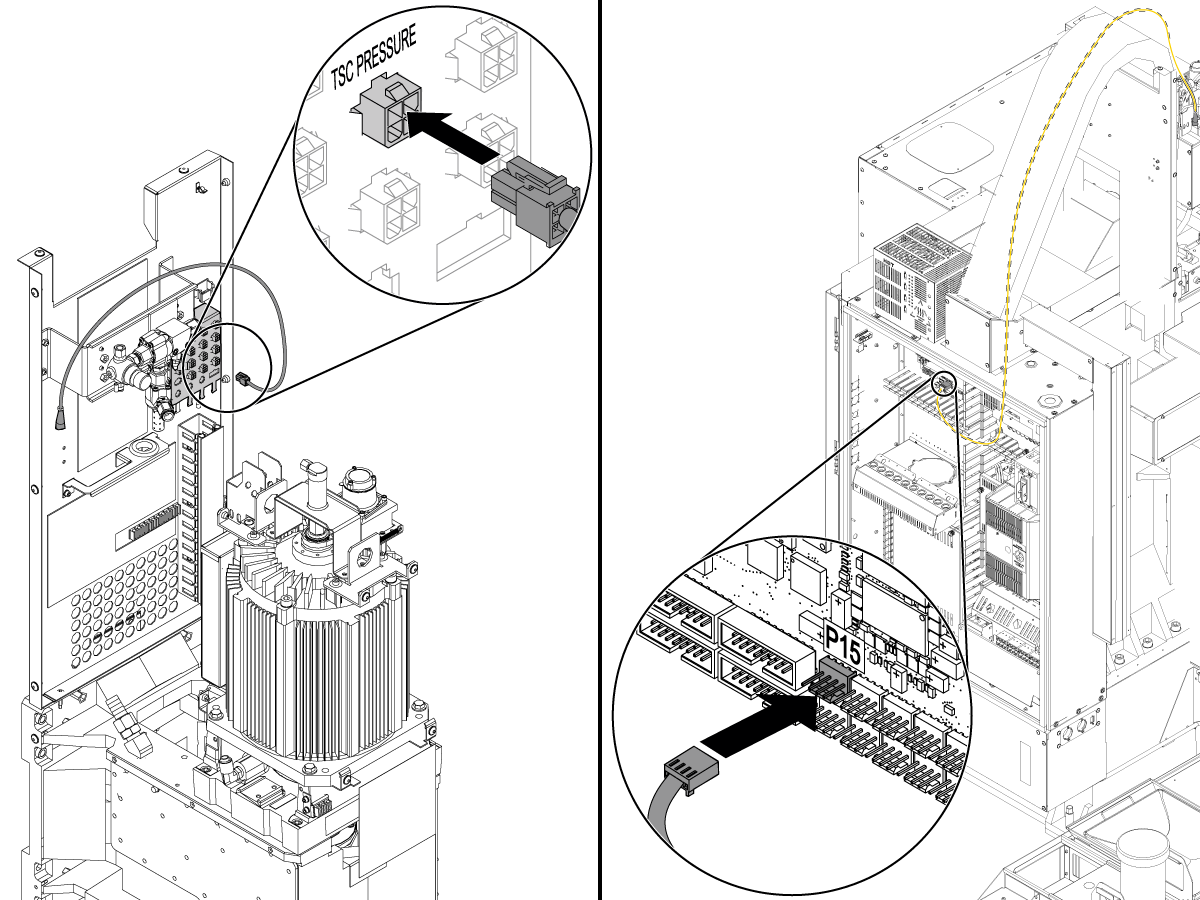
The TSC pressure sensor is defective. Some coolant flow may occur if this is the case. Troubleshoot the coolant pressure sensor.
The auxiliary filter is draining from being used with the TSC pump. Replace muffler fitting with 58-2103 (FITG NPT1/4M X 1/8" THRU 90 BRASS) See section below.
The auxiliary filter is being drained, the tank lid is not leaking.
The TSC pump is cavitating.
The auxiliary filter tank runs out of coolant periodically.
No coolant flow. The TSC pump filter or intake strainer is clogged. Clean the filters. Remove chips from the coolant system.
The Auto-clean coolant pump filter does not work (if equipped). Test and troubleshoot the Auto-clean pump filter.
The pick-up hose can kink when the pump is running. Ensure intake hose is properly installed and not loose. If issue persists, replace hose with the new version with a spring. 
Alarm 552 TRIPPED CIRCUIT BREAKER Pump head shaft misalignment causing shaft to seize and shear. Review pump head casting to see if it says "REV" or "REV C" report what is found to a service tech so we may keep record of the failed pump. Then replace the pump head and motor if the motor shaft has sheared if it has not sheared you may replace the pump head only. The correct pump head that should be installed should have "REV C" on the casting.
A short circuit in the pump motor or pump motor cable caused a fuse to blow or a circuit breaker to trip.

Check the circuit breakers and fuses on the power supply PCB.

Check for shorts in the TSC pump cable and the motor leads. Reset breaker. 

TSC 1K Only: Incorrect Circuit Breaker size installed TSC 1K requires 15 Amp Circuit breaker, verify correct size is installed.
Coolant flow issues: noise, pulsing, cavitation (cavitation sounds like heavy grit in the pump head or a suction sound).  The coolant does not return to the coolant tank fast enough. Remove chip buildup from the coolant return path.
The TSC pump filter or intake strainer is clogged. Clean the filters. Remove chips from the coolant system.
The Auto-clean coolant pump filter does not work (if equipped). Test and troubleshoot the Auto-clean pump filter.
Excessive noise from pump. Order kit 93-4195 Coolant Gear Pump Coupler Conversion. Follow the Pump Head Coupling - Flexible Coupling Replacement procedure.
Flow is cavitating: The pickup hose fittings are loose. Tighten the pickup hose fittings.
Flow is cavitating: The TSC auto clean cylinder is leaking air into the tank, which will fill the auxiliary filter with air.  Remove the cylinder from the pump and place that end in the coolant. Manually actuate the TSC purge solenoid a few times. Once complete, let it sit and see if any bubbles are present. If they are, replace the auto clean cylinder. 
Flow is pulsating: There is an alignment problem due to  the pump not properly seated. Loosen and re-tighten the standoffs supporting the pump. Refer to the Standoff Alignment section below for more information. 
Flow is pulsating: Gear pump coupler misalignment. Order kit 93-4195 Coolant Gear Pump Coupler Conversion. Follow the  Pump Head Coupling - Flexible Coupling Replacement procedure.
TSC union solenoid does not turn off after running TSC. Faulty pressure sensor. Troubleshoot the TSC pressure sensor.
TSC-1K Only: The 230V system does not turn ON and the red LED on the motor drive PCB is OFF.  The jumper on the motor drive PCB is incorrectly located or defective.  Make sure that the motor drive PCB has a jumper installed on P3 in between pin 1 and 2 (the bottom two pins). 
There is no 12V input power.  Make sure that the 12V input power is connected to P2 on the motor drive PCB. 
There is a delay before the coolant starts to flow. The coolant check valve (spring & ball check valve only) is defective. Inspect the check valve for contamination and proper operation. See the Check Valve Inspection section below.
The Auto-clean cylinder is leaking. Inspect the air cylinder for leaks into the coolant tank after it cycles. 
The TSC pressure seems low. The  TSC pump could not be putting out enough pressure. Order tool T-0152 and refer to the TSC Pressure Test section below.
Tool Air Blast (TAB) causes coolant tank overflow, or bubble and spill. The coolant check valve (spring & ball check valve only) has failed. See the Check Valve Inspection section below.
Coolant fills the TAB air pneumatic line and blows out the muffler in the CALM cabinet. The TAB air check valve (spring & ball check valve only) has failed. Troubleshoot the TAB check valve. Refer to the Check Valve Inspection section below.
TSC union is making squealing noise while running. Motor shaft is pushed up causing the standoff height to be incorrect. Measure the height from the top of the motor shaft to the mounting surface, refer to Motor Shaft Reference Dimension Section for further instructions. See TSC Compensating Union Troubleshooting Guide. 

40T and 50T Belted Spindles

Pull studs will not enter into spindle taper

And possibly one of the following alarms:

Alarm 130 Tool Unclamped
Alarm 134 Tool Unclamp Fault

There is noise being introduced through the IO and pre-charge solenoid. Order service kits 93-3451 & 93-3452 and follow the Low Load Solenoid Valve Kit - Installation procedure.
Excessive coolant tank bubbling, especially when machining with a small tool.  High backflow exhaust from pump head pressure relief

If you have an older pump head, replacing it may resolve the issue. See Pump Head Identification section below. 

For TSC 1K: Order service kit 93-2589C TSC1K SVC PUMP HEAD SPLINED and follow the Universal Pump Head/Motor - Component Replacement procedure. 

For TSC 300: Order service kit 93-1525C TSC 300 SVC PUMP HEAD SPLINED and follow the Universal Pump Head/Motor - Component Replacement procedure. 

Coolant leaks or splashes out of the tank. Air is flowing into the coolant tank.

Check intake filter screen.

Inspect the autoclean cylinder for leaks. Do not open the autoclean cylinder if it is visibly leaking. 

Refer to the TSC 300K/1K section on the VMC Maintenance Schedule to avoid repeated failure.

TSC 300 Only: Excessive noise and vibration from TSC pump and coolant hoses, especially during high pressure applications (e.g. when machining with a small TSC tool).  Pressure buildup in pump head during operation. 
Upgrade pump head to latest version with improved pressure relief system. Order kit 93-1525C TSC 300 SVC PUMP HEAD SPLINED. 

Fitting Replacement for Auxiliary filter

If your auxiliary filter is draining for any of the reasons in the symptom table above you will need to change the muffler fitting to fitting 58-2103 (FITG NPT1/4M X 1/8" THRU 90 BRASS) [1]. The orientation of hole [2] must face the opposite side of the threaded portion of the fitting as shown in the image.

Standoff Alignment

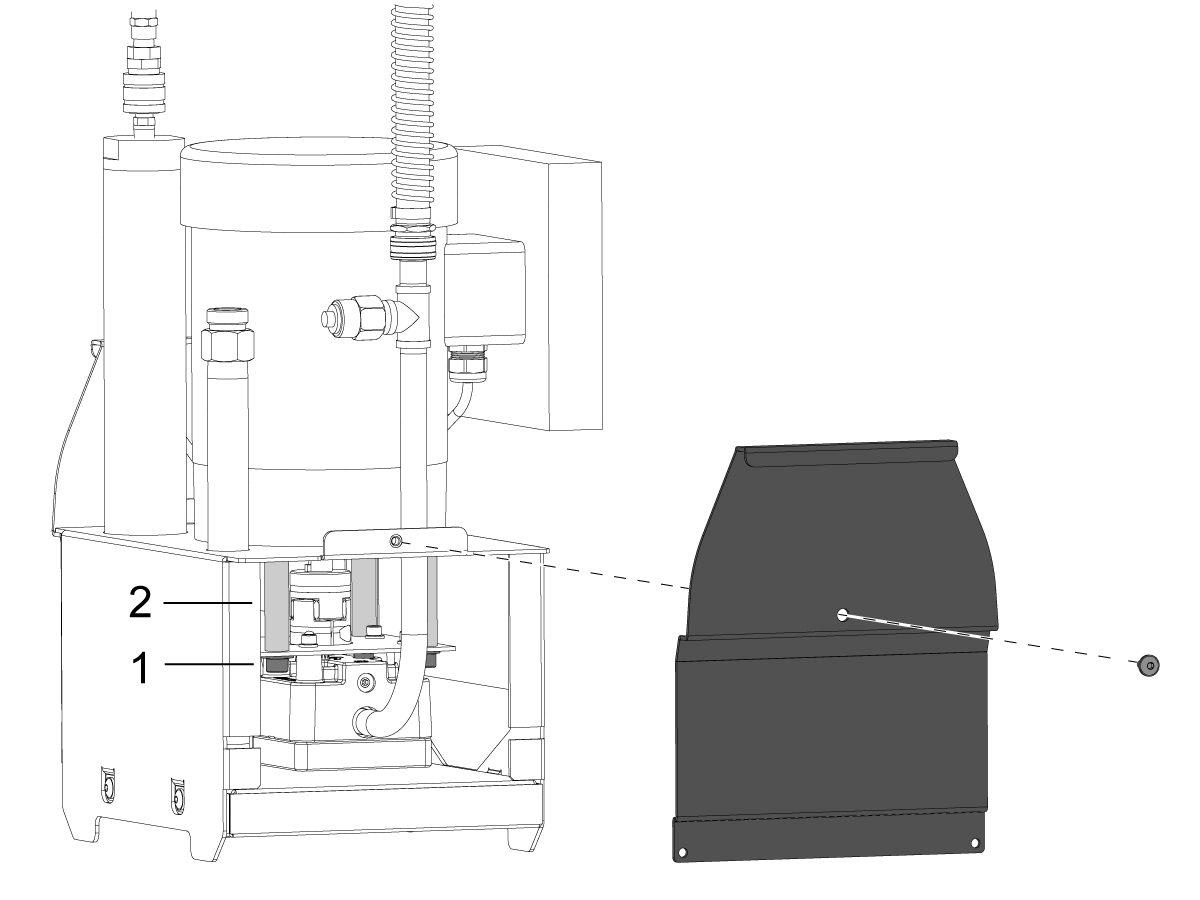
Remove the side panel covering the pump in order to access the standoffs. 

Loosen the (x4) standoff bolts. 

Re-tighten the (x4) standoff bolts. 

Run the pump while listening for excessive noise. 

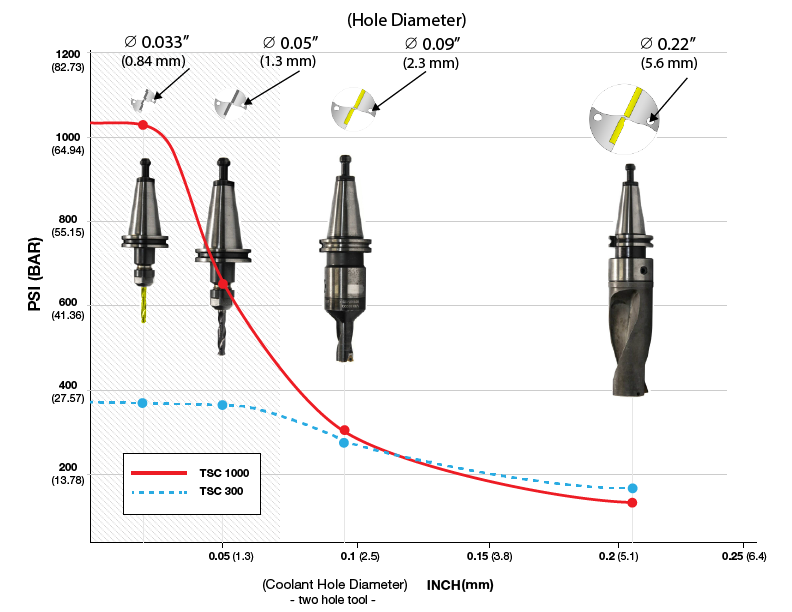
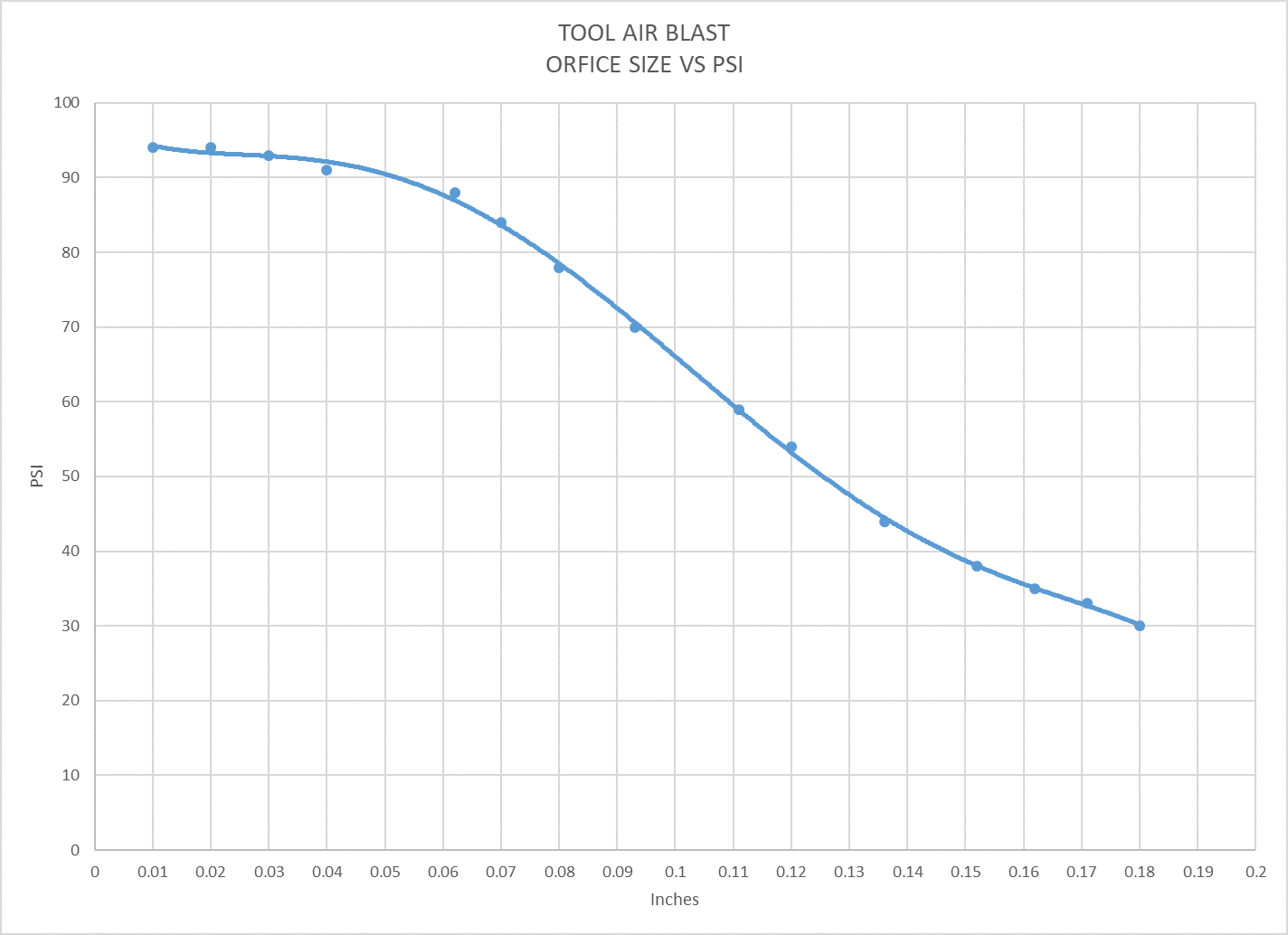
Output Pressure Reference Chart

This graph shows approximate pressure vs. tool orifice diameters for Through Spindle Coolant.

This graph shows approximate pressure vs. tool orifice diameters for tool air blast.  (single orifice tools)

Flow Rate Reference Chart

This graph shows approximate Flowrates vs. tool orifice diameters. This data can be used to aid in the selection of an appropriate spindle speed for your application.

TSC Pressure Test

To test the TSC pressure order tool T-0152 [2].

Perform the following steps to use the TSC pressure tool:

  1. Grease around the o-ring [1] on the tool [2]. This will protect the o-ring from being damaged when inserted into the tool holder.
  2. Insert the tool into a tool holder. This is a 3/4 shank tool and will only work with a 3/4 set screw tool holder. Collet style tool holders will not work.
    Note: Use a single set screw type tool holder as a two set screw tool holder may effect the reading of the TSC pressure.
  3. Insert the tool in the spindle [4].
  4. Run the TSC to see the pressure reading.

A good TSC pump will produce a pressure value that is at least 75% of its rated value. 
Example: TSC-1K will produce at least 750 psi and TSC-300 will produce at least 225 psi.

If the pump is producing less than 75% of its rated value, it will need to be replaced.

Important: Before replacing, make sure the rest of the troubleshooting guide has been followed.

Short Circuit

1. Check for a blown fuse or a tripped breaker:

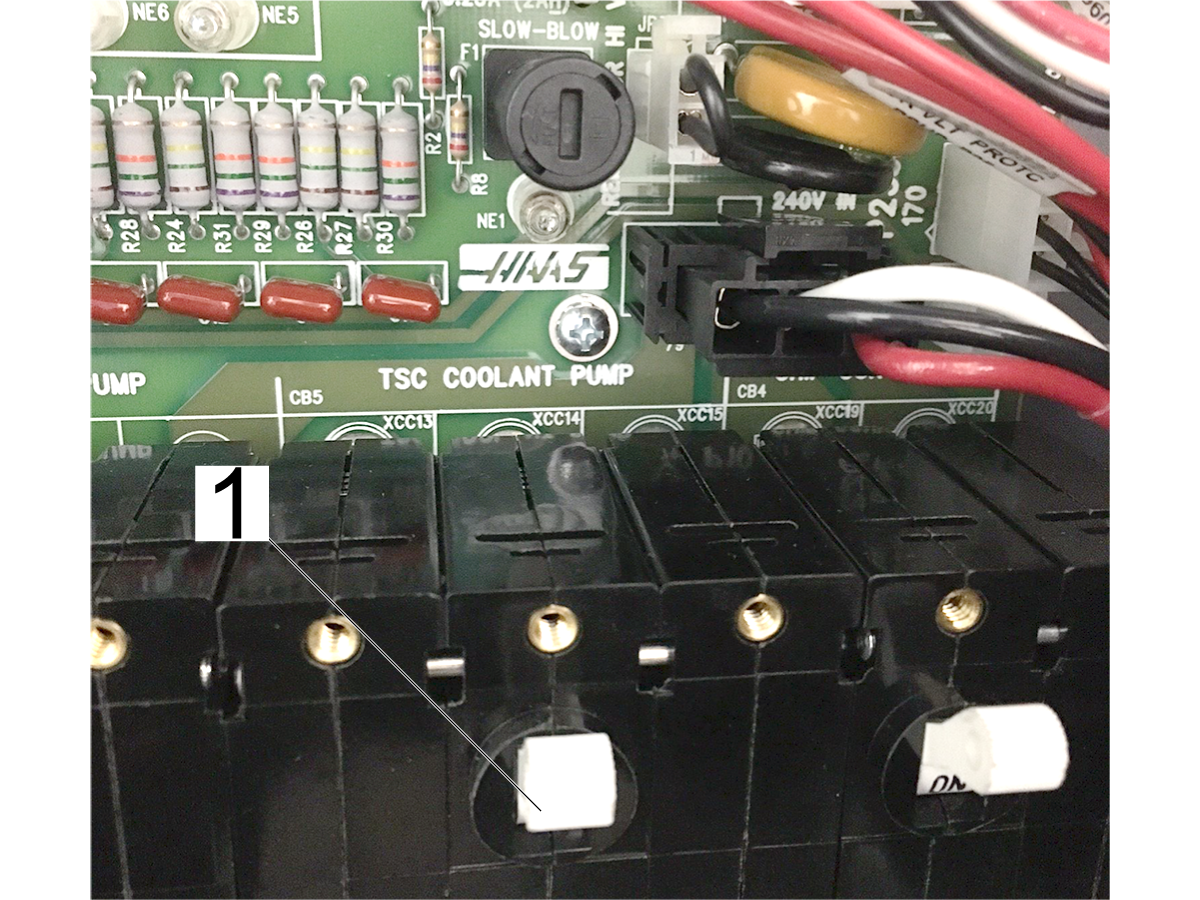
TSC-300 - On the power supply PCB: Make sure that the fuses at F1 and F3 are not blown. If there are blown fuses, check for shorts in the motor or motor cable in Step 2 before you replace the fuses.

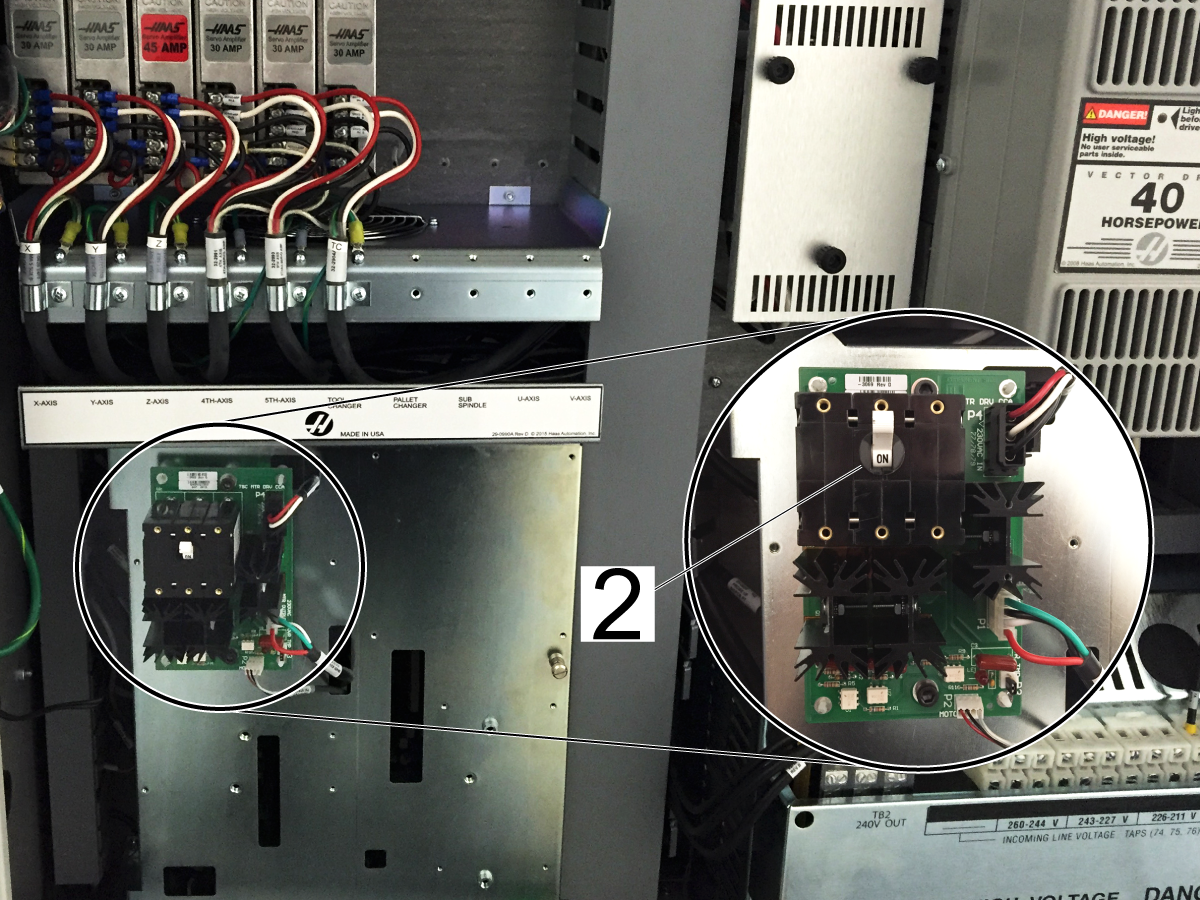
TSC-1K - On the motor drive PCB: Make sure the circuit breaker [2] on the motor drive PCB is in the ON position.  Verify 15 Amp Circuit breaker is installed for TSC-1K

If the circuit breaker has tripped, turn it back on. Test the TSC system. If the circuit breaker trips again, check for a short circuit in the TSC pump.

 Note: On pumps made before December, 2016, you must use water-based coolants with The TSC-1K system. Thicker fluids like cutting oil will overload the pump and trip the breaker.

2. Check the pump for shorts:

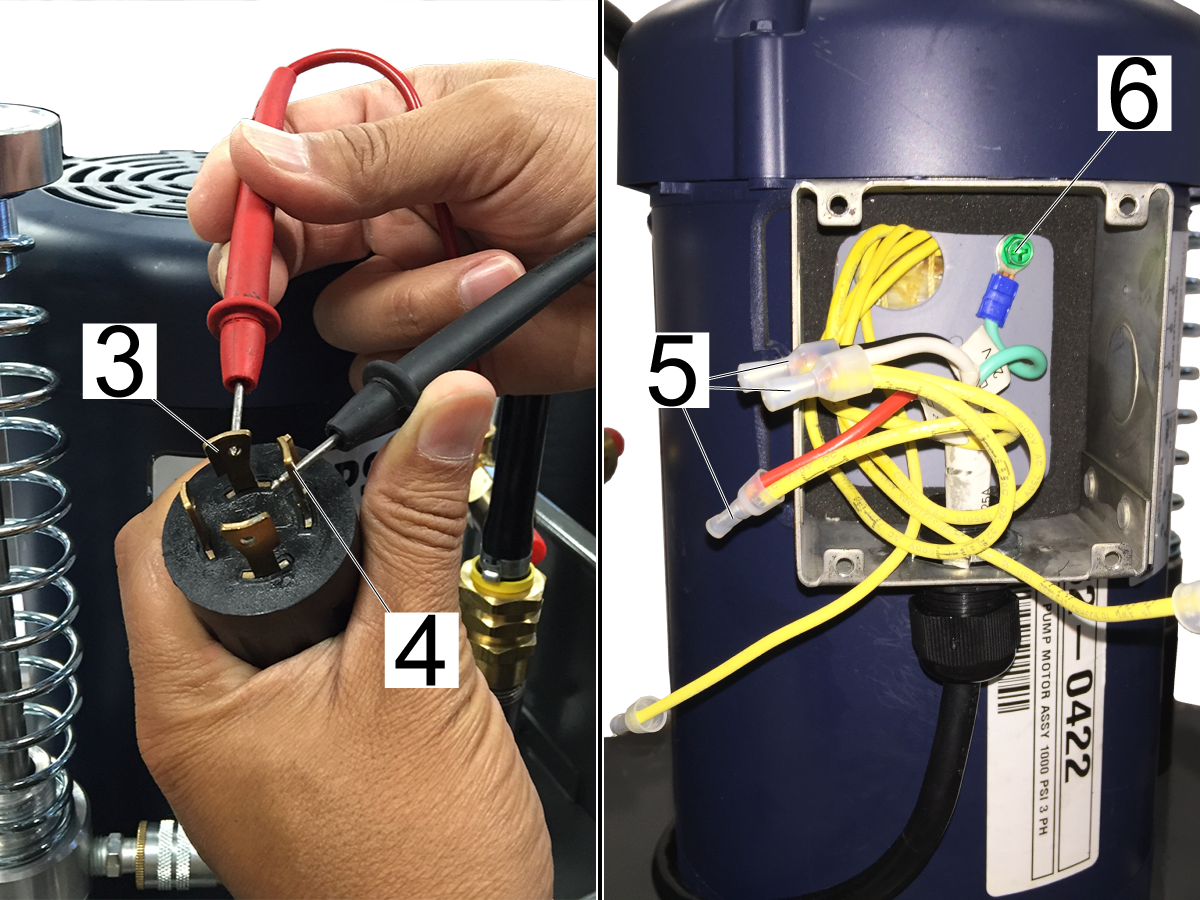
Measure the (3) leads [3] to ground [4] on the TSC power cable. If all leads [3] test open to ground [4], the pump and cable do not have a short.

If the motor cable leads [3] indicate a short, disconnect the cable from the motor. Measure the (3) cable leads [5] to ground [6]. If any lead tests short, the pump is at fault. If none of the leads [5] test short, the cable is at fault.

3. If all leads test OK:

Check the TSC motor for binding that could cause an over amperage condition.

Incorrect Input Power-Phasing

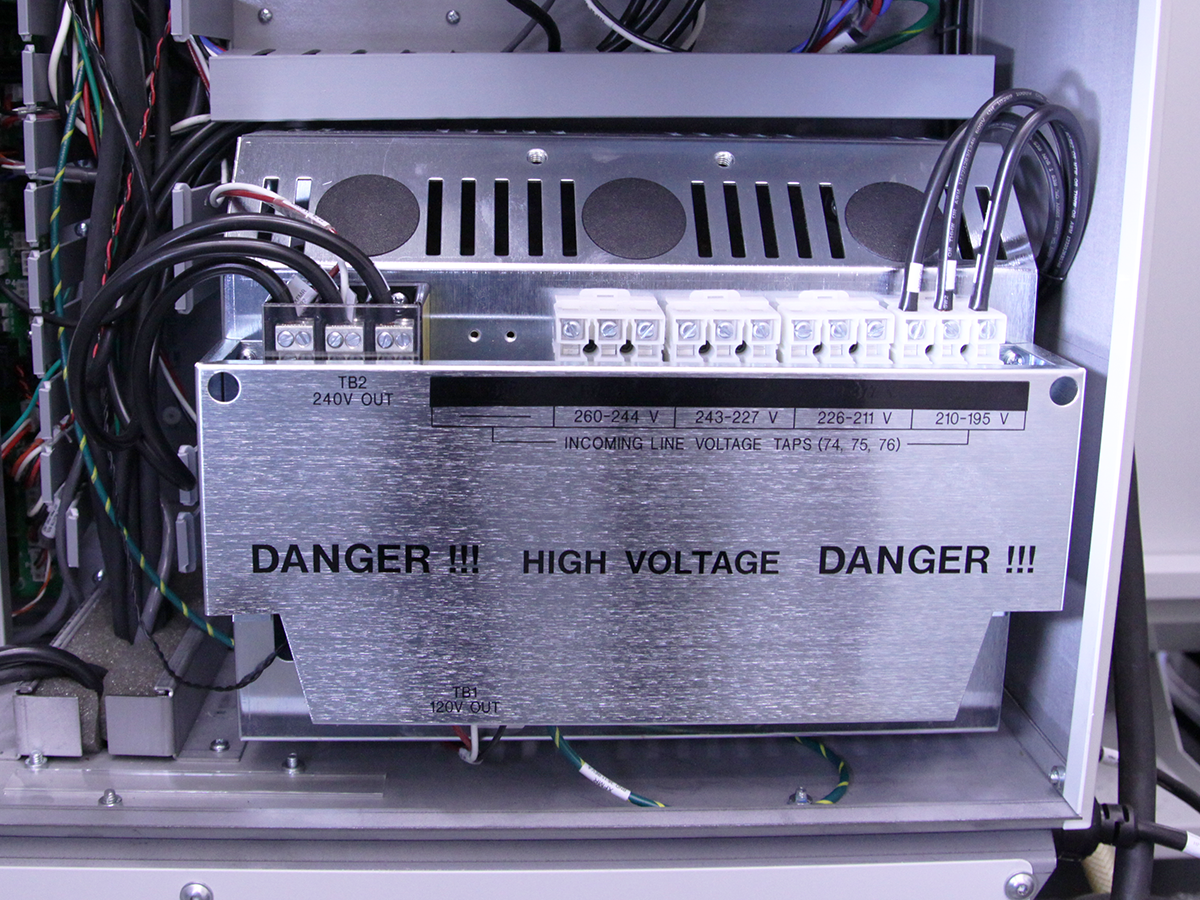
The power supply PCB has a phase detect with neon indicators on the top center portion of the board. Make sure that the electrical power is phased correctly:

  • Green Light: The incoming power is phased correctly.
  • Orange Light: The incoming power is incorrectly phased.
  • Both Lights: A phase is missing (there is a loose cable in the system).

If the electrical power is phased incorrectly:

Set the main circuit breaker on the machine to the OFF position.

Lock the main circuit breaker. Use an approved lock with an approved safety tag.

Swap the #74 and #75 incoming power cables at the main transformer.

Coolant Pump Damage

Cutting abrasive materials causes premature wear on the coolant system, resulting in reduced pressure. Use additional filtration when you cut abrasive materials.

Remove the pump from the tank. Rotate the pump motor fan [1] by hand clockwise. Make sure that the pump coupling [2] also turns.

If it does not turn, separate the pump from the motor. Check for a damaged key on the motor shaft.

Check the pressure relief spring in the pump head.

  1. Remove the TSC pump from the tank.
  2. Remove the pressure relief plugs.
  3. Inspect the spring and valve pin. Replace the spring if it is broken and the pin if it is pitted or worn.

TSC Pressure-Sensor Failure

Pressure Switch:

Press [PARAM/DGNOS]. Go to the I/O diagnostics page.

Short the switch connector leads. The Low TSC Pressure bit state should change from 1 to 0.

If it does not change, then the cable or the I/O PCB is damaged. Measure for resistance at both ends of the cable. If the cable has resistance, refer to:

  • Classic Haas Control - I/O PCB - Troubleshooting Guide

The pressure switch is connected to a bracket above the spindle. Replace the pressure switch if it is defective:

If the bit changes, use an inline pressure gauge to verify the pressure is correct. If the pressure is over 40 psi, replace the switch.

Pressure Sensor:

Check the TSC pressure gauge page in diagnostic when the pump is not running. It should read 0 PSI/BAR. If it reads pressure when the pump is off the TSC union solenoid will remain on after use. Check the TSC check valve before replacing the sensor on the check valve assembly.

Check Valve: 

Disassemble and visually inspect the check valve for any deformities. Make sure the ball isn't trapped inside the spring. If it is, the spring would be pushing the ball against the countersink of the fitting. Replace the valve if it has failed.

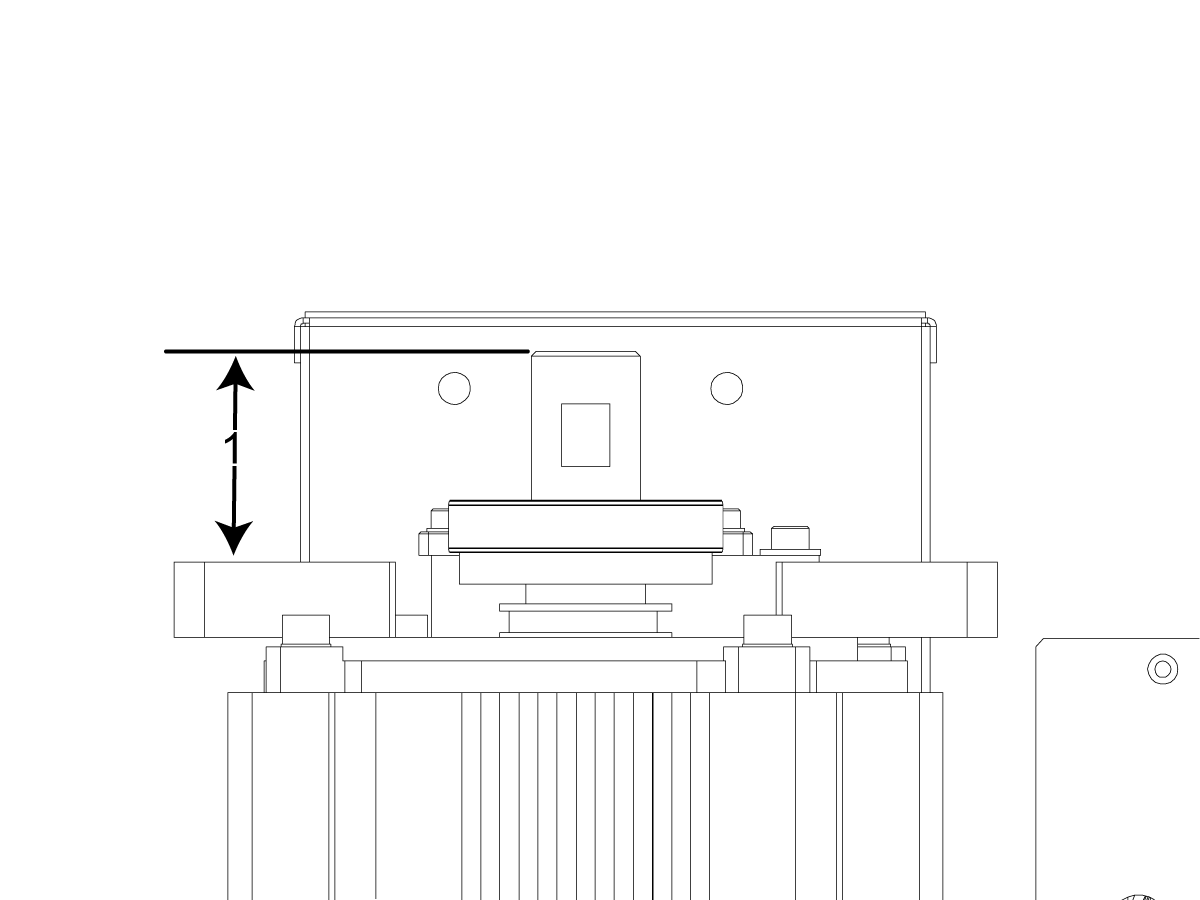
Motor Shaft Reference Dimension

1

Measure from the of the motor shaft to the mating surface of the standoff's these measurements should be as follows:

  • DT/DM built before 2018: 1.74”
  • DT/DM built after 2018: 1.09”
  • VF Inline: 1.29”

If this reference height is incorrect please contact your local Haas Factory Outlet for assistance. 

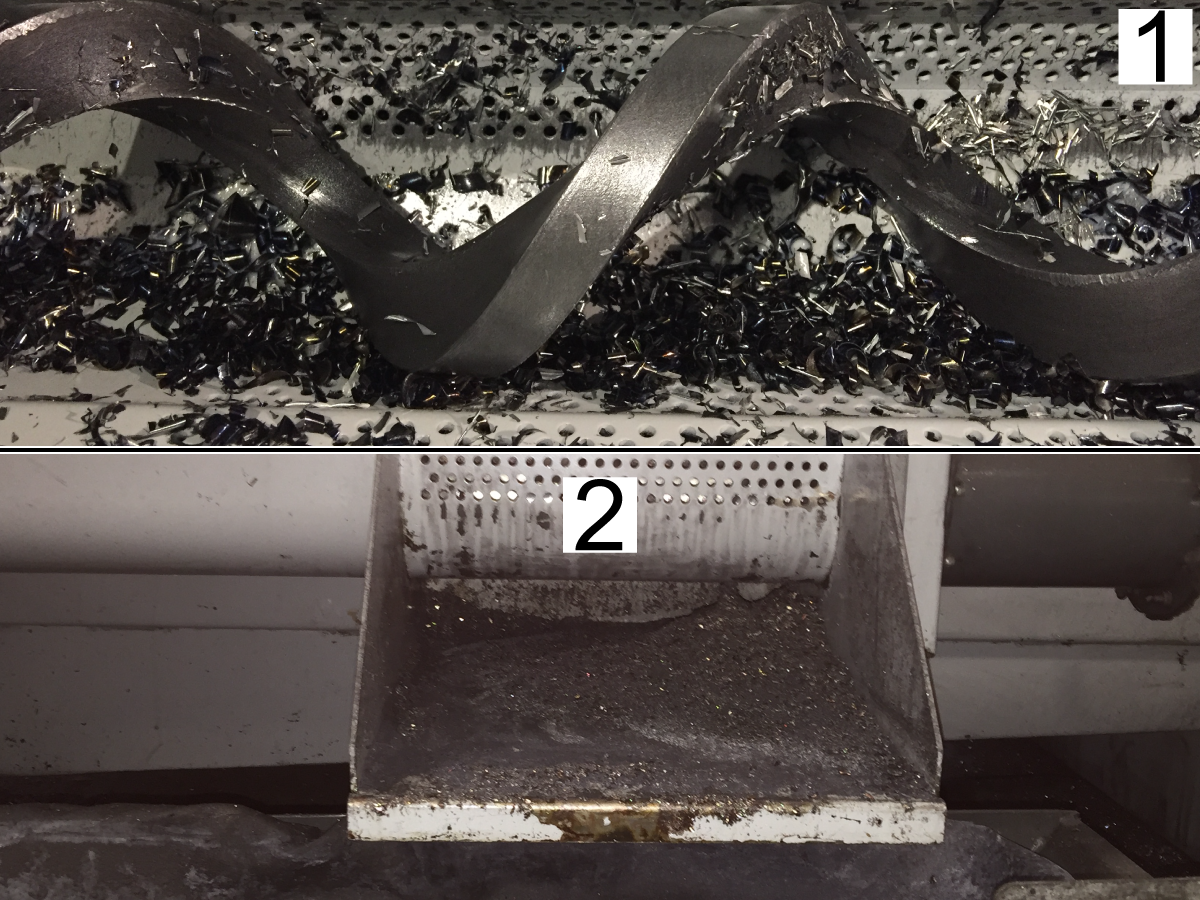
Coolant Blockage

Remove all chips from the auger trough [1], and the coolant return drain [2].

  • Remove chips from the coolant tank. Excessive chips in the coolant tank reduce the amount of coolant the tank can store. Watch the video Machine Tool Coolant - Cleaning Your Tank - Video.
  • Fill the coolant tank. Watch the video Standard Coolant – Simplified - Filling your Tank … and More.
  • Make sure the coolant level sensor operates correctly.

Clean the coolant filters and the filters in the coolant tank.

  • Machines made after March, 2015: Press the plunger down (5) times to clean the filter. Make sure that the auto-clean plunger activates when the TSC pump shuts off. If it does not activate, troubleshoot the solenoid. Test the TSC purge solenoid.

    Remove the filter tray from the bottom of the TSC assembly. Remove the tray lid from the filter. Use a brush to clean the filter. Install the filter tray to the bottom of the TSC pump assembly.

    If the solenoid operates and it outputs air, check the air tube for kinks or breaks.

  • Machines made before March, 2015: Remove the filter retaining ring and filter screen from the bottom of the TSC pump assembly. Clean the filter screen with warm, soapy water and a soft brush.

Remove the chip basket and polyester mesh strainer (if the strainer is installed) from the chip tray. Remove all chips from the chip strainer basket.

To replace the mesh strainer, pull it tightly over the top of the chip basket. Make sure that the elastic band goes over the edge of the chip basket.

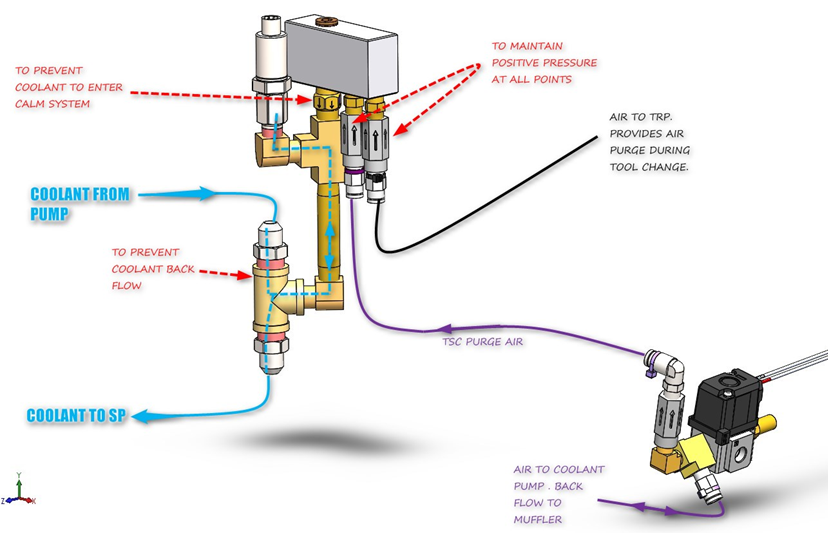
Tool Air Blast (TAB) causes coolant tank overflow

Through Spindle Coolant (TSC) flow diagram.

Coolant Check Valve Inspection

Shuttle & Ball

This check valve has a ball deflector [2] inside rather than a spring. The ball deflector acts as a shuttle by directing the ball from one location to another--either blocking the coolant or TAB opening.

As coolant flows into the valve, the ball gets pushed and deflected out of the way [3]. When TAB air flows into the valve, the ball gets pushed back down due to both air and gravity [4].

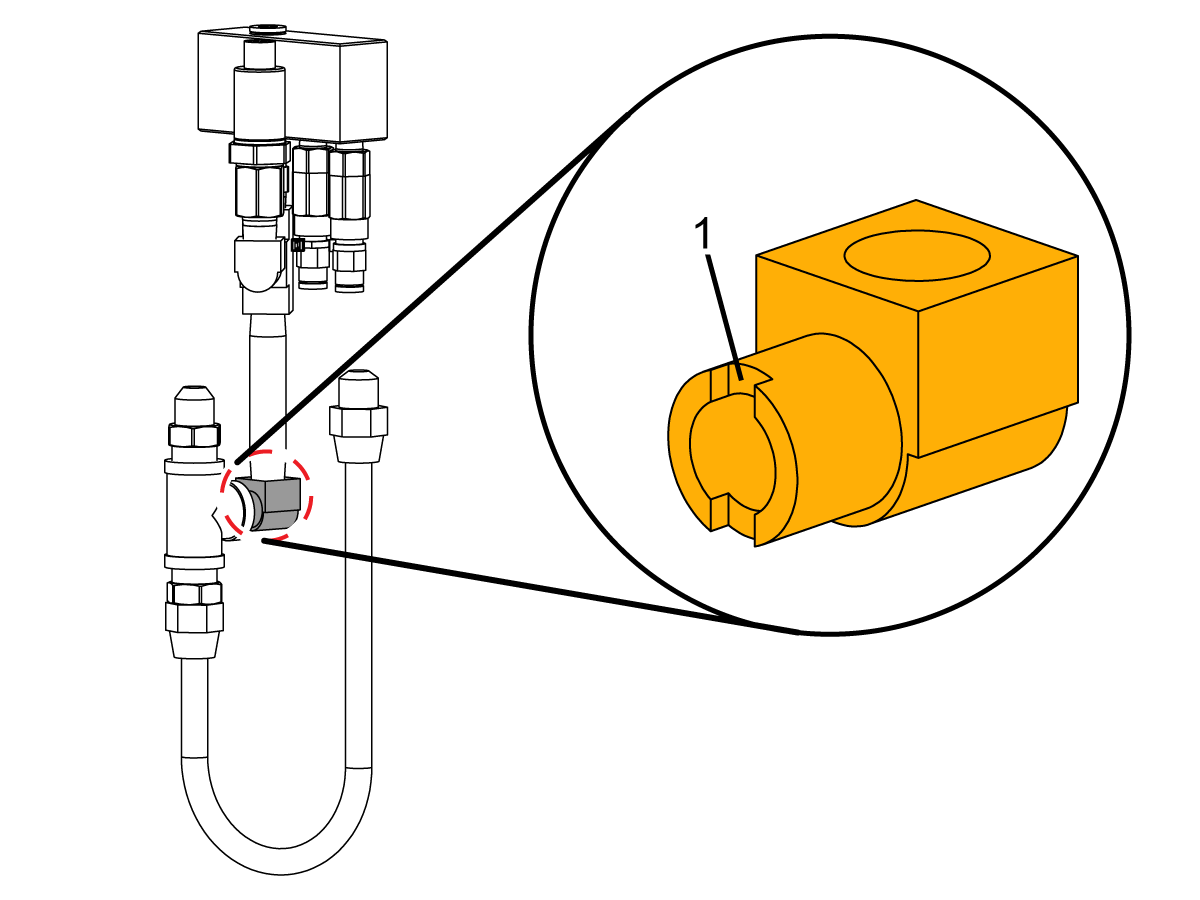
The new shuttle and ball check valve also has a new elbow fitting that is slotted [1]. This elbow fitting allows a small amount of coolant or air pressure through to pressurize the pressure sensor.

Spring & Ball

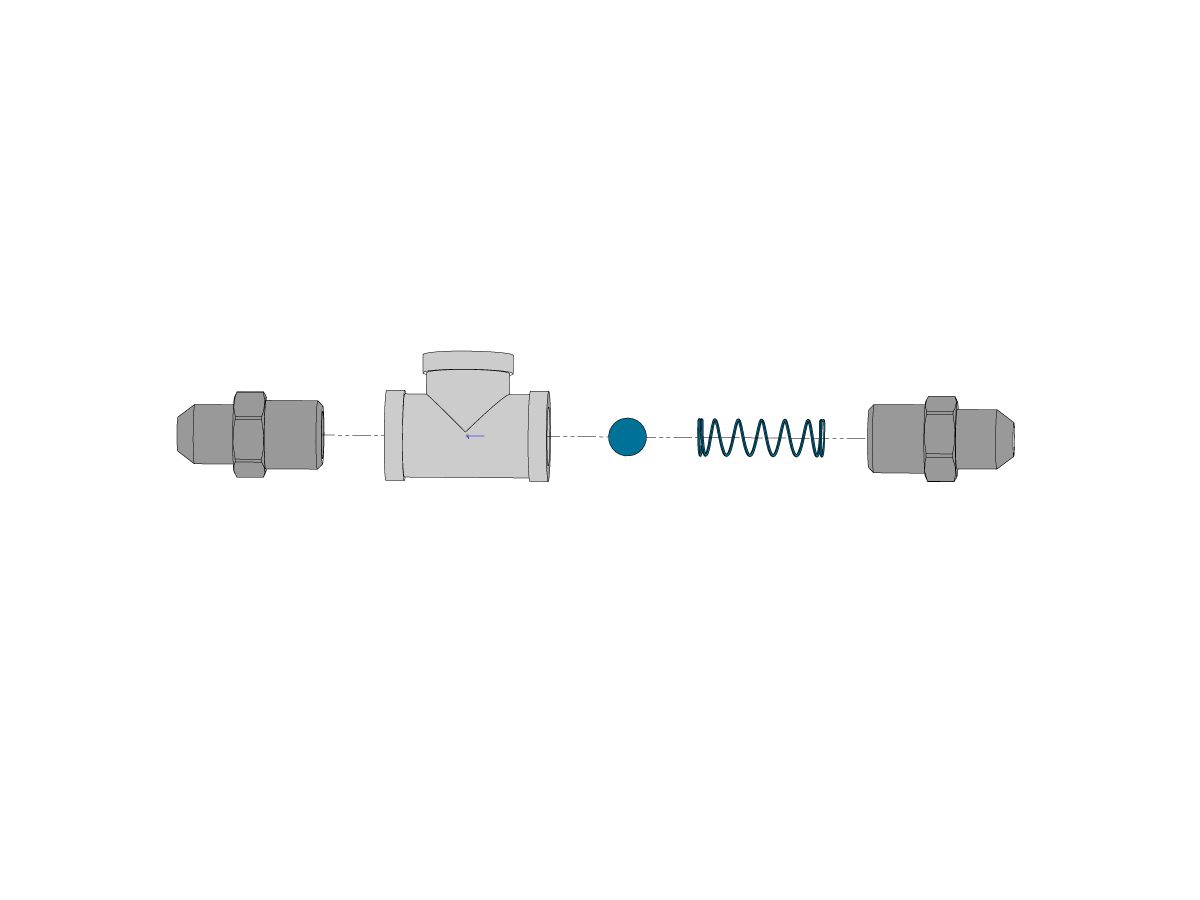
Coolant pressure can push the ball into the spring and trap it, causing the check valve to fail.  Without a functional check valve, air from the TAB may flow backward through the coolant system and cause the coolant tank to overflow and/or bubble. 

Corrective Action:

Disassemble and visually inspect the check valve for any deformities. Make sure the ball isn't trapped inside the spring. If it is, the spring would be pushing the ball against the countersink of the fitting.

Coolant fills the TAB air pneumatic line

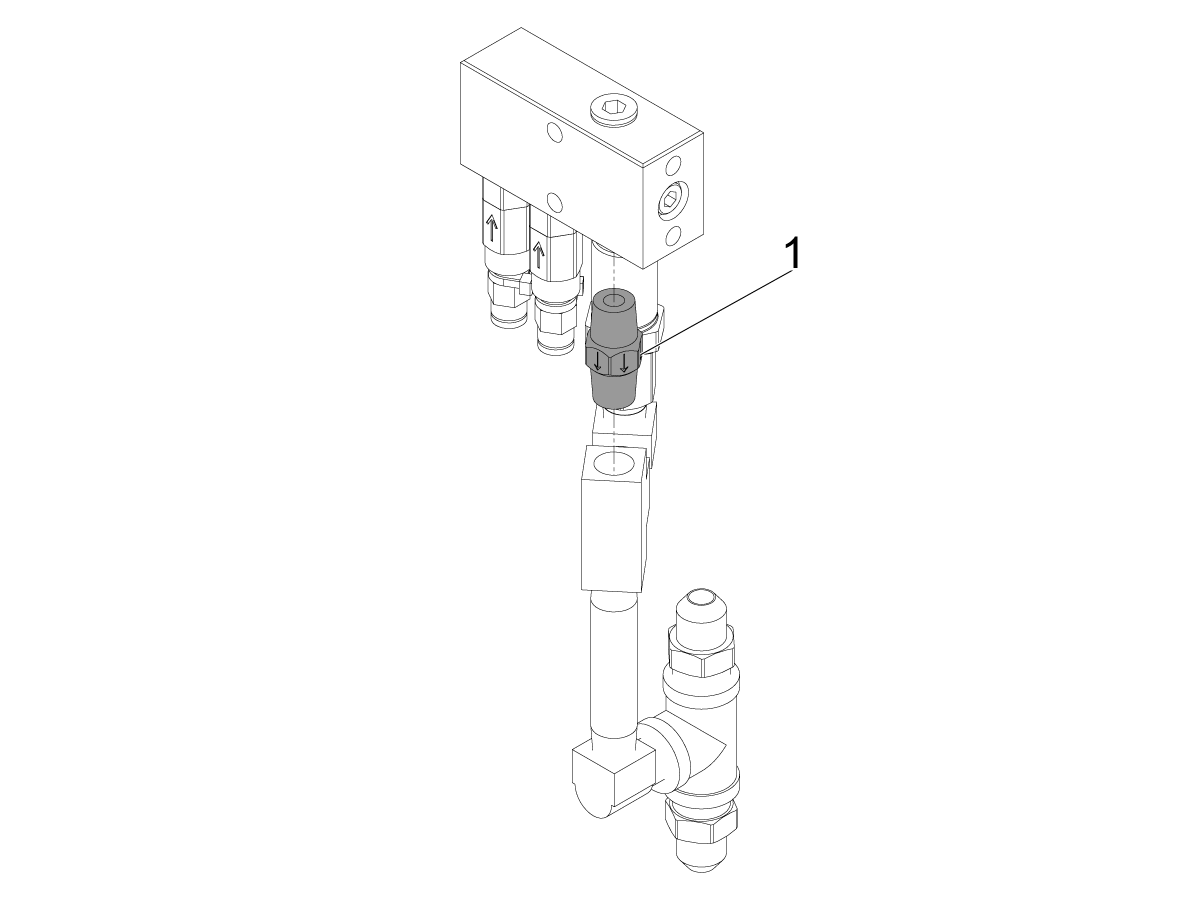
When the TAB air check valve [1] fails and TSC is turned on, coolant from the TSC pump will back flow through the TAB air line to the solenoid and blow out the muffler.


CORRECTIVE ACTION:

Replace the TAB air check valve.

Pump Head Identification

To view your pump head, the TSC must be partially disassembled. See  HPC/TSC - 300/1K - Universal Coolant Pump Head/Motor - Component Replacement.

Inspect your pump head. The old pump head has a pressure release outlet on its top surface [1]. The new pump head has a pressure release outlet on its bottom surface [2]. 


Recently Viewed Items

You Have No Recently Viewed Items Yet

Feedback
Haas Logo

Haas Delivered Price

This price includes shipping cost, export and import duties, insurance, and any other expenses incurred during shipping to a location in France agreed with you as a buyer. No other mandatory costs can be added to the delivery of a Haas CNC Product.

KEEP UP WITH THE LATEST HAAS TIPS AND TECHNOLOGY...

Sign up now!   

HAAS TOOLING ACCEPTS THE FOLLOWING:

  • Service & Support
  • Owners
  • Request Service
  • Operator Manuals
  • Haas Parts
  • Rotary Repair Request
  • Pre-Install Guides
  • Shopping Tools
  • Build & Price a New Haas
  • Available Inventory
  • The Haas Price List
  • CNCA Financing
  • About Haas
  • Accessibility Statement
  • DNSH Statement
  • Export Compliance
  • Careers
  • Certifications & Safety
  • Contact Us
  • History
  • Terms & Conditions
  • Haas Tooling Terms & Conditions
  • Privacy
  • Warranty
  • Haas Community
  • Haas Certification Program
  • Haas Motorsports
  • Gene Haas Foundation
  • Haas Technical Education Community
  • Events
  • Join the Conversation
  • Facebook
  • X
  • Flickr
  • YouTube
  • LinkedIn
  • Instagram
  • TikTok
© 2026 Haas Automation, Inc – CNC Machine Tools
This site is protected by reCAPTCHA and the Google Privacy Policy and Terms of Service apply.

2800 Sturgis Rd., Oxnard, CA 93030
Toll Free: (888) 817-4446 / Fax: 805-278-8554