My Haas Welcome,
!
Haas Tooling MyHaas/HaasConnect Sign In Register Haas Tooling MyHaas/HaasConnect Sign Out Welcome, My Machines Latest Activity My Quotes My Account My Users Sign Out
Find Your Distributor
  1. Select Language
    1. English
    2. Deutsch
    3. Español - España
    4. Español - México
    5. Français
    6. Italiano
    7. Português
    8. Český
    9. Dansk
    10. Nederlands
    11. Magyar
    12. Polski
    13. Svenska
    14. Türkçe
    15. 中文
    16. Suomi
    17. Norsk
    18. الإنجليزية
    19. български
    20. Hrvatski
    21. Ελληνικά
    22. Română
    23. Slovenský
    24. Slovenščina
    25. 한국어
    26. 日本語
    27. Українська
  • machines Main Menu
    • Vertical Mills
      Vertical Mills
      Vertical Mills View All
      • Vertical Mills
      • VF Series
      • Universal Machines
      • VR Series
      • VP-5 Prismatic
      • Pallet-Changing VMCs
      • Mini Mills
      • Mold Machines
      • High-Speed Drill Centers
      • Drill/Tap/ Mill Series
      • Toolroom Mills
      • Pocket Mill
      • Compact Mills
      • Gantry Series
      • SR Sheet Routers
      • Extra-Large VMC
      • Double-Column Mills
      • 3+2 Positioning Machines
    • Multi-Axis Solutions
      Multi-Axis Solutions
      Multi-Axis Solutions View All
      • Multi-Axis Solutions
      • Y-Axis Lathes
      • 5-Axis Mills
    • Lathes
      Lathes
      Lathes View All
      • Lathes
      • ST Series
      • Dual-Spindle
      • Box Way Series
      • Toolroom Lathes
      • Chucker Lathe
      • Haas Bar Feeders
    • Horizontal Mills
      Horizontal Mills
      Horizontal Mills View All
      • Horizontal Mills
      • 50-Taper
      • 40-Taper
    • Rotaries & Indexers
      Rotaries & Indexers
      Rotaries & Indexers View All
      • Rotaries & Indexers
      • Rotary Tables
      • Indexers
      • 5-Axis Rotaries
      • Extra-Large Rotaries
    • Special Series
      Special Series
      Special Series View All
      • Special Series
      • EU_Series_Redirect
    • Automation Systems
      Automation Systems
      Automation Systems View All
      • Automation Systems
      • Mill Automation
      • Lathe Automation
      • Automatic Parts Loaders
      • Automation Models
    • Desktop Machines
      Desktop Machines
      Desktop Machines View All
      • Desktop Machines
      • Desktop Mill
      • Desktop Lathe
      • Control Simulator, Standard
      • Control Simulator, Premium
    • Shop Equipment
      Shop Equipment
      Shop Equipment View All
      • Shop Equipment
      • Knee Mill
      • Haas Manual Lathes
      • Haas Saws
    • Fabrication Machines
      Fabrication Machines
      Fabrication Machines View All
      • Fabrication Machines
      • Laser Cutting Machines
      • CNC Press Brakes
    • QUICK LINKS Special Series  Special Series 
      EU SERIES EU SERIES BUILD & PRICE | PRICE LIST BUILD & PRICE | PRICE LIST In-Stock Machines In-Stock Machines WHAT’S NEW WHAT’S NEW YOUR FIRST CNC YOUR FIRST CNC
      SHOPPING TOOLS
      • Build & Price a Haas
      • Price List
      • Available Inventory
      • CNCA Financing
      WANT TO TALK TO SOMEONE?

      A Haas Factory Outlet (HFO) can answer your questions, and walk you through your best options.

      CONTACT YOUR DISTRIBUTOR >
  • Options Main Menu
    • The Haas Control Value Option Packages
      Value Option Packages
      Value Option Packages View All
      • Value Option Packages
    • Product Image Spindles
      Spindles
      Spindles View All
      • Spindles
    • Product Image Tool Changers
      Tool Changers
      Tool Changers View All
      • Tool Changers
    • Product Image 4th- | 5th-Axis
      4th- | 5th-Axis
      4th- | 5th-Axis View All
      • 4th- | 5th-Axis
    • Product Image Turrets & Live Tooling
      Turrets & Live Tooling
      Turrets & Live Tooling View All
      • Turrets & Live Tooling
    • Product Image Probing
      Probing
      Probing View All
      • Probing
    • Haas Chip & Coolant Management Chip & Coolant Management
      Chip & Coolant Management
      Chip & Coolant Management View All
      • Chip & Coolant Management
    • The Haas Control The Haas Control
      The Haas Control
      The Haas Control View All
      • The Haas Control
    • Product Image Product Options
      Product Options
      Product Options View All
      • Product Options
    • Product Image Tooling & Fixturing
      Tooling & Fixturing
      Tooling & Fixturing View All
      • Tooling & Fixturing
    • Product Image Workholding
      Workholding
      Workholding View All
      • Workholding
    • Product Image 5-Axis Solutions
      5-Axis Solutions
      5-Axis Solutions View All
      • 5-Axis Solutions
      • 5 Easy Steps to 5-Axis
    • QUICK LINKS Special Series  Special Series 
      EU SERIES EU SERIES BUILD & PRICE | PRICE LIST BUILD & PRICE | PRICE LIST In-Stock Machines In-Stock Machines WHAT’S NEW WHAT’S NEW YOUR FIRST CNC YOUR FIRST CNC
      SHOPPING TOOLS
      • Build & Price a Haas
      • Price List
      • Available Inventory
      • CNCA Financing
      WANT TO TALK TO SOMEONE?

      A Haas Factory Outlet (HFO) can answer your questions, and walk you through your best options.

      CONTACT YOUR DISTRIBUTOR >
  • Why Haas Main Menu
      Discover the Haas Difference
    • Why Haas
    • MyHaas
    • Education Community
    • Industry 4.0
    • Haas Certification
    • Customer Testimonials
  • Service Main Menu
      Welcome to Haas Service
      SERVICE HOME Operator’s Manuals How-To Procedures Troubleshooting Guides Preventive Maintenance Haas Parts Haas Tooling Videos
  • Videos Main Menu
  • Main Menu
    • View All
    • View All
    • View All
    • View All
      • HTEC Curriculum Support
    • View All
      • Haas 10 kg Cobot Package
      • Cobot Kits
      • DC-1 Drill Center
      • CNC Sales News
      • Do More With Your Haas
    • View All
    • View All
      • contact-us-test
      • 4 - AUTOMATION SYSTEMS
      • Carousel-V2
      • expert test
      • Demo_Day_Trident-test
      • Link Test
      • image-sale-tag-test
      • article-list-test
      • Haas 25 kg Robot Package
    • View All
      • Choose Options
    • View All
    • View All
    • View All
    • View All
    • View All
      • calc-test
    • View All
    • QUICK LINKS Special Series  Special Series 
      EU SERIES EU SERIES BUILD & PRICE | PRICE LIST BUILD & PRICE | PRICE LIST In-Stock Machines In-Stock Machines WHAT’S NEW WHAT’S NEW YOUR FIRST CNC YOUR FIRST CNC
      SHOPPING TOOLS
      • Build & Price a Haas
      • Price List
      • Available Inventory
      • CNCA Financing
      WANT TO TALK TO SOMEONE?

      A Haas Factory Outlet (HFO) can answer your questions, and walk you through your best options.

      CONTACT YOUR DISTRIBUTOR >
  • Haas Tooling Main Menu
  • Haas Service Parts Main Menu
My Haas Welcome,
!
Haas Tooling MyHaas/HaasConnect Sign In Register Haas Tooling MyHaas/HaasConnect Sign Out Welcome, My Machines Latest Activity My Quotes My Account My Users Sign Out
Find Your Distributor
  1. Select Language
    1. English
    2. Deutsch
    3. Español - España
    4. Español - México
    5. Français
    6. Italiano
    7. Português
    8. Český
    9. Dansk
    10. Nederlands
    11. Magyar
    12. Polski
    13. Svenska
    14. Türkçe
    15. 中文
    16. Suomi
    17. Norsk
    18. الإنجليزية
    19. български
    20. Hrvatski
    21. Ελληνικά
    22. Română
    23. Slovenský
    24. Slovenščina
    25. 한국어
    26. 日本語
    27. Українська
×

Search Results

Web Pages

Images

    • <
    • 1
    • >

H-5AX Single Yoke Spindle Head - Geometry Guide

Service Home How To Procedures H-5AX Single Yoke Spindle Head - Geometry Guide
Recently Updated Last updated: 05/07/2025

H-5AX Single Yoke Spindle Head - Geometry Guide


H-5AX Single Yoke Spindle Head - Geometry Guide

- Jump to Section - 1. Warning 2. Introduction 3. Leveling 4. Flatness of Square Granite 5. X- Axis Y-Axis Perpendicularity 6. X-Z plane & Y-Z Plane Perpendicularity 7. Before Starting Head Alignment 8. C-axis Parallel to Z-axis 9. C-axis Runout 10. B-axis Inclination (5 steps) 11. Spindle Centerline and B-axis Intersection 12. B-axis Sweep Back to Top

Warning

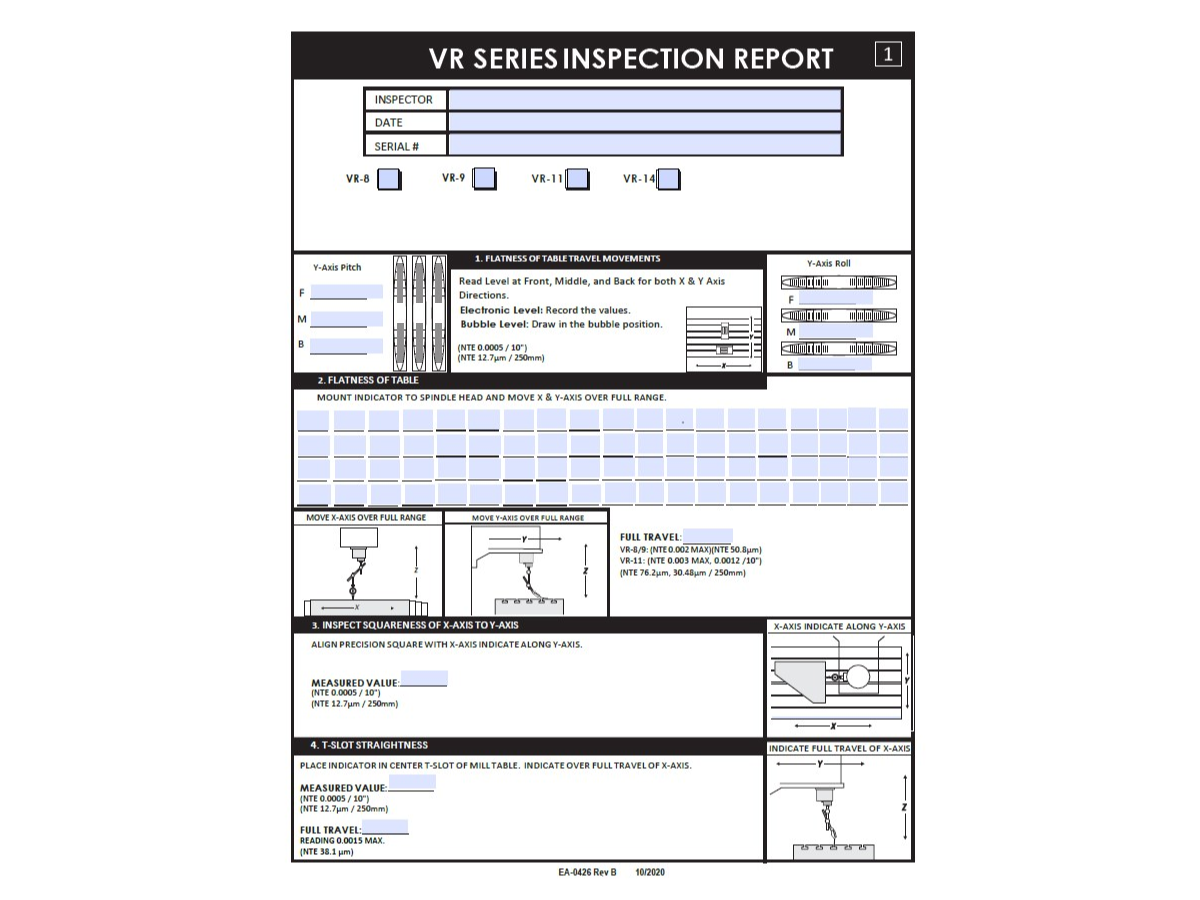
Fill out the latest Inspection Report on HBC and consult with Haas Service before attempting any geometry adjustments.

 Note: This site is available only to Haas Service Techs.

 WARNING: Breaking the DON'T REMOVE seal on the spindle without contacting Haas Service will VOID the warranty. Contact Haas Service before proceeding with process.

WARNING: This page may be used as reference for the inspection report but do not make any adjustments before consulting with Haas Service. Adjustments made without consulting Haas Service will void warranty.

NOTE: Haas is requiring that the serrated/small steel washers be replaced with hardened thick washers. Order part number 93-3769 HSD C-AXIS MOUNTING HARDWARE SVC KIT for the proper hardened washers and longer bolts. When replacing the serrated/small washers with the hardened washers it is recommended to clean the counterbore seat, please refer to the H-5AX C-Axis Counterbore Touch Up - Instructions.

Inspection Report

Introduction

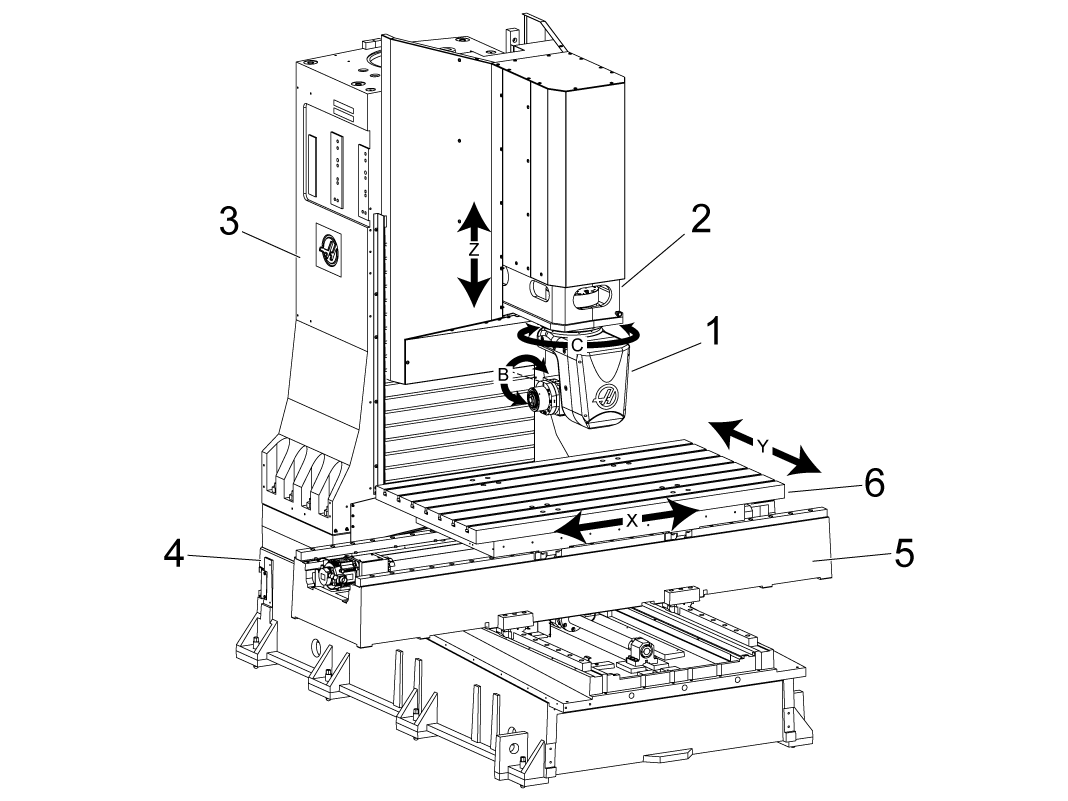
This procedure will go over how to adjust the following components on the VR-series machine:
 
  1. Haas 5-Axis Head
  2. Spindle Head
  3. Column
  4. Base
  5. Saddle
  6. Table

Note: As mentioned before this procedure can be used as an aid to the inspection report, but adjustments made without consultation from Haas Service will void warranty for the machine. 

Leveling

Verify the level, if the machine is not level follow the instructions below to level the machine. 

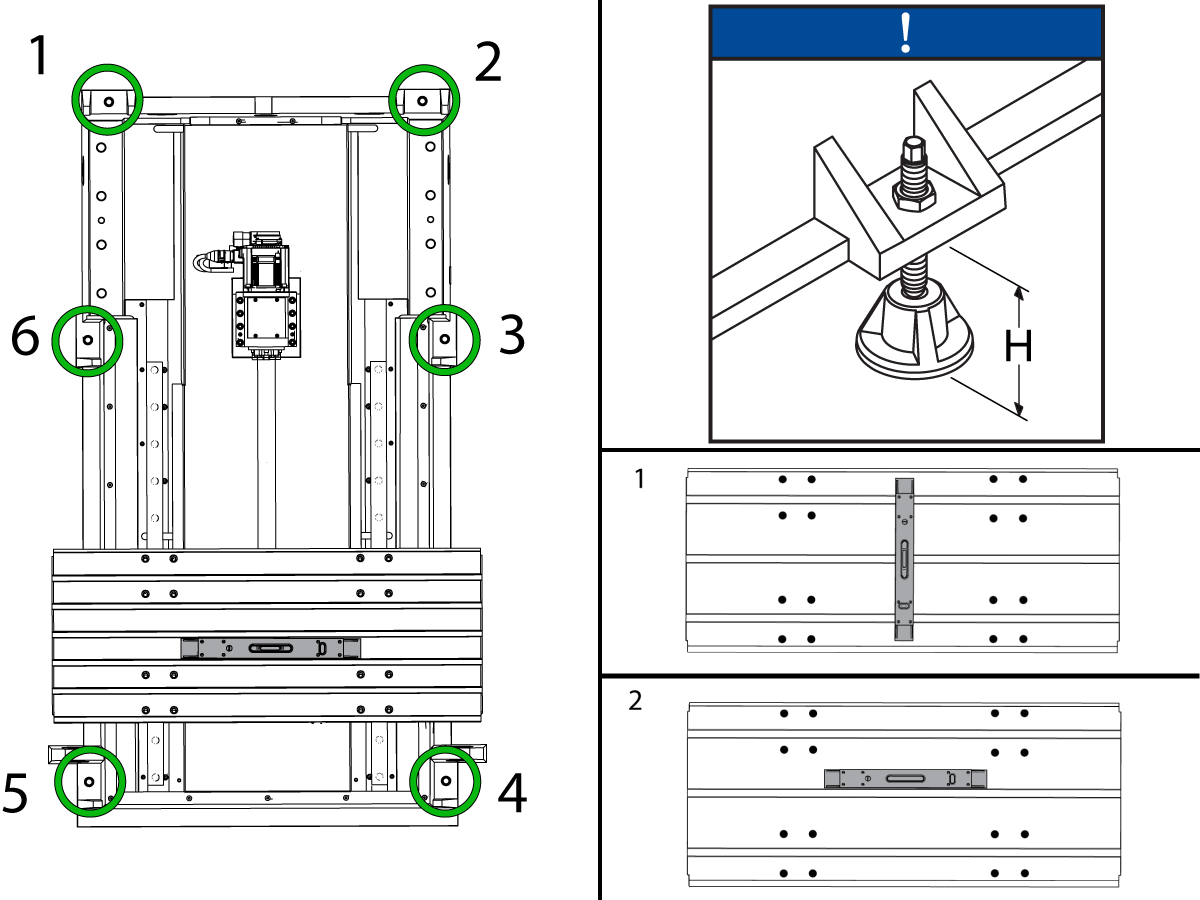
1

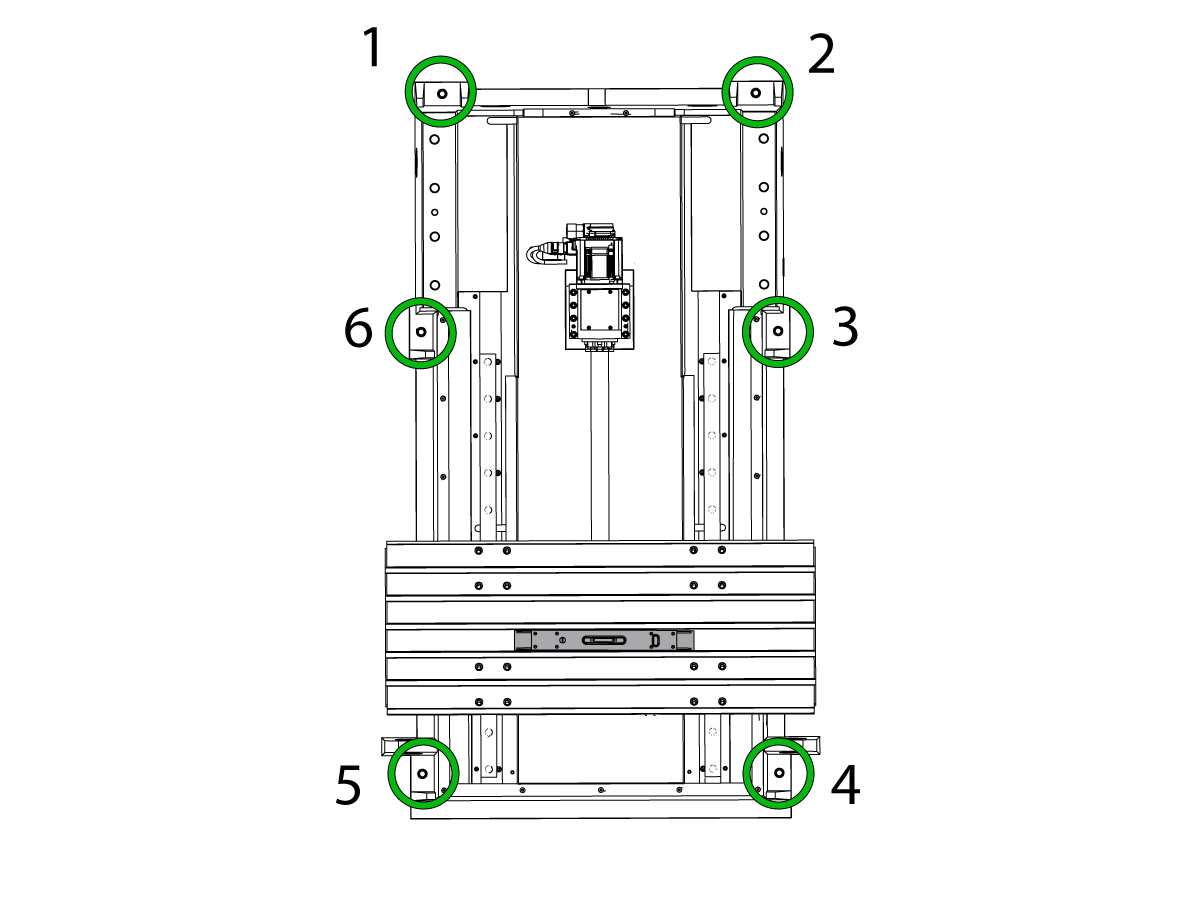
  • Adjust the four corner leveling screws to the same height to lift the base casting to the height specified as [H] on the leveling decal on the back of the machine.
  • Loosen the middle leveling screws [3, 6] so that they are not touching the pads, install jam nuts [1] on leveling screws, but do not tighten 
  • Jog the table so that it is centered in the machine. 

2

  • Place the level on the center of the bed and position it so that the shorter vial is parallel to the Y-axis and the longer vial is parallel to the X-axis.
  • Using the shorter vial adjust the front to back level by either adjusting the front or back leveling screws.
  • Adjust the leveling screws until the Y-axis bubble is centered. 
  • Using the longer vial which is parallel to the X-axis, raise the leveling screws on lower side of the machine.
  • Adjust the leveling screws accordingly until the X-axis bubble is centered

3

  • Continue using the longer vial, with the table at the front of the machine look at the position of the indicating bubble
  • Jog the table through its full Y-axis travel stopping at the column, with the table at the column look to see which rear corner of the machine is lowest if any. 
  • If needed adjust the leveling screws 2 and 4 until there is no twist across Y axis
  • Continue adjusting the level at the front and back of the machine until both readings are zero.
  • Lower the center leveling screws 3 and 6 until they make contact with the pads. Tighten these hand tight and then tighten them an additional 10 degrees with the ratchet. 

4

  • Place the level in the center of the bed and orient it so the long vial is parallel to the Y-axis
  • Look at the bubble position when the bed is at its center position and then jog the bed back in the Y direction until it reaches the column.
  • Take note of the bubble position, if the level shows that the machine is either bowed in the up or down direction, make small and even adjustments to middle leveling screws 3 and 6
  • The Tolerance for both the twist and bow is N.T.E 0.0002"/10"

For a more in depth guide on how to level your VMC including how to level machines with outriggers please see:

VMC Leveling

Flatness of Square Granite

Place some leveling jacks on the VR table then place a granite on those leveling jacks.

Once the granite is placed on the jacks adjust the surface of the granite flat. This is NTE 0.0001"

X- Axis Y-Axis Perpendicularity

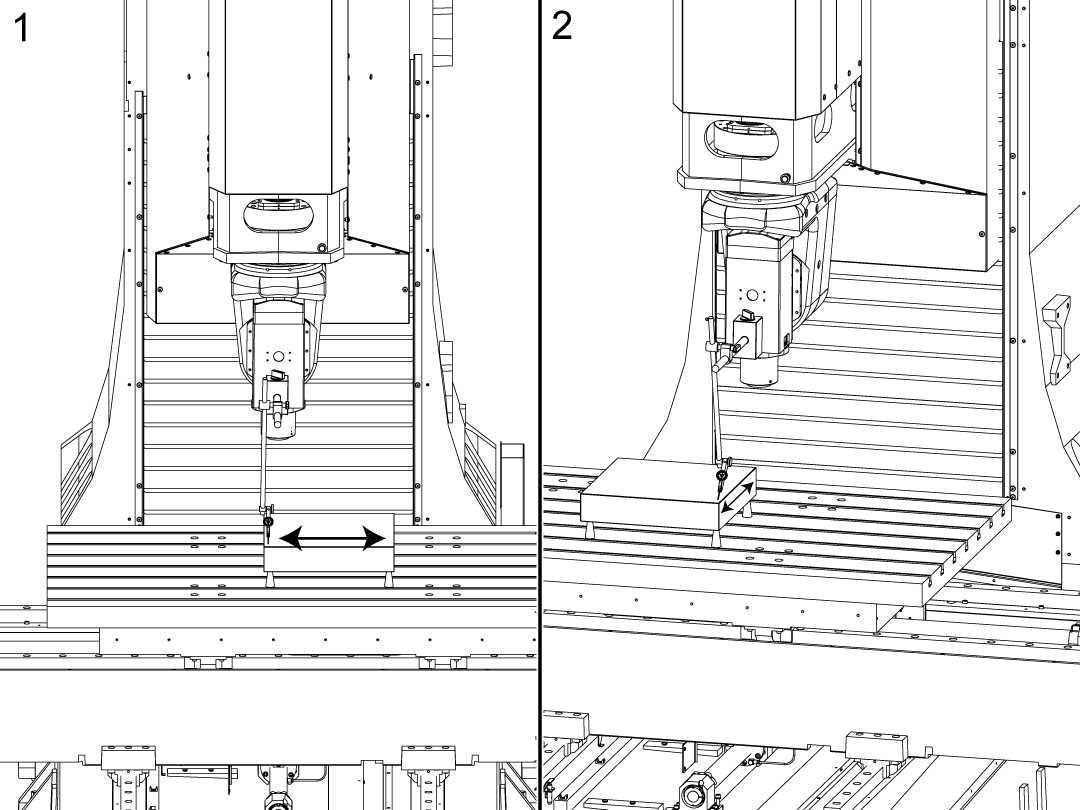
With the granite adjusted flat place the indicator on the front face of the granite [1]. Zero the indicator and run it across the granite, adjust the granite so that both ends read zero, 

Once the X-axis plane is zeroed place the indicator on one of the sides, parallel to the Y-axis plane. Zero the indicator on one end of the granite and run the indicator to the opposite end of the granite. Record the measurement. 

This measurement is NTE 0.0005/10" 

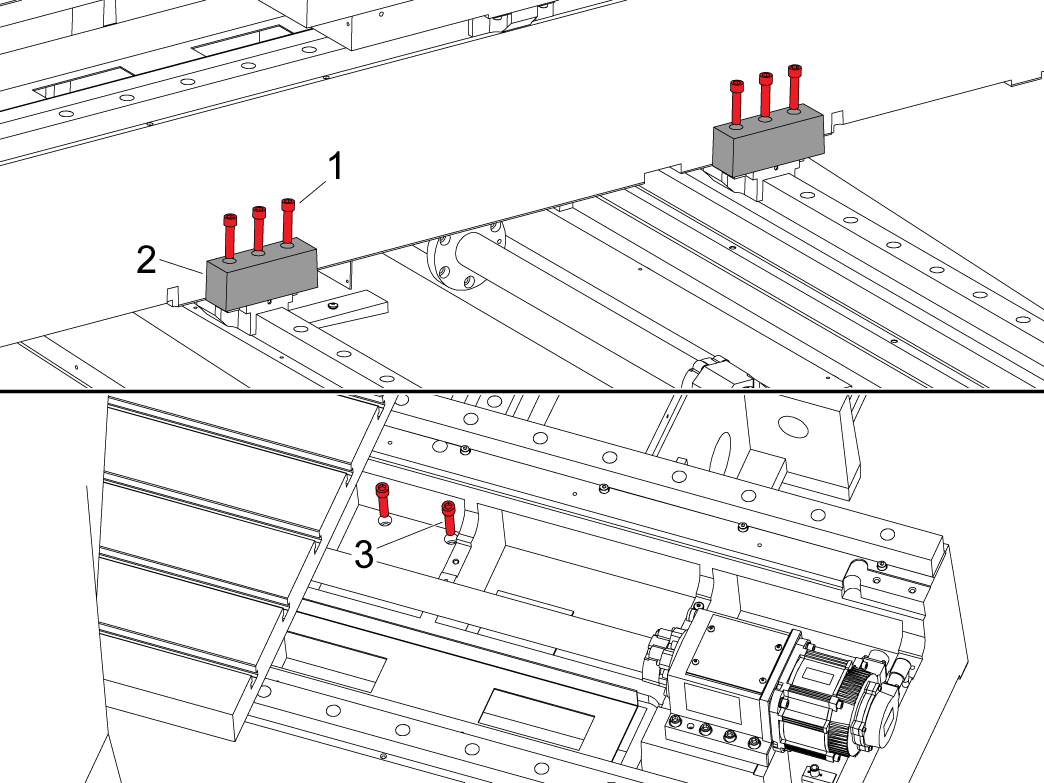
To adjust the Y-Axis perpendicular to X-Axis loosen the (3x) SHCS M12 X 50 [1] on the front of the saddle that connects the casting [2] to the linear pads. Be sure to loosen all 4 pads.

NOTE: There are (2x) SHCS M12 X 50 [3] found under the table that need to be loosen as well to make this adjustment. 

Once the bolts for all 4 linear pads are loosened, jog the saddle front to back a few times. 

Tighten and torque the 5 bolts back to specification using the HAAS TORQUE SPECIFICATION and re-check the X-Y perpendicularity.

WARNING: This step may be used as reference for the inspection report but do not make any adjustments before consulting with Haas Service. Adjustments made without consulting Haas Service will void warranty.

X-Z plane & Y-Z Plane Perpendicularity

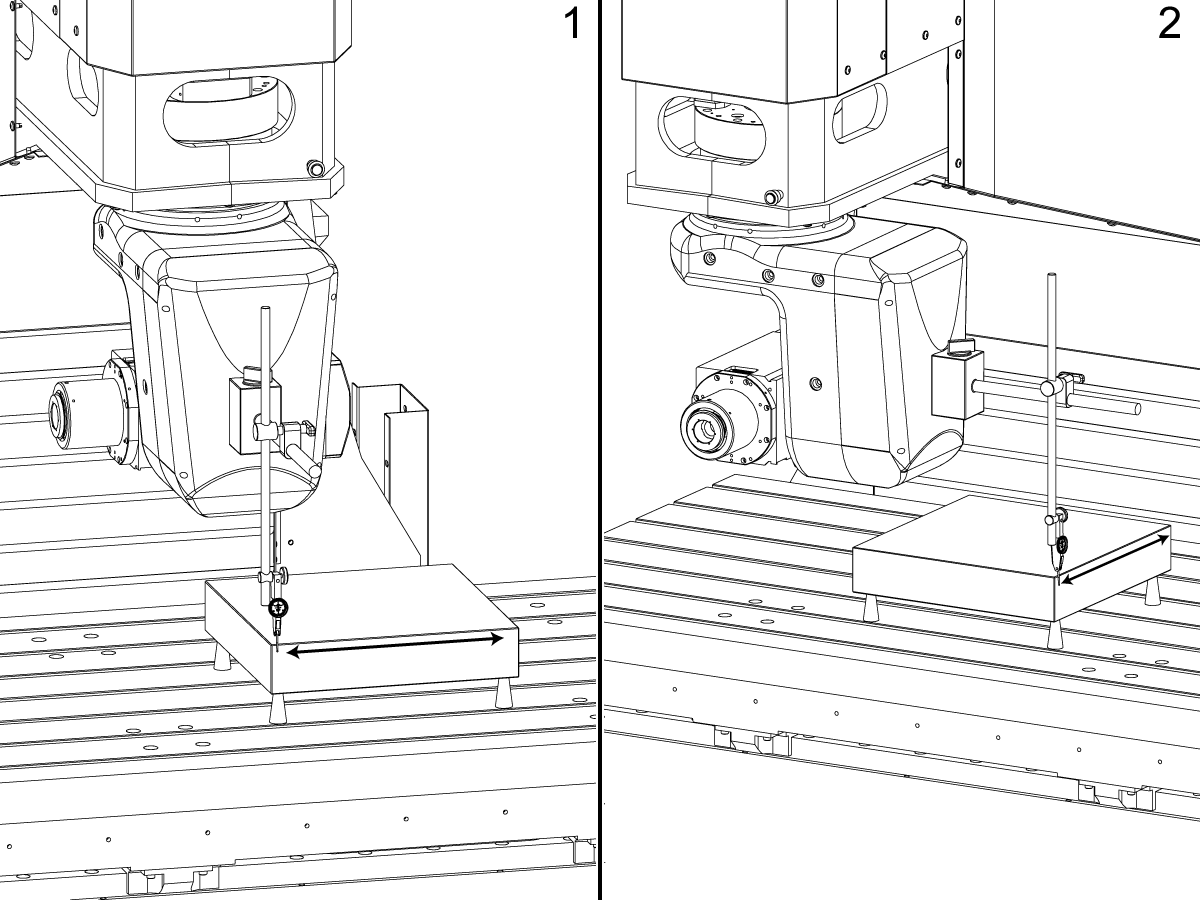
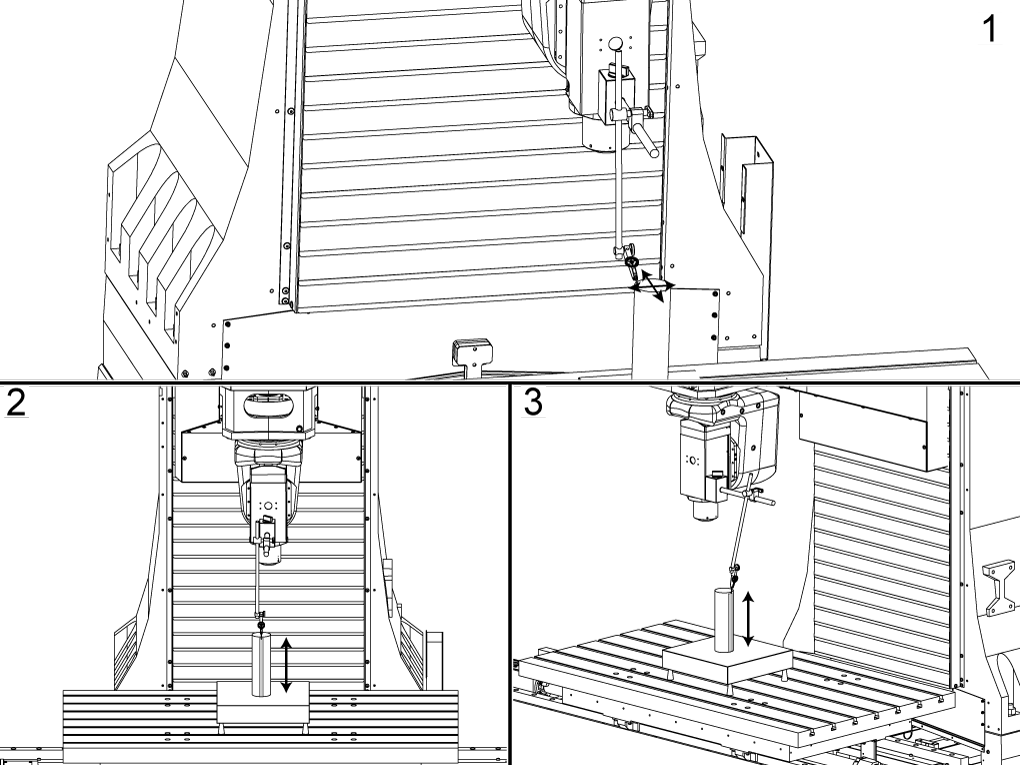
Place a cylinder on the granite and place an indicator on the top face of the granite [1]. Adjust the cylinder flatness so that the indicator reads zero in X/Y motion by shimming under the cylinder.

Place the indicator on the front face of the cylinder [2], zero the indicator, and jog the Z-axis up and down. This measurement is NTE 0.0005/10". 

Place the indicator on the side face of the cylinder [3], zero the indicator, and jog the Z-axis up and down. This measurement is NTE 0.0005/10". 

IMPORTANT: This step is for reference only.  The coloumn should not need to be adjusted, as the head geometry may influence this value. If any adjustments need to be made Haas service approval is  necessary. Adjustments made without consulting Haas Service will void warranty.

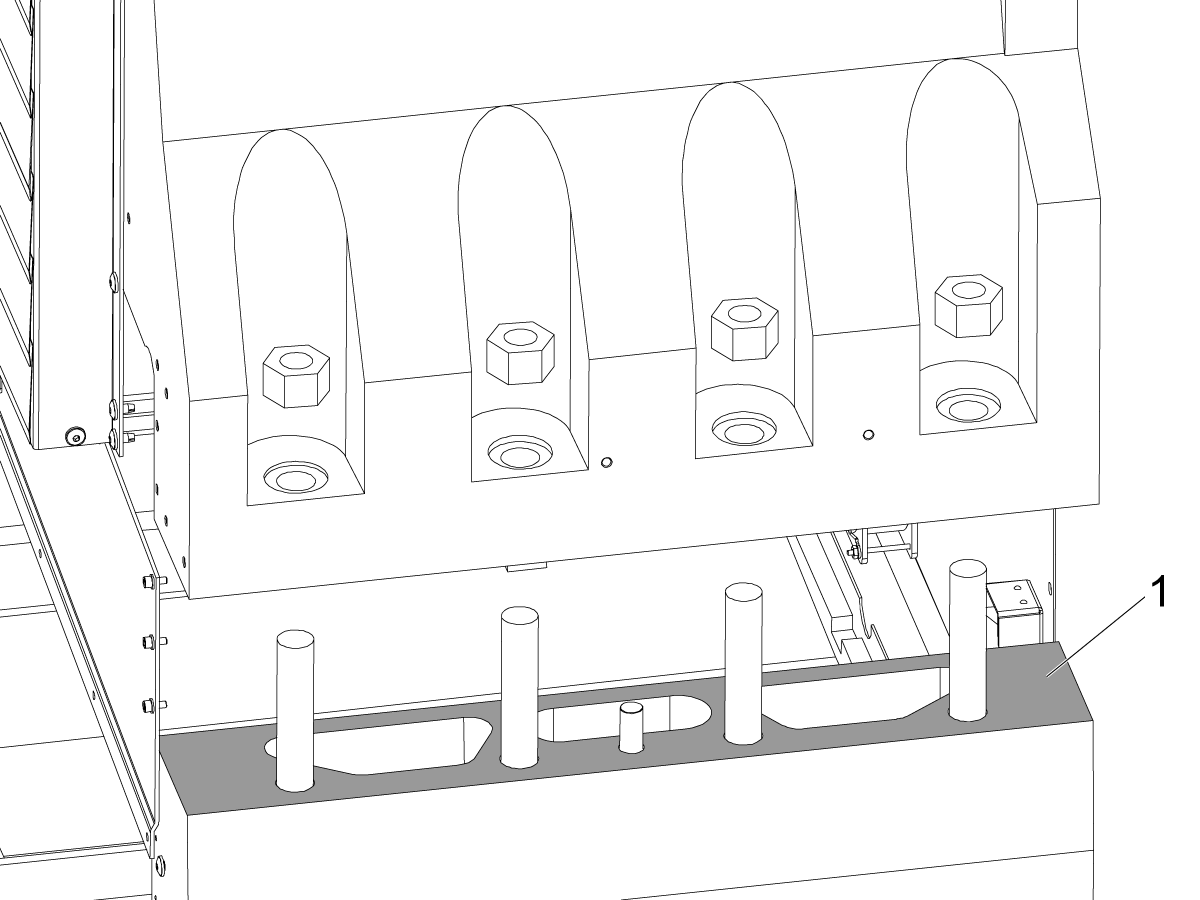
To adjust perpendicularity in either plane place shims on the highlighted portion of the riser block [1].

The shim amount should not exceed 0.008" thickness.

Before Starting Head Alignment

NOTE: Depending on how the machine was crashed the adjustment may need to start with the B-axis sweep adjustment. Make sure to consult with Haas Service for further information.

C-axis Parallel to Z-axis

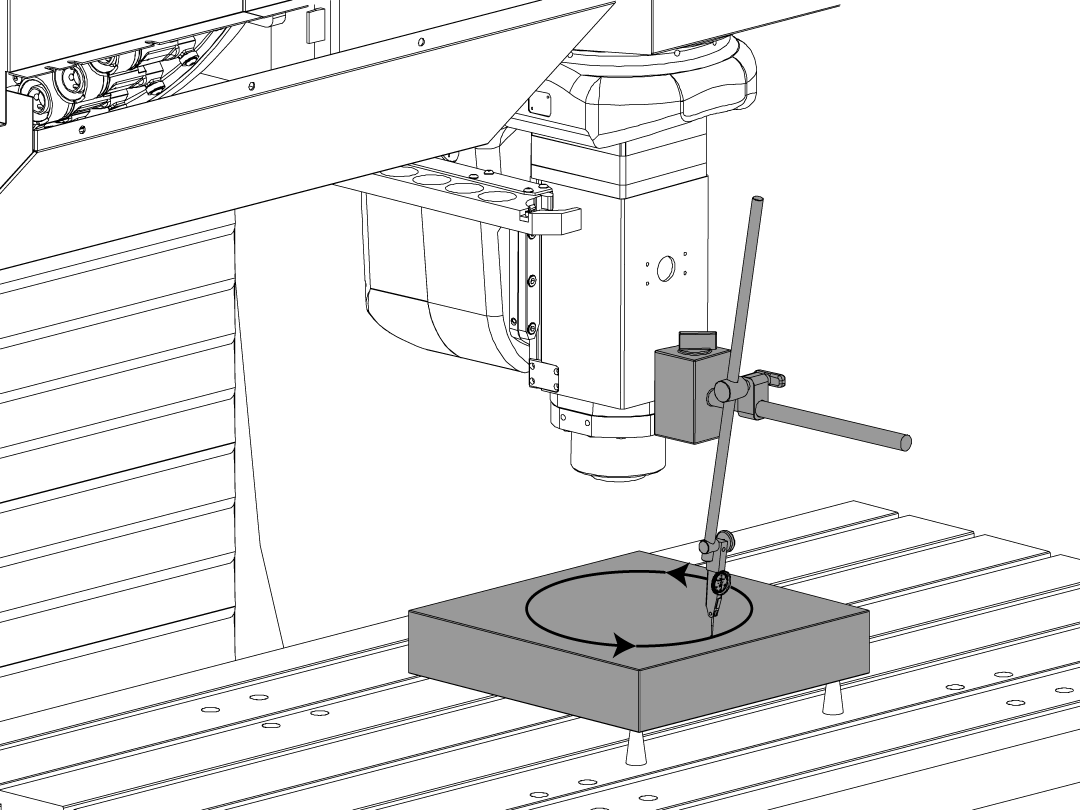
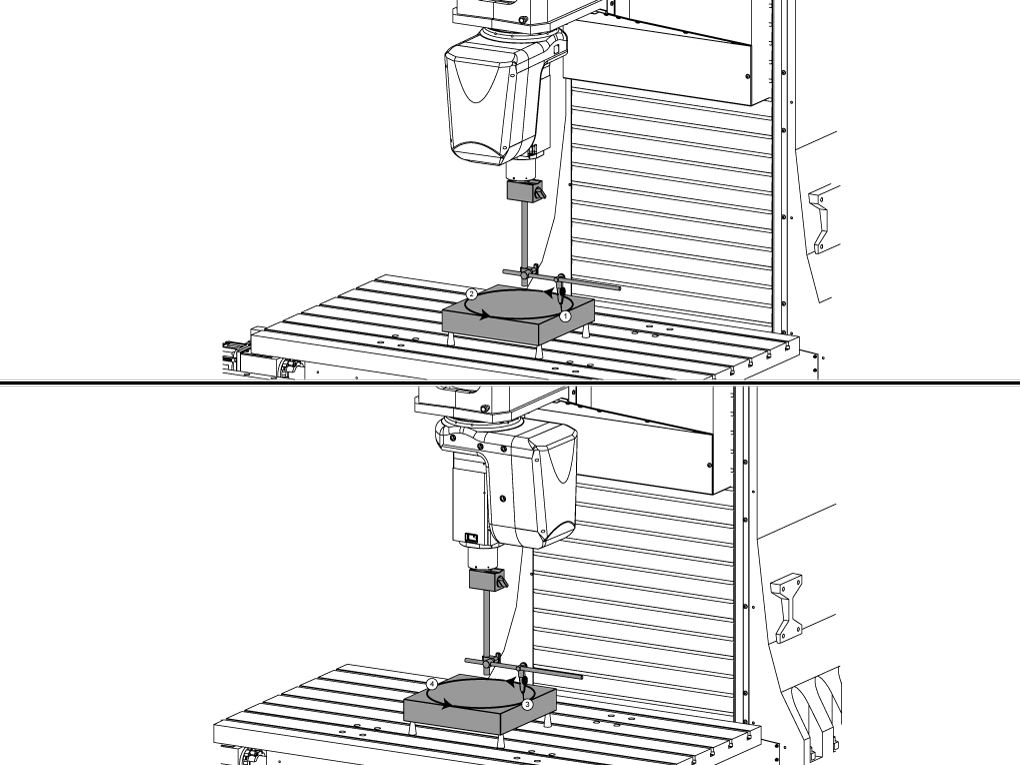
Place an indicator on the B-axis body and place the indicator on the face of the granite, set up the indicator so that it can sweep the granite with a 5" radius.

Zero the indicator and rotate the C-axis a full 360 degrees and record the measurement. This measurement is NTE 0.0008/10" diameter.

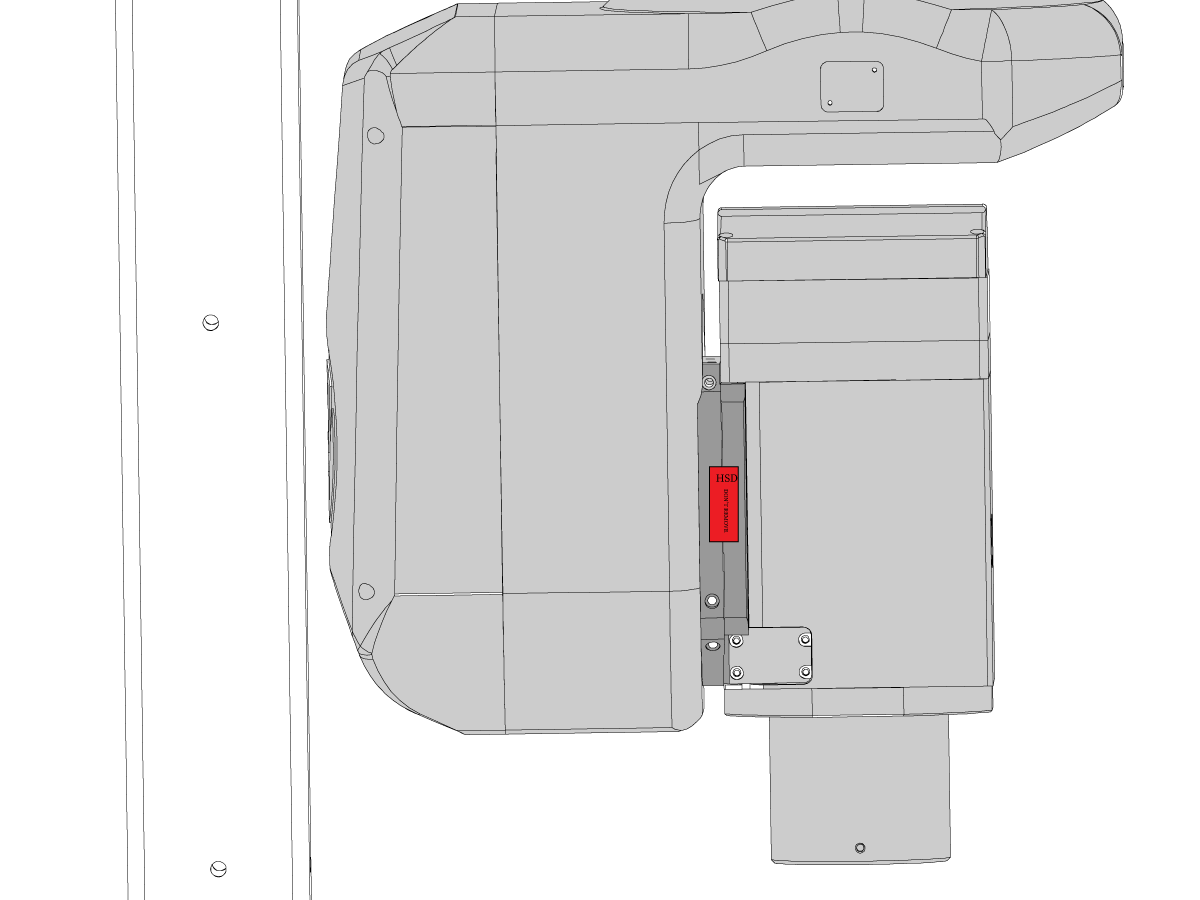
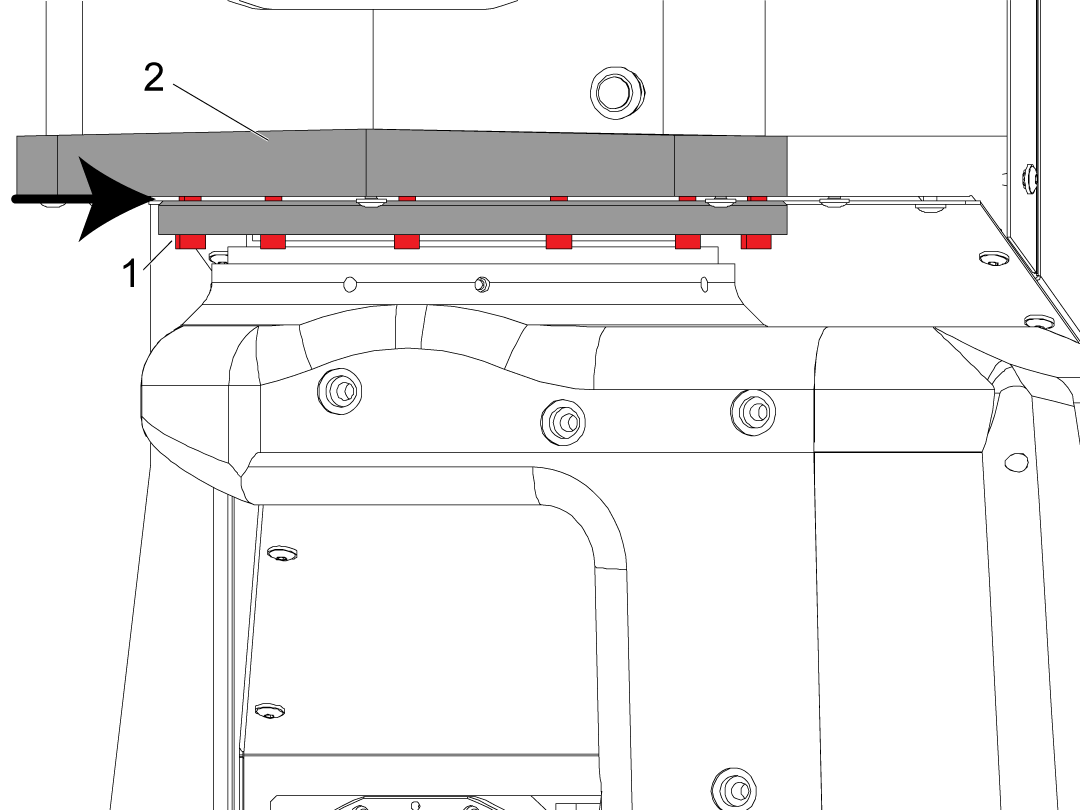
To adjust the C-Axis level loosen the bolts [1] that holds the black plate to the spindle head casting [2].

Loosen the bolts until the head drops enough to insert a shim in between. Do not exceed 0.003" shim thickness. Shim part numbers are:

  • 59-0684 - .001"
  • 59-0685 - .0015"
  • 59-0686 - .002"
  • 59-0688 - .003"

 Note: The shim amount usually follows a 1:1 ratio to correct the error.

 Note: The head does not need to be supported to do this. Only loosen the bolts enough to insert the shim.

WARNING: This step may be used as reference for the inspection report but do not make any adjustments before consulting with Haas Service. Adjustments made without consulting Haas Service will void warranty.

C-axis Runout

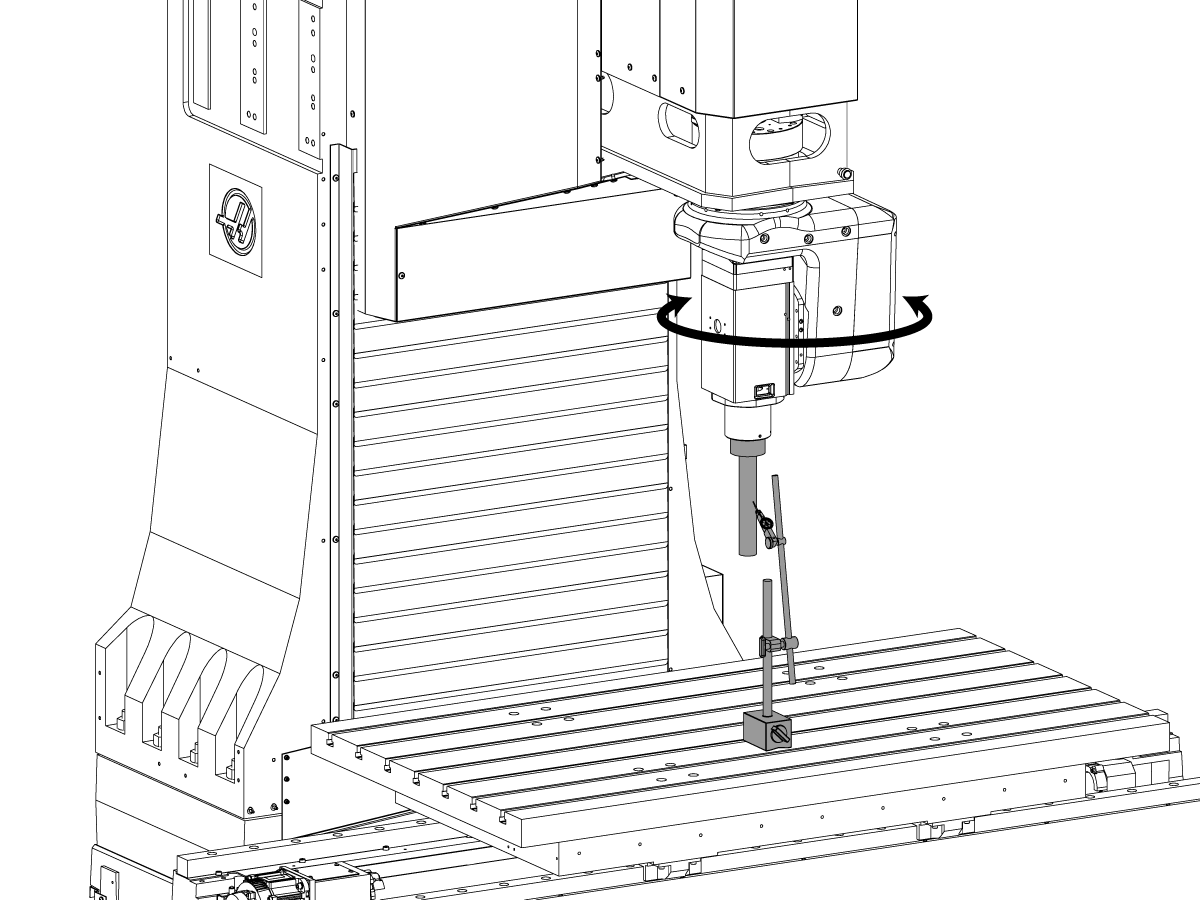
Home the B-axis and place an indicator on the test arbor. Find the high spot on the test bar by jogging the indicator along the X-axis.

Zero the indicator on the high spot and rotate the C- axis 360 degree's. Record the error, this measurement is NTE 0.0015" TIR.

Make a note of where the runout was the highest as this will be needed to make the adjustment


Remove the plugs that cover the bolts that hold the head to the casting. Loosen the bolts, but do not remove. 

NOTE: If these bolts are not loosened it will be difficult to adjust the concentricity 

Concentricity Adjustment:

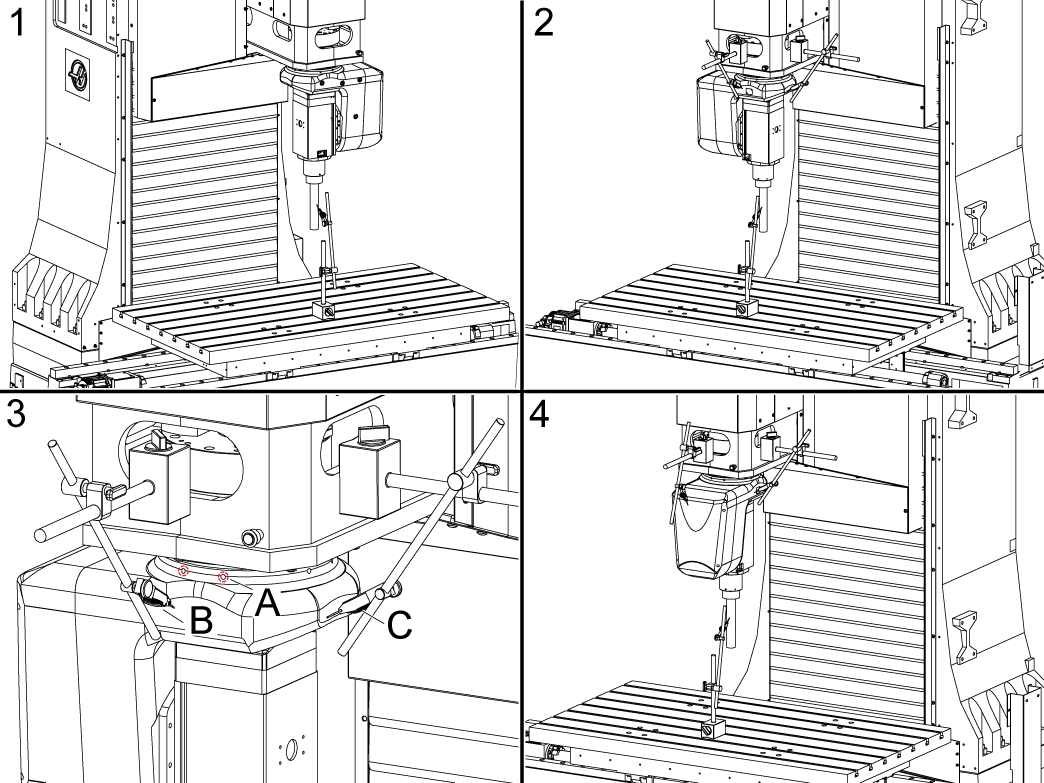
For explanation purposes the largest point of error will be at C=90 degrees [1]. Rotate the C-axis body to 270 degrees [2].  Place 2 additional indicators [B] and [C] onto the B-axis casting as shown. 

Make sure the set screws are snug and not tight before proceeding with the concentricity adjustment.

In this example set screws denoted as [A] will be used to make the necessary adjustment. This is when the head has been roted 180 degrees from its original position [1]. If the set screws are tightened it will bring the spindle head towards the user.  Make these adjustments in small increments, this can be done by tightening set screws [A] by a half turn  and loosening the set screws on the opposite side by a half turn.

 WARNING:  It is important to monitor the adjacent set screws while adjusting. They should always be snug, but not tight. If they become tight loosen them up and continue adjusting. 

The indicators [B] and [C] are used to check movement along the X & Y axis. For example as you are tightening set screws [A] the spindle head may move in the direction of indicator [C]. Re-adjust the movement seen on that indicator back to zero and continue adjusting set screws [A]. 

WARNING: This step may be used as reference for the inspection report but do not make any adjustments before consulting with Haas Service. Adjustments made without consulting Haas Service will void warranty.

WARNING: Haas is requiring to change the spring washers paired with the B-axis mounting bolts with the appropriate hard spacers.  

 NOTE: When replacing the serrated/small steel washers order the service kit 93-3769 HSD C-AXIS MOUNTING HARDWARE SVC KIT for the proper hardened washers and longer bolts

When replacing the serrated/small washers with the hardened washers it is recommended to clean the counterbore seat, please refer to the H-5AX C-Axis Counterbore Touch Up - Instructions.

NOTE: Be sure to check the runout after torquing the bolts as the concentricity can change after torquing.

B-axis Inclination

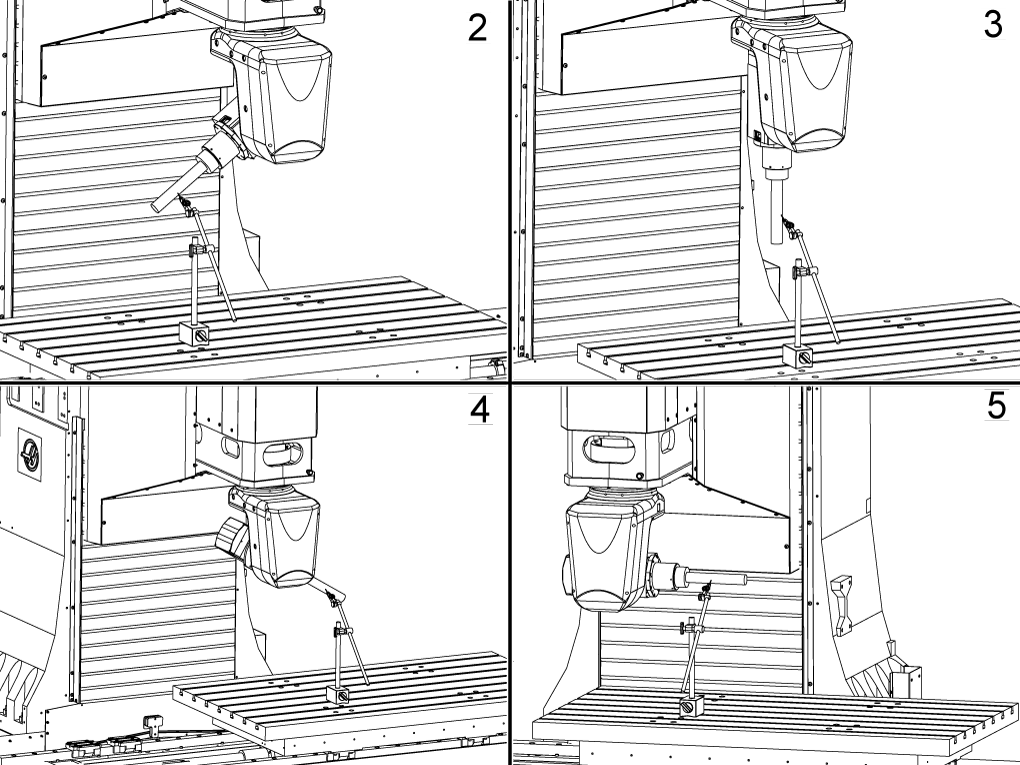
Home the B and C axis, place the indicator on the bottom of the test bar in the position shown in the top image.

Zero the indicator and rotate the test bar to position the indicator 180 degrees from its first location. Record this value, this measurement is NTE 0.0005" while the C-axis is in the home position.

Rotate the C-axis 90 degrees and the indicator in position shown in the bottom image. Zero the indicator and rotate the test bar to position the indicator 180 degrees from its first location. Record this value, this measurement is NTE 0.002" while the C-axis is in the 90 degree position.

NOTE: If the recorded measurement is out while C is in the home position (top image) adjust the B-axis tool change offset to bring it into specification. This may bring the measurements taken at C=0 and C=90 back within specification. 

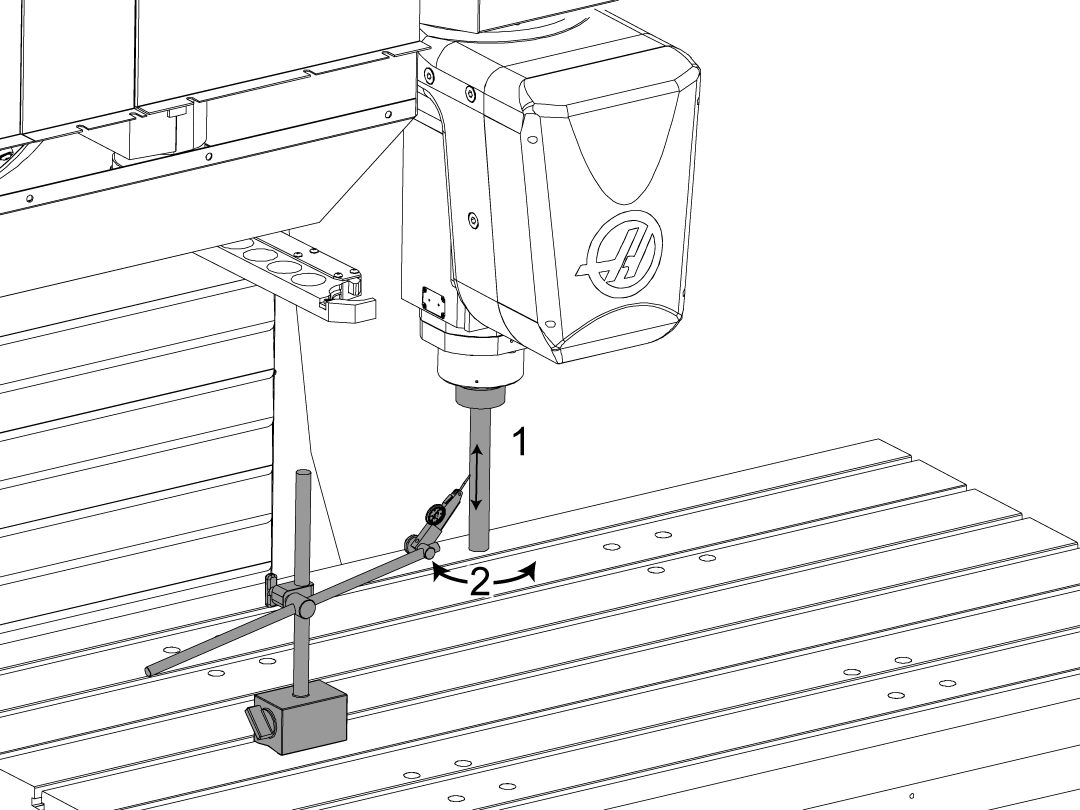
To adjust the B-axis tool change offset home the B & C axis and place the indicator on the side face of the test arbor.

Find the high spot on the arbor by jogging the Y axis. Once the indicator is on the high spot jog the indicator up and down the test bar and adjust the B-axis so that the error on the indicator is no more than 0.0001".

1

Use the following instructions to change the Tool Change Offset if a service key is not available. 

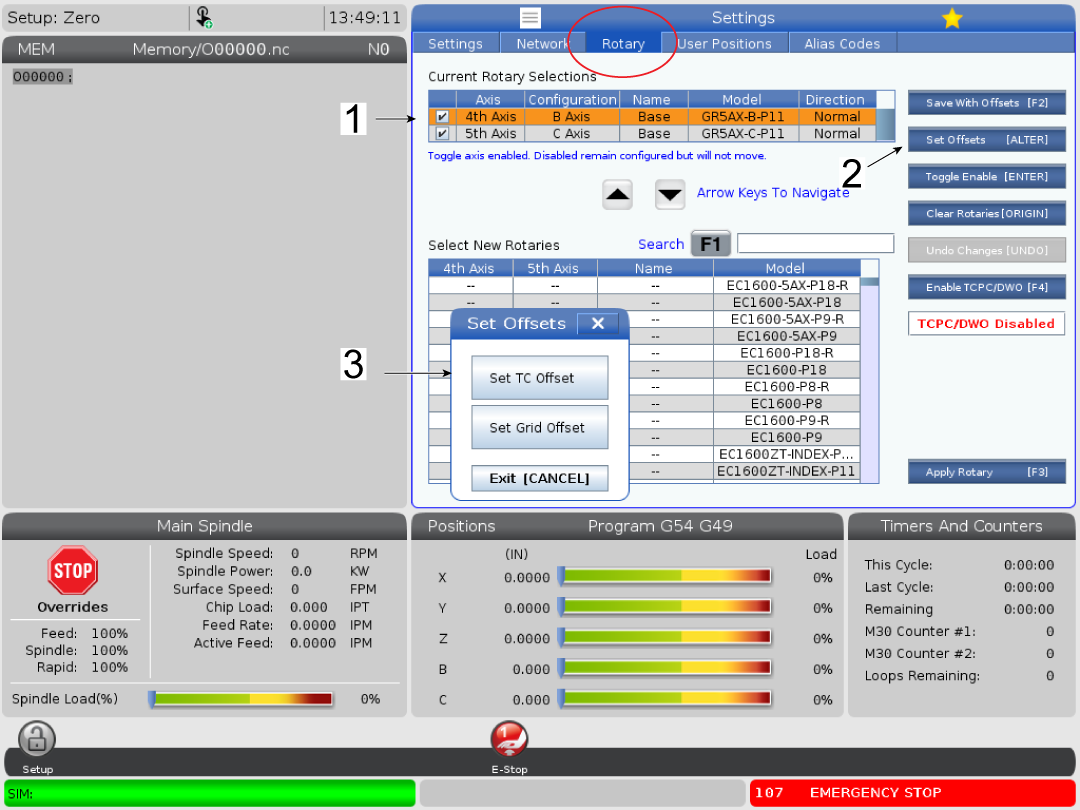
Press [SETTING] and navigate to the rotary tab. Highlight the 4th axis selection[1] and press [ALTER] to set the TC offset [3].

After adjusting the offset go back and redo the inclination test, if the inclination is out of tolerance after adjusting the offset then proceed to the adjustment portion. 

2

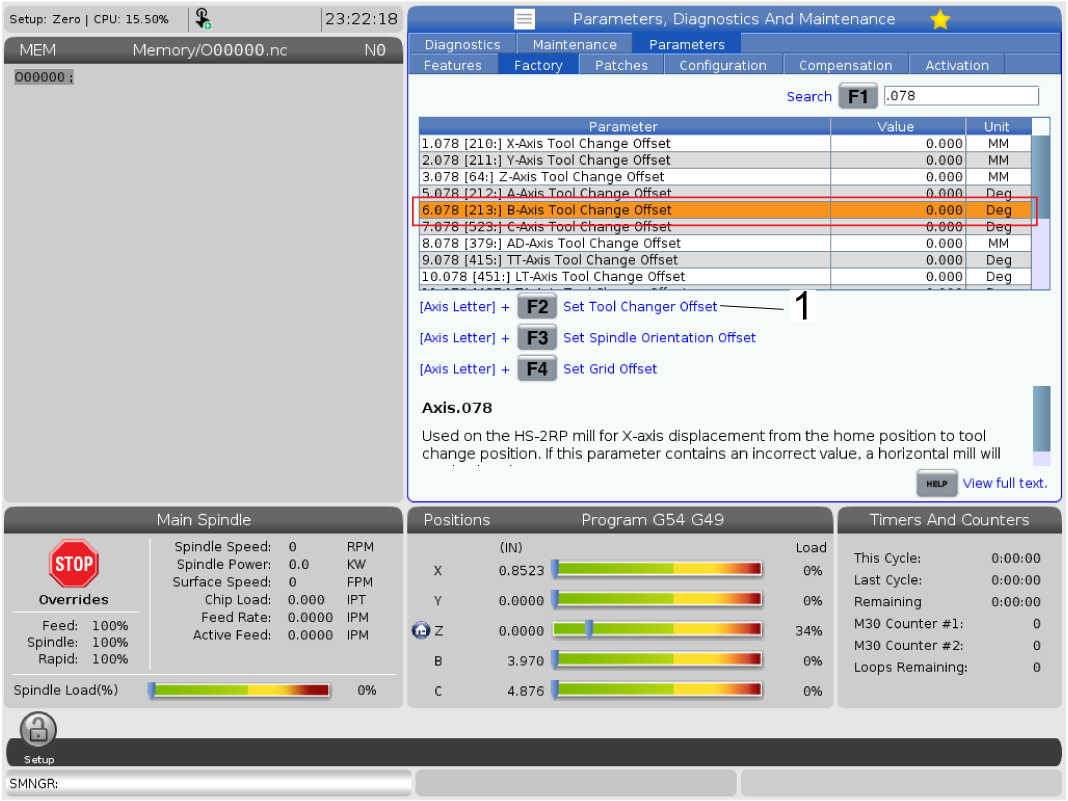
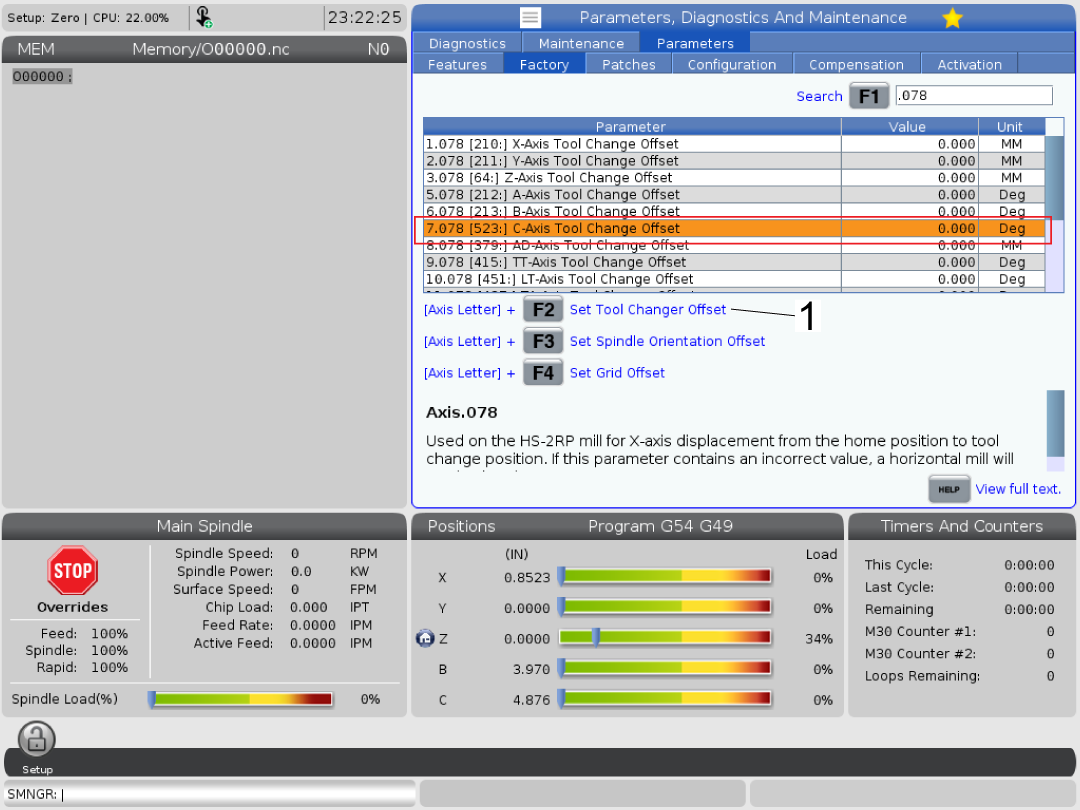
If a service key is available press [DIAGNOSTIC] and navigate to the parameters tab and to the factory tab. Find Parameter 6.078 B-AXIS TOOL CHANGE OFFSET to set the tool change offset by pressing the axis letter + [F2] to set the offset to the current position.

After adjusting the offset go back and redo the inclination test, if the inclination is out of tolerance after adjusting the offset then proceed to the adjustment portion. 

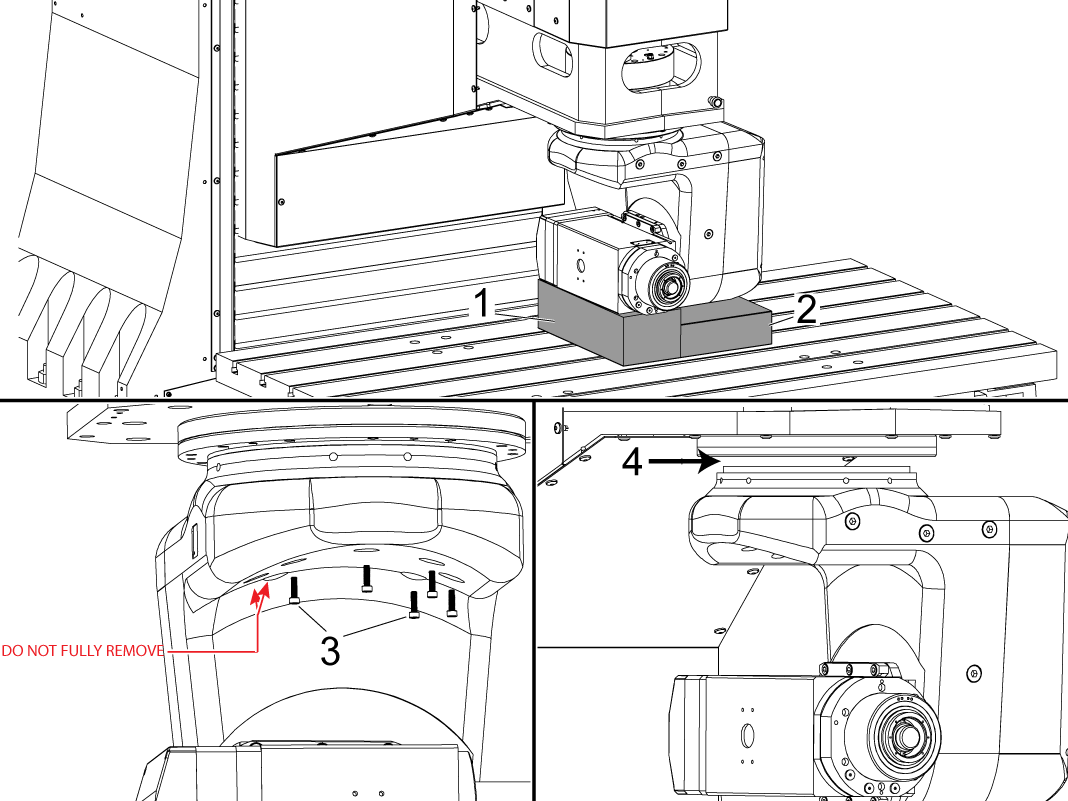
Before shimming it is important to loosen all the set screws that are used to adjust concentricity.

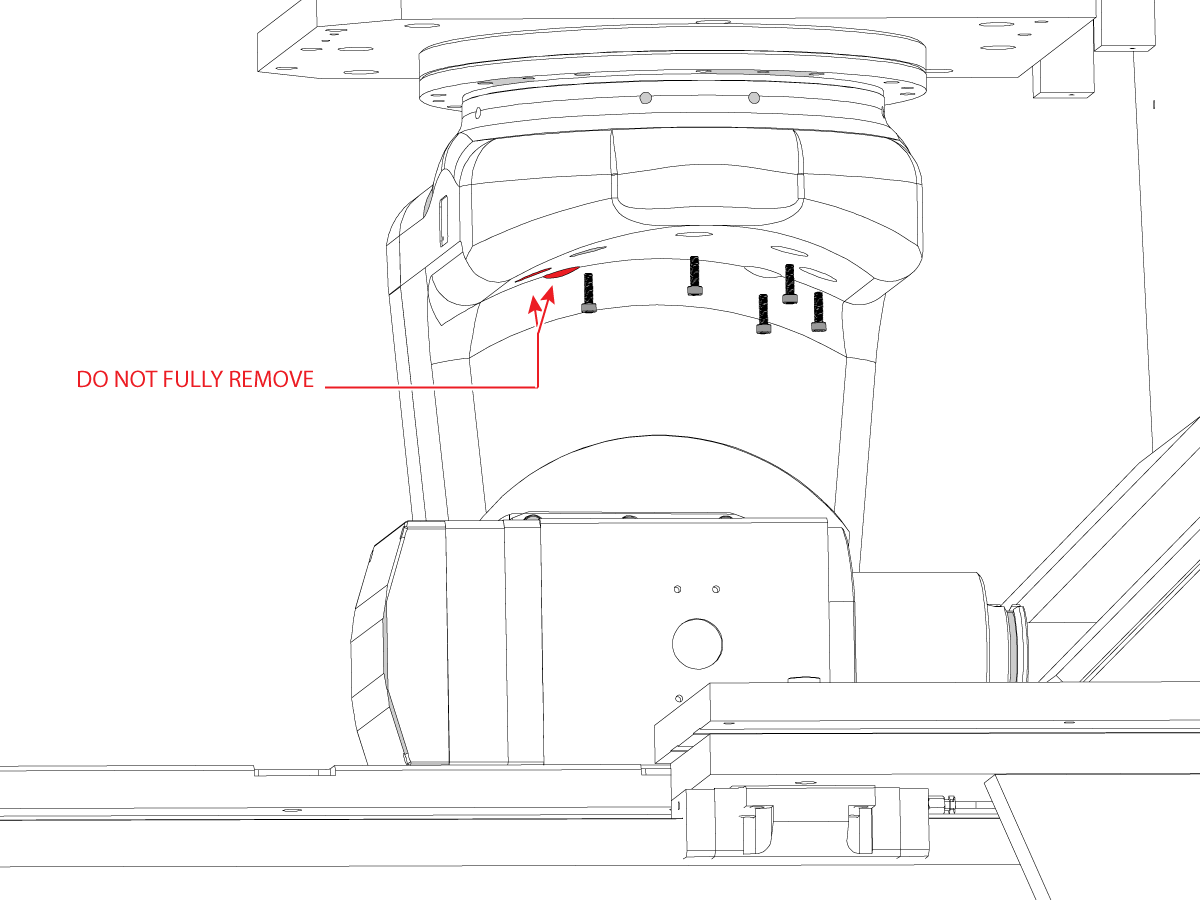
Drop the head and support the spindle [1] and the B-axis casting [2].

Remove the plugs and remove the bolts that hold the head to the casting [3].

NOTE: Do not fully remove the two bolts shown in the bottom left, the cabling is tightly wound around those bolts and the bolts can get lost in the head and casting. 

Jog the Z-axis to separate the head enough to shim the head [4].

3

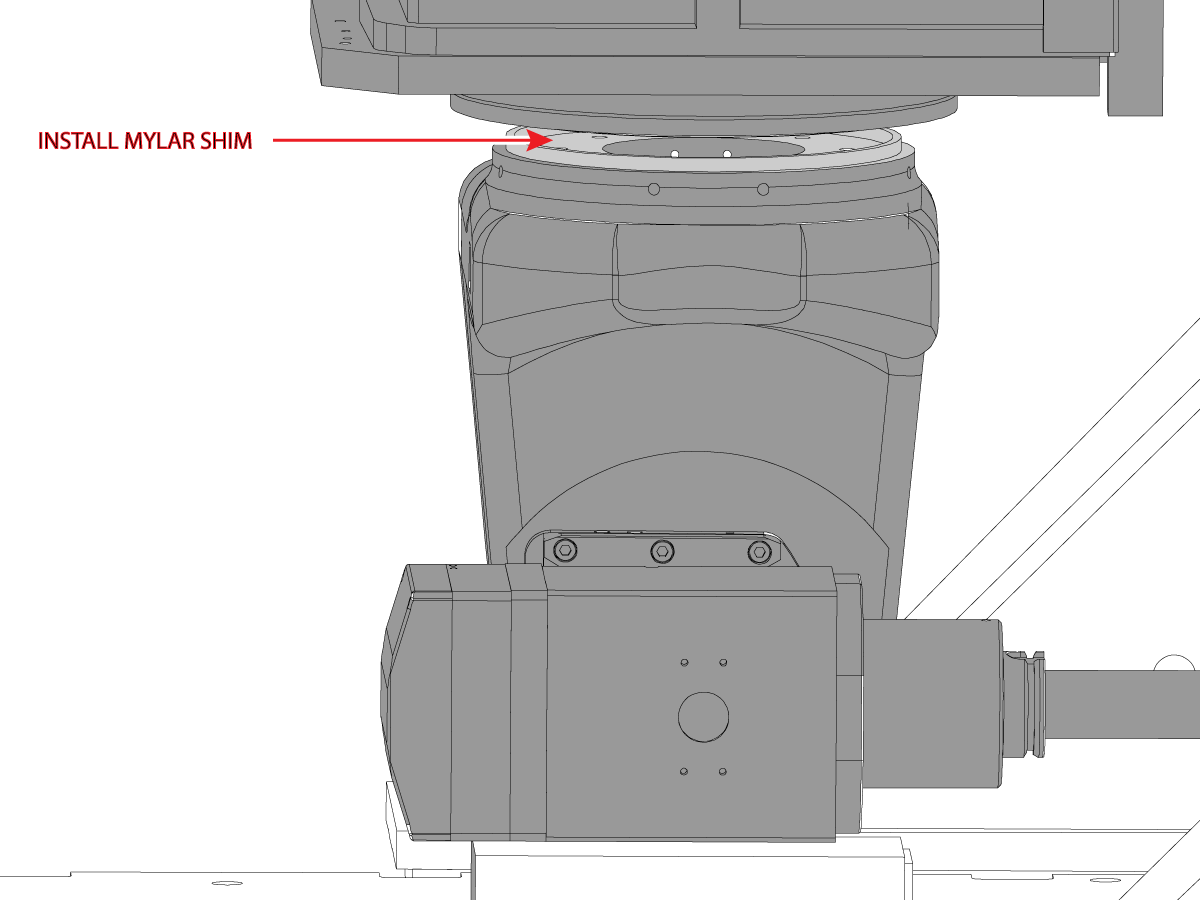
Place a mylar shim in the area shown in the image. Make a note of where the shims were placed. 

Re-bolt the head together, torque the bolts to 35 ft-lbs.

Snug the concentricity bolts back into place and redo the head alignment portion of this procedure up to this point to make sure everything is within tolerance after this adjustment. 

WARNING: This step may be used as reference for the inspection report but do not make any adjustments before consulting with Haas Service. Adjustments made without consulting Haas Service will void warranty.

After placing the mylar shims and redoing the previous alignment procedures up to this point verify the C-axis tool change offset is correct.

Home the B and C axis and swing B to 90 degrees. Place an indicator on the front face of the arbor and find the high spot by jogging in the Z-axis direction. Once found jog along the X-axis direction making sure this reading does not exceed 0.0001". If it does adjust the C-axis until it is within tolerance. 

4

Use the following instructions to change the Tool Change Offset if a service key is not available. 

Press [SETTING] and navigate to the rotary tab. Highlight the 5th axis selection[1] and press [ALTER] to set the TC offset [3].

5

If a service key is available press [DIAGNOSTIC] and navigate to the parameters tab and to the factory tab. Find Parameter 7.078 C-AXIS TOOL CHANGE OFFSET to set the tool change offset by pressing the axis letter + [F2] to set the offset to the current position.

Spindle Centerline and B-axis Intersection

Home the B & C axis and rotate B to 90 degrees.

Place an indicator on the bottom face of the test bar 4" away from the spindle nose.

In this position zero the indicator and move the X-axis 4.75" out from the zero position and make sure the test bar reads 0 to 0 across it [1]. This is NTE 0.0005". While in this position, go to the position page and zero the Z & Y-axis on the operators page. 

Rotate the B-axis to the -90 degree position (in reference to the machine position). 

Jog the X-axis so the indicator is on the bottom of the test bar make sure to bring back the Z and Y axis to its zero position on the operators page

. Jog the X-axis across and make sure the test bar reads the same value across it [2].  Subtract the difference between this value [2] and the previous value [1] and divide that by two. This measurement is NTE 0.002". 

B-axis Sweep

With the C-axis in the home position and rotate the B-axis to -90 degree. 

Place the indicator on the front face of the test bar about 4" away from the spindle nose and mark the position of the indicator on the test bar with a felt tip marker, and set the indicator to zero. 

Rotate the B-axis to -45 degree position [2] and without moving the table in the Y-axis jog the indicator back onto the felt tip mark. Record this value. 

Continue this process for all other positions [3], [4], & [5] and record their measurements from the indicator.

NOTE: All positions are in 45 degree increments.

After taking the last reading at C = 0 and B = +90 rotate the C-Axis to C = +180 so that the test bar is back to its starting position.

Take the measurement at the operator X-Axis zero position, rotate the test bar so that the marked position is showing. 

Sweep the test bar in the X-direction to make sure it is still straight. If it is not, adjust the C-Axis until the error on the test bar reads the same end to end. Record this value. DO NOT SET THE INDICATOR BACK TO ZERO. 

Redo the sweep steps mentioned above and record the values. The difference between the measurements in run 1 and run 2 at each B-Axis position divided by 2, is NTE 0.004" (Run 1 is at C = 0, Run 2 is at C = 180; use inspection report EA0426 to help calculate).

 Note: If the indicator does not touch the test bar after it is rotated to C = 180 and does not touch sweeping in X, this might be due to the C-Axis Runout error, front to back direction. The C-Axis Runout section will need to be repeated and any errors corrected. 

B-AXIS SWEEP

Breaking the DON'T REMOVE seal on the spindle without contacting Haas Service will VOID the warranty. Contact Haas Service before proceeding with process

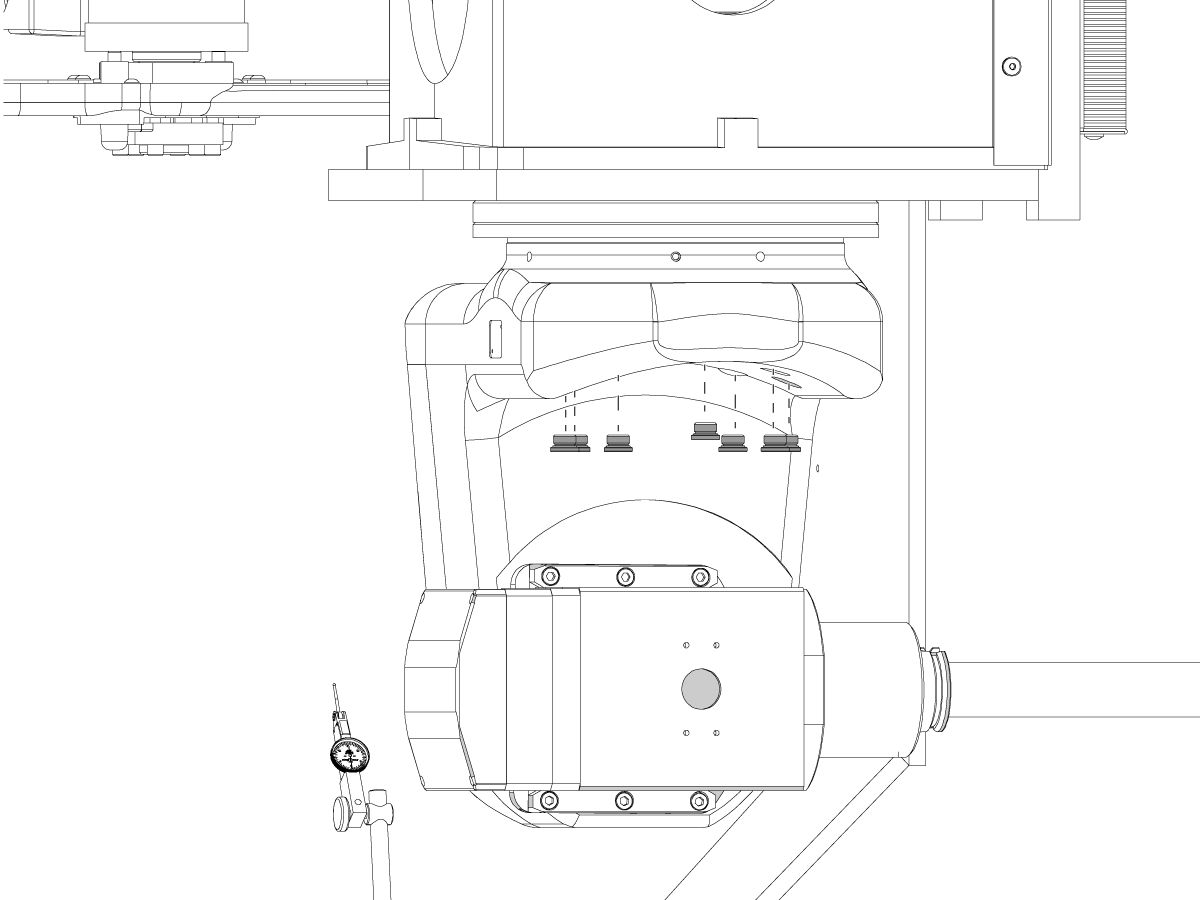
Verify if the dowel pins between the Spindle and spindle mount plate are damaged.

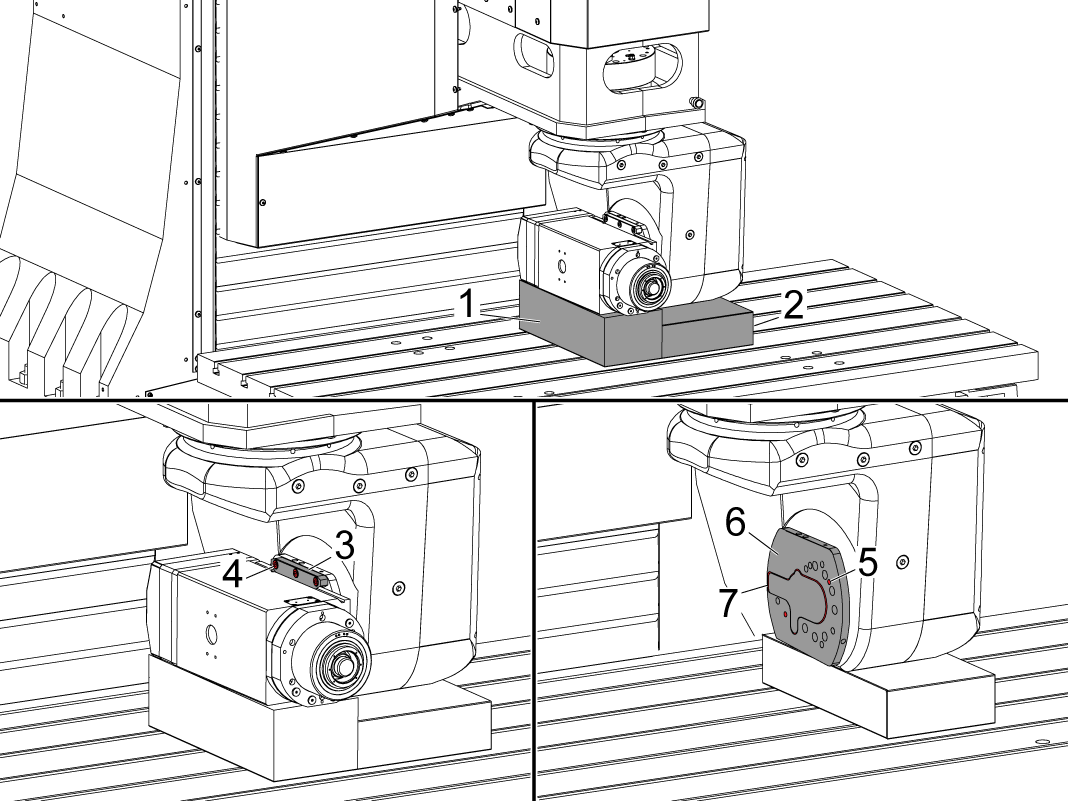
If the B-axis position error and B-axis sweep come out of tolerance, check to see if the pins [5] have broken or the B-axis plate [6] has been deformed. 

To check these components rotate the B-axis to 90 degrees and lower the Z-axis close to the table. Place a support for the spindle cartridge [1] and B-axis casting [2] and lower the spindle head SLOWLY. Once supported break the mounting bolts [3] to remove the clamps [4] holding the spindle housing in place. Inspect the pins and plate.  

If the pins and plate are not damaged and B-axis position and B-axis sweep are out of tolerance contact Haas Service for assistance.

Note: For illustration purposes the spindle is removed in the third image, the spindle cannot be removed because the spindle cables run through the center of the spindle housing. 

Note: When reinstalling spindle, cables may cause the spindle to not sit flat against the mount plate. If this happens, separate the spindle from the casting and adjust the cables until the spindle sits flat. If the spindle still will not sit flat contact Haas Service.

Recently Viewed Items

You Have No Recently Viewed Items Yet

Feedback
Haas Logo

Haas Delivered Price

This price includes shipping cost, export and import duties, insurance, and any other expenses incurred during shipping to a location in France agreed with you as a buyer. No other mandatory costs can be added to the delivery of a Haas CNC Product.

KEEP UP WITH THE LATEST HAAS TIPS AND TECHNOLOGY...

Sign up now!   

HAAS TOOLING ACCEPTS THE FOLLOWING:

  • Service & Support
  • Owners
  • Request Service
  • Operator Manuals
  • Haas Parts
  • Rotary Repair Request
  • Pre-Install Guides
  • Shopping Tools
  • Build & Price a New Haas
  • Available Inventory
  • The Haas Price List
  • CNCA Financing
  • About Haas
  • Accessibility Statement
  • DNSH Statement
  • Export Compliance
  • Careers
  • Certifications & Safety
  • Contact Us
  • History
  • Terms & Conditions
  • Haas Tooling Terms & Conditions
  • Privacy
  • Warranty
  • Haas Community
  • Haas Certification Program
  • Haas Motorsports
  • Gene Haas Foundation
  • Haas Technical Education Community
  • Events
  • Join the Conversation
  • Facebook
  • X
  • Flickr
  • YouTube
  • LinkedIn
  • Instagram
  • TikTok
© 2026 Haas Automation, Inc – CNC Machine Tools
This site is protected by reCAPTCHA and the Google Privacy Policy and Terms of Service apply.

2800 Sturgis Rd., Oxnard, CA 93030
Toll Free: (888) 817-4446 / Fax: 805-278-8554