My Haas Welcome,
!
Haas Tooling MyHaas/HaasConnect Sign In Register Haas Tooling MyHaas/HaasConnect Sign Out Welcome, My Machines Latest Activity My Quotes My Account My Users Sign Out
Find Your Distributor
  1. Select Language
    1. English
    2. Deutsch
    3. Español - ES
    4. Français
    5. Italiano
    6. Nederlands
    7. Polski
  • machines Main Menu
    • Vertical Mills
      Vertical Mills
      Vertical Mills View All
      • Vertical Mills
      • VF Series
      • Universal Machines
      • VR Series
      • VP-5 Prismatic
      • Pallet-Changing VMCs
      • Mini Mills
      • Mold Machines
      • High-Speed Drill Centers
      • Drill/Tap/ Mill Series
      • Toolroom Mills
      • Pocket Mill
      • Compact Mills
      • Gantry Series
      • SR Sheet Routers
      • Extra-Large VMC
      • Double-Column Mills
      • 3+2 Positioning Machines
    • Multi-Axis Solutions
      Multi-Axis Solutions
      Multi-Axis Solutions View All
      • Multi-Axis Solutions
      • Y-Axis Lathes
      • 5-Axis Mills
    • Lathes
      Lathes
      Lathes View All
      • Lathes
      • ST Series
      • Dual-Spindle
      • Box Way Series
      • Toolroom Lathes
      • Chucker Lathe
      • Pocket Lathe
      • Haas Bar Feeders
    • Horizontal Mills
      Horizontal Mills
      Horizontal Mills View All
      • Horizontal Mills
      • 50-Taper
      • 40-Taper
    • Rotaries & Indexers
      Rotaries & Indexers
      Rotaries & Indexers View All
      • Rotaries & Indexers
      • Rotary Tables
      • Indexers
      • 5-Axis Rotaries
      • Extra-Large Rotaries
    • Special Series
      Special Series
      Special Series View All
      • Special Series
      • EU_Series_Redirect
    • Automation Systems
      Automation Systems
      Automation Systems View All
      • Automation Systems
      • Mill Automation
      • Lathe Automation
      • Automatic Parts Loaders
      • Automation Models
    • Desktop Machines
      Desktop Machines
      Desktop Machines View All
      • Desktop Machines
      • Desktop Mill
      • Desktop Lathe
      • Control Simulator, Standard
      • Control Simulator, Premium
    • Shop Equipment
      Shop Equipment
      Shop Equipment View All
      • Shop Equipment
      • Knee Mill
      • Haas Manual Lathes
      • Haas Saws
    • Fabrication Machines
      Fabrication Machines
      Fabrication Machines View All
      • Fabrication Machines
      • Laser Cutting Machines
      • CNC Press Brakes
    • QUICK LINKS Special Series  Special Series 
      EU SERIES EU SERIES BUILD & PRICE | PRICE LIST BUILD & PRICE | PRICE LIST In-Stock Machines In-Stock Machines WHAT’S NEW WHAT’S NEW YOUR FIRST CNC YOUR FIRST CNC
      SHOPPING TOOLS
      • Build & Price a Haas
      • Price List
      • Available Inventory
      • CNCA Financing
      WANT TO TALK TO SOMEONE?

      A Haas Factory Outlet (HFO) can answer your questions, and walk you through your best options.

      CONTACT YOUR DISTRIBUTOR >
  • Options Main Menu
    • The Haas Control Value Option Packages
      Value Option Packages
      Value Option Packages View All
      • Value Option Packages
    • Product Image Spindles
      Spindles
      Spindles View All
      • Spindles
    • Product Image Tool Changers
      Tool Changers
      Tool Changers View All
      • Tool Changers
    • Product Image 4th- | 5th-Axis
      4th- | 5th-Axis
      4th- | 5th-Axis View All
      • 4th- | 5th-Axis
    • Product Image Turrets & Live Tooling
      Turrets & Live Tooling
      Turrets & Live Tooling View All
      • Turrets & Live Tooling
    • Product Image Probing
      Probing
      Probing View All
      • Probing
    • Haas Chip & Coolant Management Chip & Coolant Management
      Chip & Coolant Management
      Chip & Coolant Management View All
      • Chip & Coolant Management
    • The Haas Control The Haas Control
      The Haas Control
      The Haas Control View All
      • The Haas Control
    • Product Image Product Options
      Product Options
      Product Options View All
      • Product Options
    • Product Image Tooling & Fixturing
      Tooling & Fixturing
      Tooling & Fixturing View All
      • Tooling & Fixturing
    • Product Image Workholding
      Workholding
      Workholding View All
      • Workholding
    • Product Image 5-Axis Solutions
      5-Axis Solutions
      5-Axis Solutions View All
      • 5-Axis Solutions
      • 5 Easy Steps to 5-Axis
    • QUICK LINKS Special Series  Special Series 
      EU SERIES EU SERIES BUILD & PRICE | PRICE LIST BUILD & PRICE | PRICE LIST In-Stock Machines In-Stock Machines WHAT’S NEW WHAT’S NEW YOUR FIRST CNC YOUR FIRST CNC
      SHOPPING TOOLS
      • Build & Price a Haas
      • Price List
      • Available Inventory
      • CNCA Financing
      WANT TO TALK TO SOMEONE?

      A Haas Factory Outlet (HFO) can answer your questions, and walk you through your best options.

      CONTACT YOUR DISTRIBUTOR >
  • Why Haas Main Menu
      Discover the Haas Difference
    • Why Haas
    • MyHaas
    • Education Community
    • Industry 4.0
    • Haas Certification
    • Customer Testimonials
  • Service Main Menu
      Welcome to Haas Service
      SERVICE HOME Operator’s Manuals How-To Procedures Troubleshooting Guides Preventive Maintenance Haas Parts Haas Tooling Videos
  • Videos Main Menu
  • Main Menu
    • View All
    • View All
    • View All
    • View All
      • HTEC Curriculum Support
      • Haas Value Option Packages (VOP) Journey
    • View All
      • Haas 10 kg Cobot Package
      • Cobot Kits
      • DC-1 Drill Center
      • CNC Sales News
      • Do More With Your Haas
    • View All
    • View All
      • contact-us-test
      • 4 - AUTOMATION SYSTEMS
      • Carousel-V2
      • expert test
      • Demo_Day_Trident-test
      • Link Test
      • image-sale-tag-test
      • article-list-test
      • Haas 25 kg Robot Package
      • test-algolia-page
    • View All
    • View All
    • View All
    • View All
      • calc-test
    • View All
    • QUICK LINKS Special Series  Special Series 
      EU SERIES EU SERIES BUILD & PRICE | PRICE LIST BUILD & PRICE | PRICE LIST In-Stock Machines In-Stock Machines WHAT’S NEW WHAT’S NEW YOUR FIRST CNC YOUR FIRST CNC
      SHOPPING TOOLS
      • Build & Price a Haas
      • Price List
      • Available Inventory
      • CNCA Financing
      WANT TO TALK TO SOMEONE?

      A Haas Factory Outlet (HFO) can answer your questions, and walk you through your best options.

      CONTACT YOUR DISTRIBUTOR >
  • Haas Tooling Main Menu
  • Haas Service Parts Main Menu

My Haas Welcome,
!
Haas Tooling MyHaas/HaasConnect Sign In Register Haas Tooling MyHaas/HaasConnect Sign Out Welcome, My Machines Latest Activity My Quotes My Account My Users Sign Out
Find Your Distributor
  1. Select Language
    1. English
    2. Deutsch
    3. Español - ES
    4. Français
    5. Italiano
    6. Nederlands
    7. Polski
×

Search Results

Web Pages

Images

    • <
    • 1
    • >

6 - Mill Pneumatic Vises

Haas Tooling and Workholding - Service Manual


  • 1 - Haas Tooling - Introduction
  • 2 - Tool Carts
  • 3 - Haas Shop Lift
  • 4 - Haas E-Vise
  • 5 - Mill Manual Vises
  • 6 - Mill Pneumatic Vises
  • 7- UMC Hydraulic Vises
  • 8 - UMC Pneumatic Vises

Go To :

  • 6.1 Programmable Air - Installation
  • 6.2 Dual Programmable Air - Installation
  • 6.3 Pneumatic Vise - Installation
  • 6.4 Pneumatic Vise - Troubleshooting
  • 6.5 Pneumatic Vise - Seal Kit
  • 6.6 Pneumatic Chuck HRT 210 - Installation
Recently Updated

Programmable Air - Installation


AD0473

Revision B - 11/2025

Programmable Air Installation Video

The following service video shows how to install the programmable air vise. 

Note: This service video is for reference only and does not replace the written procedure. 

Introduction

This procedure will show you how to install the Programmable Air Option [1] on the following machines and their variants:

  • VF-1/2/3/4/5/6/7/8/9
  • VM-2/3
  • DM-1/2
  • DT-1/2
  • MM
  • CM-1/2

Machine Requirements

  • Software Requirements: 100.20.000.1200 or later.
  • Machines built after January 2018
  • Minimum Main IO firmware: version 4.0 or higher. 
  • 93-1000929  - PROGRAMMABLE AIR FIELD INSTALL KIT

 Important: The Programmable Air option is NOT COMPATIBLE with machines with the TAB option built before June 2019.

 IMPORTANT: Depending on the machine's built by date, separate brackets may need to be ordered to make the machine compatible. The brackets that are sold separately are 25-12138, 25-14177 & 25-12749. Refer to the below table to determine what brackets are needed for each machine:

Machine Date Part Number
VF-1/2 Built before 7/22/2022 25-12138 & 25-14177
Built after 7/22/2022 25-15873 & 25-15875
VF-1/2YT Built before 7/21/2022 25-12138 & 25-14177
Built after 7/21/2022 25-15873 & 25-15875
VF-3/4 Built before 7/30/2022 25-12749 & 25-14177 
Built after 7/30/2022 25-15873 & 25-15875
VF-3YT/40 Built before 8/16/2022 25-12749 & 25-14177 
Built after 8/16/2022 25-15873 & 25-15875
VF-3YT/50 Built before 12/1/2022 25-12749 & 25-14177 
Built after 12/1/2022 25-15873 & 25-15875
VF-5/40/XT Built before 9/20/22 25-12749 & 25-14177 
Built after 9/20/22 25-15873 & 25-15875
VF-5/50/XT Built before 10/16/22 25-12749 & 25-14177 
Built after 10/16/22 25-15873 & 25-15875
VF-6/40/50 Built before 5/1/2022 25-12138 & 25-14177
Built after 5/1/2022 25-15873 & 25-15875
VF-7/40/50 Built before 5/1/2022 25-12138 & 25-14177
Built after 5/1/2022 25-15873 & 25-15875
VF-8/40/50 Built before 2/28/2022 25-12138 & 25-14177
Built after 2/28/2022 25-15873 & 25-15875
VF-9/40/50 Built before 2/28/2022 25-12138 & 25-14177
Built after 2/28/2022 25-15873 & 25-15875
VR-8/9 Built before 2/28/2022 25-12138 & 25-14177
Built after 2/28/2022 25-15873 & 25-15875
VM-2/3 Built before 5/1/2022 25-12138 & 25-14177
Built after 5/1/2022 25-15873 & 25-15875
DT/DM-1/2 Built before 1/28/2022 25-12138 & 25-14177
Built after 1/28/2022 25-15873 & 25-15875
TM-0 Built before 9/1/2022 25-12138 & 25-14177
Built after 9/1/2022 25-15873 & 25-15875
TM-1 Built before 1/28/2022 25-12138 & 25-14177
Built after 1/28/2022 25-15873 & 25-15875
TM-2 Built before 9/10/2022 25-12138 & 25-14177
Built after 9/10/2022 25-15873 & 25-15875
CM-1 Built before 8/25/2022 25-12138 & 25-14177
Built after 8/25/2022 25-15873 & 25-15875

Machine Install Solenoid Installation

Important: VF-small and VF-medium machines built on 7/01/2025 and later have a CANBUS lube panel PCB.

To identify if the machine has a CANBUS lube panel, look at the connection bracket and the layout of the terminals and check the following indicators:

  • CANBUS lube panels have a set of terminals on the left [1] labeled S1-S6.
  • CANBUS lube panels have LED's on connectors for outputs that are turned on [2].
  • Non-CANBUS lube panels will have empty cutouts [3] for options not on the machine. CANBUS style will have a connector at every cutout in the bracket.

CANBUS lube panel machines do not require a direct cable connected to the IO PCB for the unclamp/clamp and air blast solenoids. These solenoids can be connected directly into the ports on the Lube Panel PCB as shown in step 2.

1

Solenoid 30-13112 UNCLAMP/CLAMP:

Warning: E-Stop and turn off the machine before any electrical installation

Remove a NPT plug from the air manifold inside the lubrication cabinet and install the solenoid[4] to the air manifold into the location APC DOOR INTERLOCK/PROGRAMMABLE AIR shown on the AIR - LUBRICATION SYSTEM - PICTORIAL.

Connect the red hose at the location with the red zip tie and connect the green hose at the location with the green zip tie.

Note: The ports that these hoses are installed to will determine if the vise remains clamped when power is cut to the machine. Test at end of installation.

Plug cable 33-0631[9] in at P50 on the I/O board. Plug the other end of the cable into the APC Door Interlock/Programmable Air location[1] on the solenoid bracket.

Plug the solenoid into 33-0631 at the APC Door Interlock/Programmable Air Molex connector[1].

2

Connect cable 33-0732[7] onto the pressure switch on solenoid 30-13112[4]. Plug cable 33-0738[8] into P13 on the I/O PCB and connect the other end to cable 33-0732[7].

 Note: If the machine is equipped with other options that utilize P13, connect it to the pigtail cable coming out of P13.

Solenoid 30-11050 Air Blast:

Remove a NPT plug from the air manifold inside the lubrication cabinet and install the solenoid to the air manifold into the PROGRAMMABLE AIR BLAST SOLENOID location shown on the AIR - LUBRICATION SYSTEM - PICTORIAL.

Connect the black hose to the solenoid.

Plug the solenoid into the PALLET AIR BLAST/PROGRAMMABLE AIR molex connector[6].

3

CANBUS LUBE PANEL MACHINES ONLY

Note: Cable 33-0631/33-0632 is not needed for machines with a CAN Lube Panel and should not be installed.  The solenoid power cable can be connected directly to the CANBUS PCB in the lube panel.

The clamp/unclamp solenoid [1] can be connected directly to PROG AIR connector [2]. and the air blast solenoid [3] can be connected to the PROG. AIR BLAST [4] as shown in the image.

Field Install Solenoid Installation

Important: VF-small and VF-medium machines built on 7/01/2025 and later have a CANBUS lube panel PCB.

To identify if the machine has a CANBUS lube panel, look at the connection bracket and the layout of the terminals and check the following indicators:

  • CANBUS lube panels have a set of terminals on the left [1] labeled S1-S6.
  • CANBUS lube panels have LED's on connectors for outputs that are turned on [2].
  • Non-CANBUS lube panels will have empty cutouts [3] for options not on the machine. CANBUS style will have a connector at every cutout in the bracket.

CANBUS lube panel machines do not require a direct cable connected to the IO PCB for the unclamp/clamp and air blast solenoids. These solenoids can be connected directly into the ports on the Lube Panel PCB as shown in step 2.

1

Solenoid 30-13112 UNCLAMP/CLAMP:

Warning: E-Stop and turn off the machine before any electrical installation

Remove a NPT plug from the air manifold inside the lubrication cabinet and install the solenoid[4] to the air manifold into the location APC DOOR INTERLOCK/PROGRAMMABLE AIR shown on the AIR - LUBRICATION SYSTEM - PICTORIAL.

Connect the red hose at the location with the red zip tie and connect the green hose at the location with the green zip tie.

Note: The ports that these hoses are installed to will determine if the vise remains clamped when power is cut to the machine. Test at end of installation.

Plug cable 33-0631[9] in at P50 on the I/O board. Plug the other end of the cable into the APC Door Interlock/Programmable Air location[1] on the solenoid bracket.

Plug the solenoid into 33-0631 at the APC Door Interlock/Programmable Air Molex connector[1].

Connect cable 33-0732[7] onto the pressure switch on solenoid 30-13112[4]. Plug cable 33-0738[8] into P13 on the I/O PCB and connect the other end to cable 33-0732[7].
 Note: If the machine is equipped with other options that utilize P13, connect it to the pigtail cable coming out of P13.

Solenoid 30-11050 Air Blast:

Remove a NPT plug from the air manifold inside the lubrication cabinet and install the solenoid to the air manifold into the PROGRAMMABLE AIR BLAST SOLENOID location shown on the AIR - LUBRICATION SYSTEM - PICTORIAL.

Connect the black hose to the solenoid.

Plug the solenoid into the PALLET AIR BLAST/PROGRAMMABLE AIR Molex connector[6].

Note: The air lube cable part number will determine where this solenoid connects to:

  • If 33-9085A, plug the solenoid into the TAB UNION SOL connector.
  • If 33-9085C, plug the solenoid into the PALLET AIR BLAST connector.
  • If 33-9085D, plug the solenoid into the PALLET AIR BLAST/PROGRAMMABLE AIR connector.

2

CANBUS LUBE PANEL MACHINES ONLY

Note: Cable 33-0631/33-0632 is not needed for machines with a CAN Lube Panel and should not be installed.  The solenoid power cable can be connected directly to the CANBUS PCB in the lube panel.

The clamp/unclamp solenoid [1] can be connected directly to PROG AIR connector [2]. and the air blast solenoid [3] can be connected to the PROG. AIR BLAST [4] as shown in the image.

Air Manifold Installation

1

Table Locations

DT-1/2 - DM-1/2 - VF-1/2 - MM's

The programmable air manifold can be installed almost anywhere on the table. Verify that the conduit has enough slack and does not catch on the way covers when at its travel limits. 

VF-3/4/5

The programmable air manifold can be mounted to most locations on the table. Verify that the conduit has enough slack and does not catch on the way covers when at its travel limits.

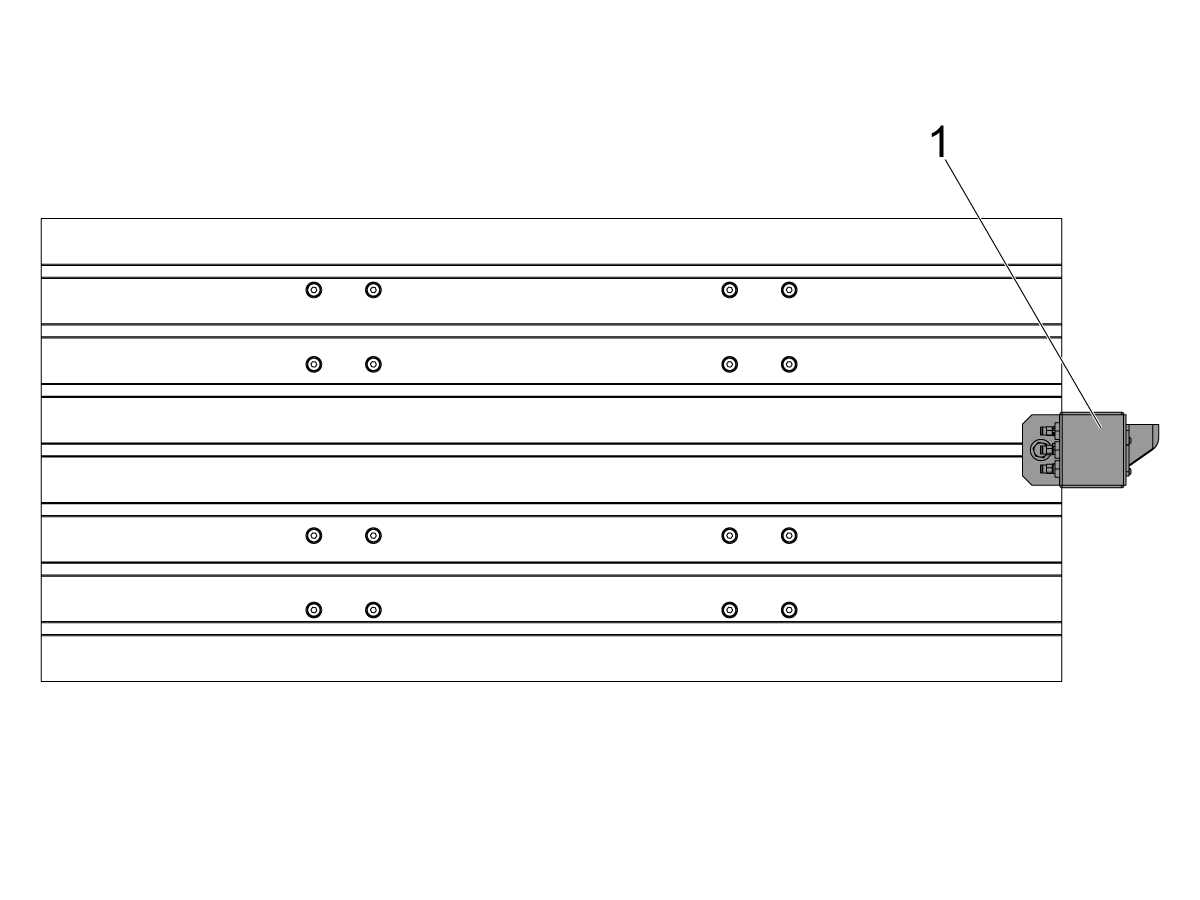
VF-5/40XT/50XT & VF-6/7/8/9

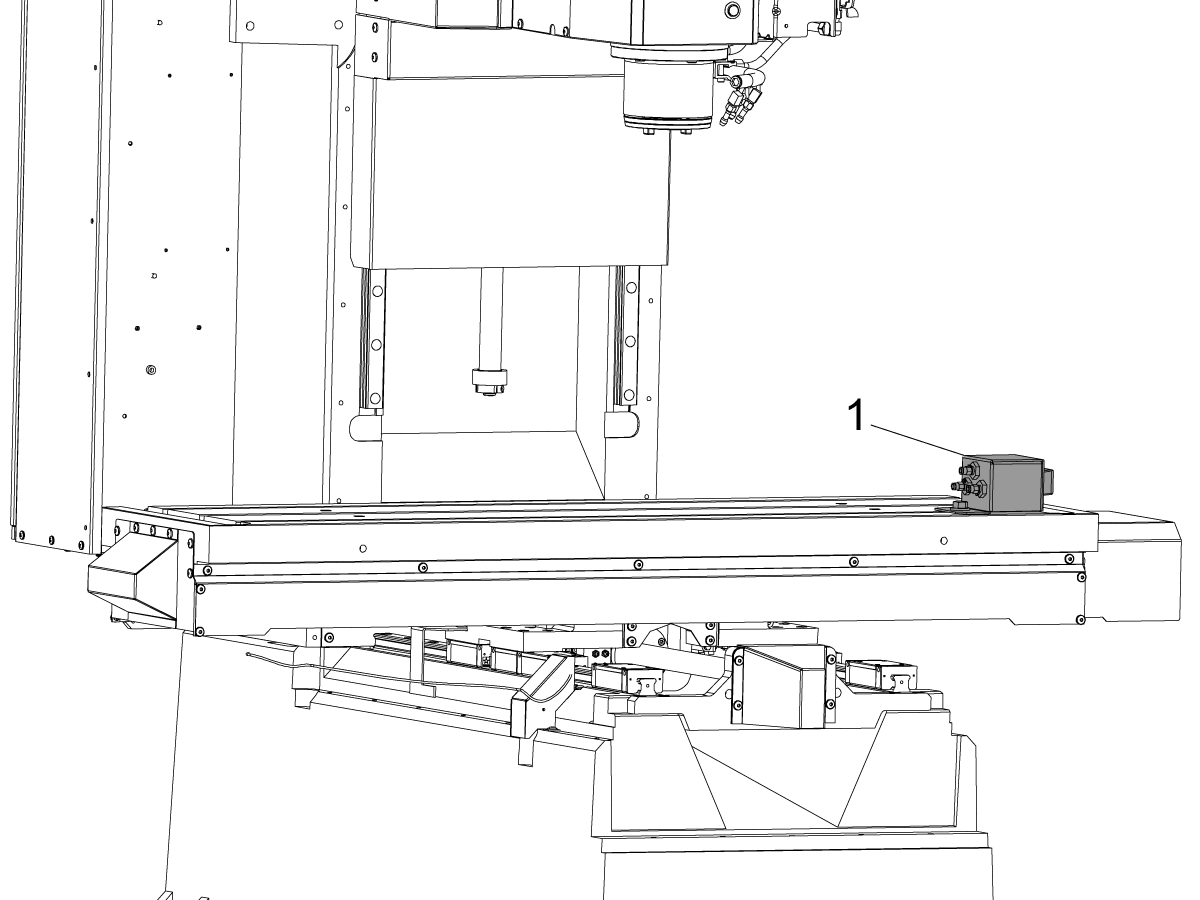
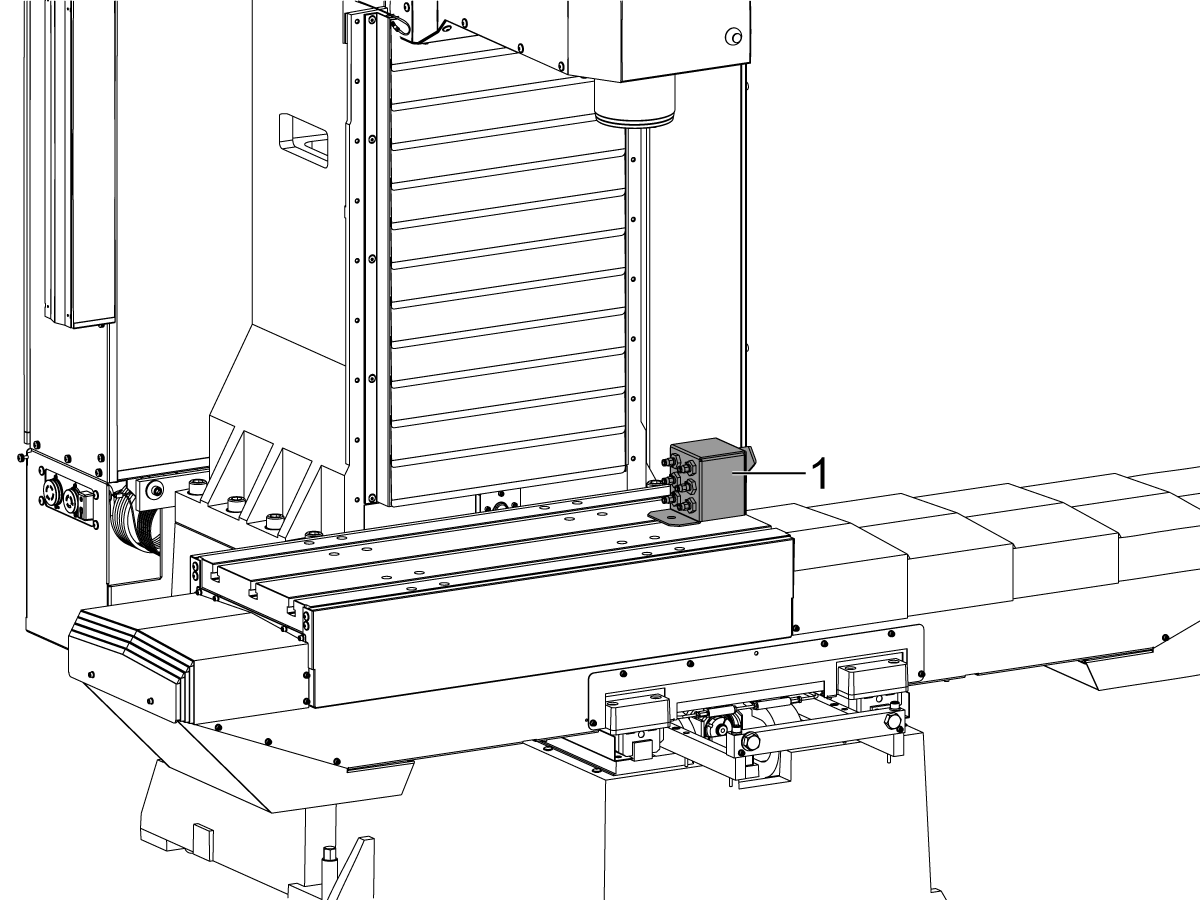
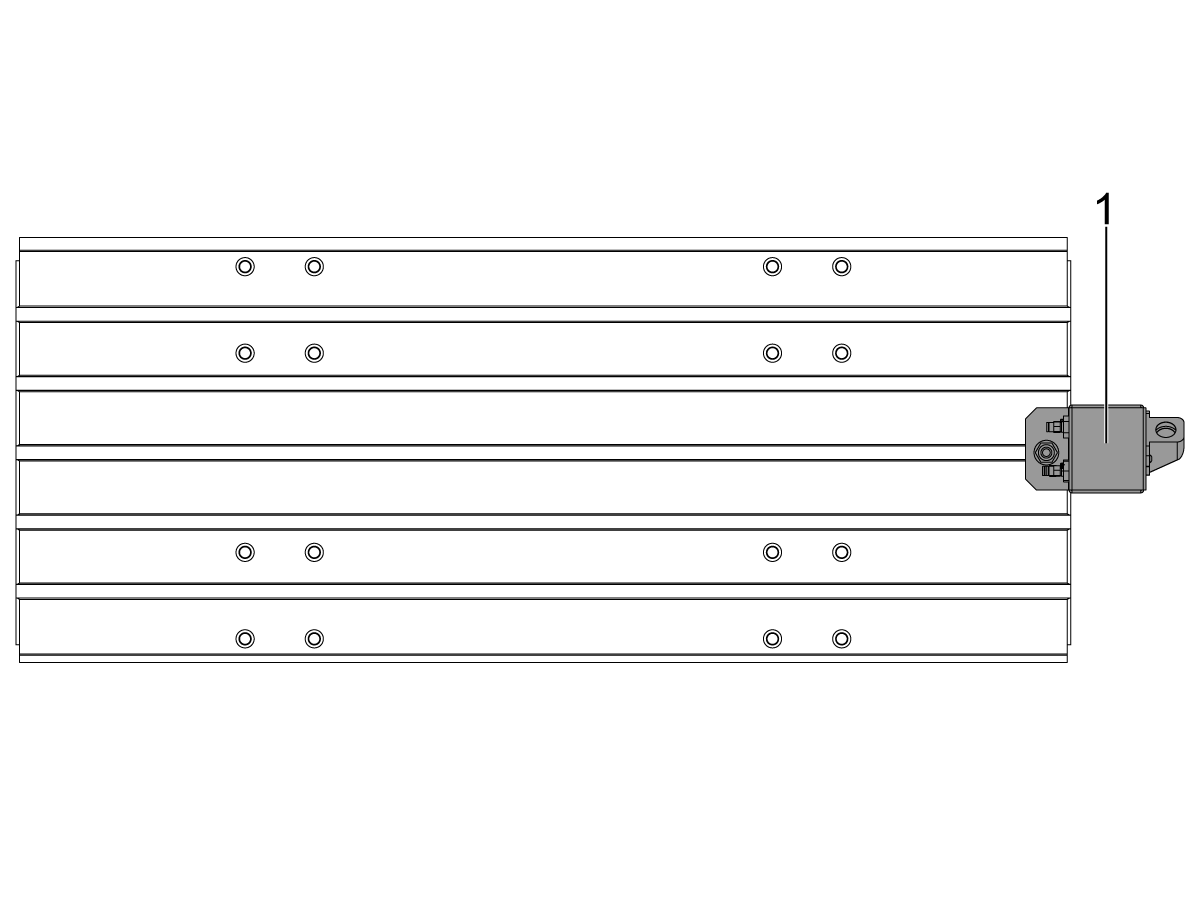
Install the programmable air manifold to the right side and middle of the table[1]. Verify that the conduit has enough slack and does not catch on the way covers when at its travel limits.

VM-2/3

The programmable air manifold can be mounted to most locations on the table. Verify that the conduit has enough slack and does not catch on the way covers when at its travel limits.

CM-1/2

The programmable air manifold can be installed almost anywhere on the table. Verify that the conduit has enough slack and does not catch on the way covers when at its travel limits. 

Note: These machines come standard with Table Auxiliary Air Supply. To install the programmable air manifold, a new location on the CALM air manifold will need to be used. Depending on the machine configuration an adapter will need to be made to add the programmable air solenoid.

2

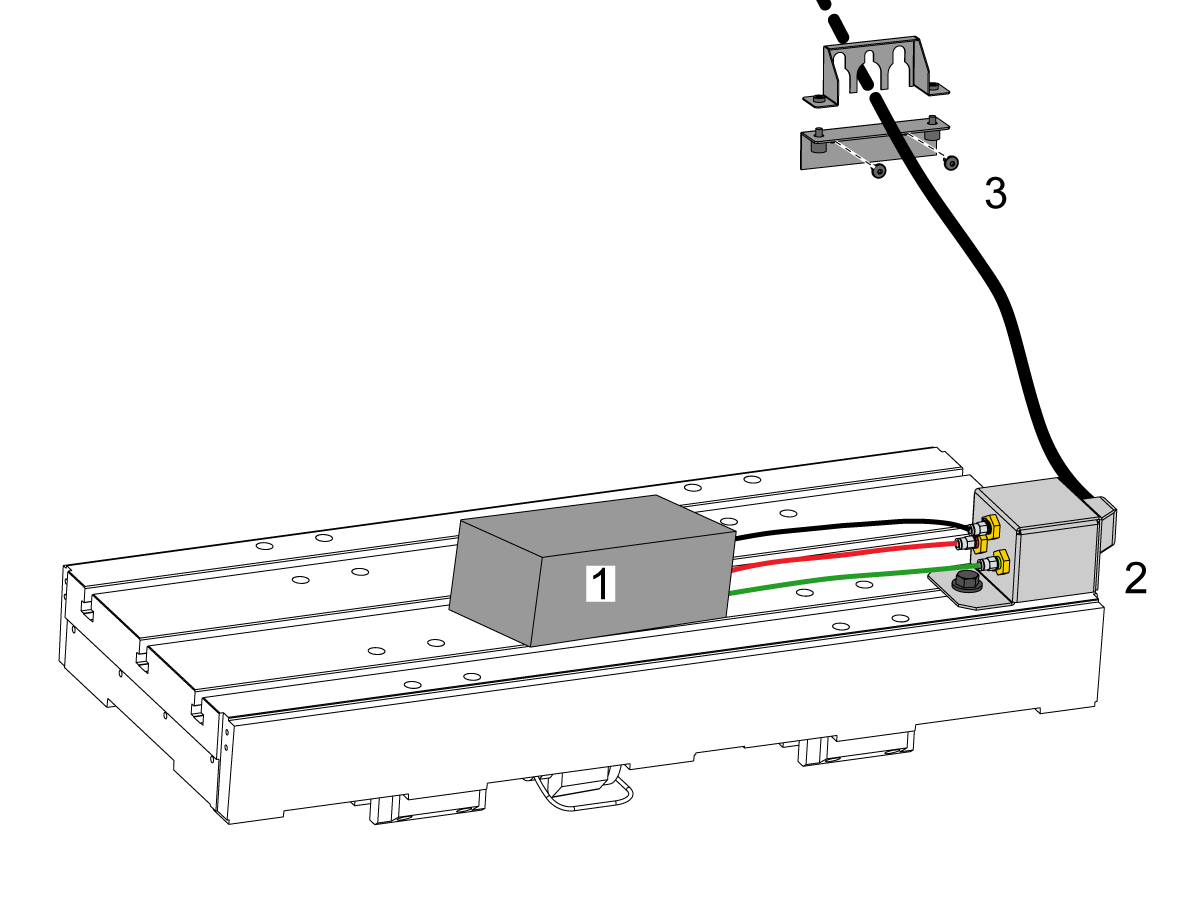
The user supplied programmable vise should be installed to the desired table location[1].

Use the included T-nut to attach manifold bracket to the table[2].

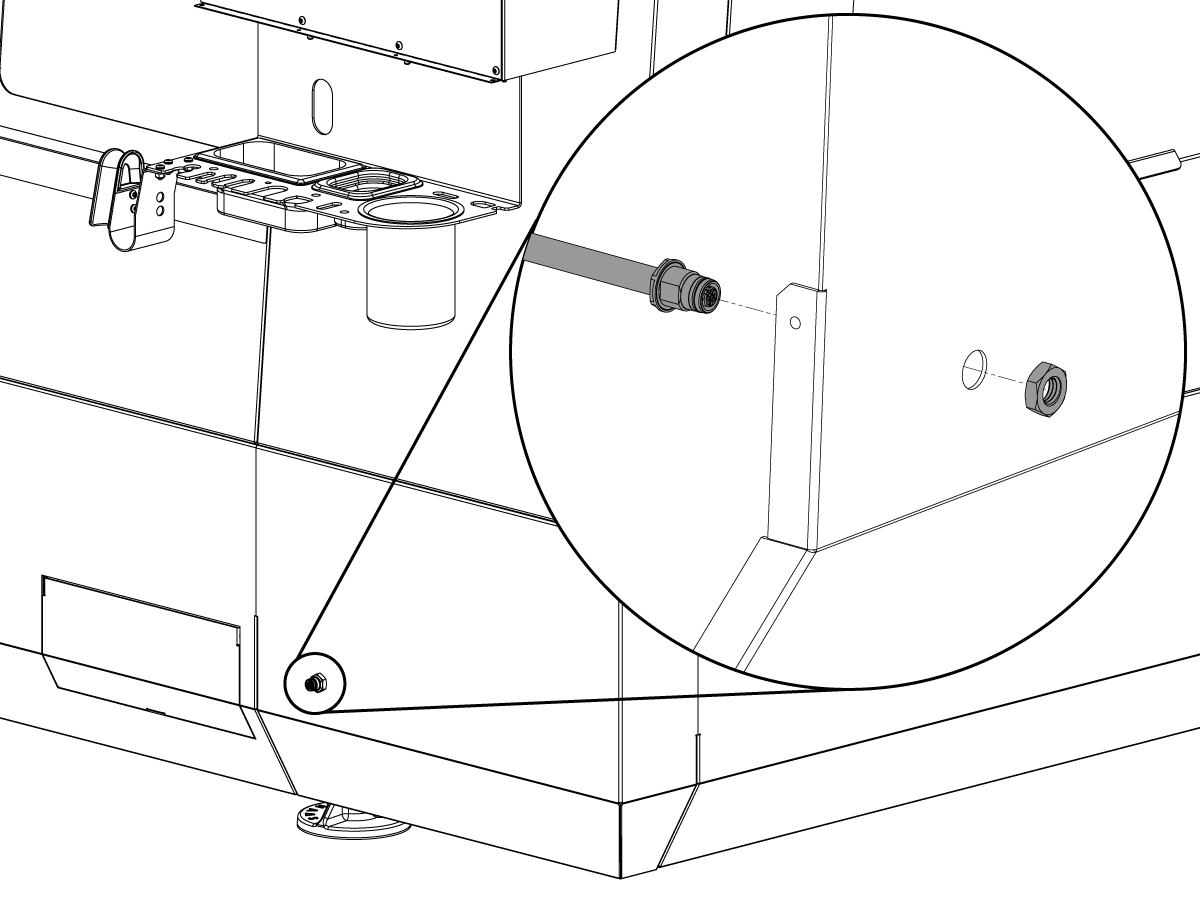
Install the cable clamp conduit into the right rear sheet metal panel of the machine as shown[3].

Jog the table into the furthest corner from the cable clamp conduit to set the travel length of the cable.

Jog the table into the closest corner of the conduit cable clamp and verify that the conduit doesn't interfere with the Z-Axis way cover, OMI sensor, or WIFI camera if these options are installed.

Plug the user supplied vise and airblast into the air manifold on the table.

Red zip tie location for clamp.

Green zip tie location for unclamp.

Black zip tie location for air blast.

3

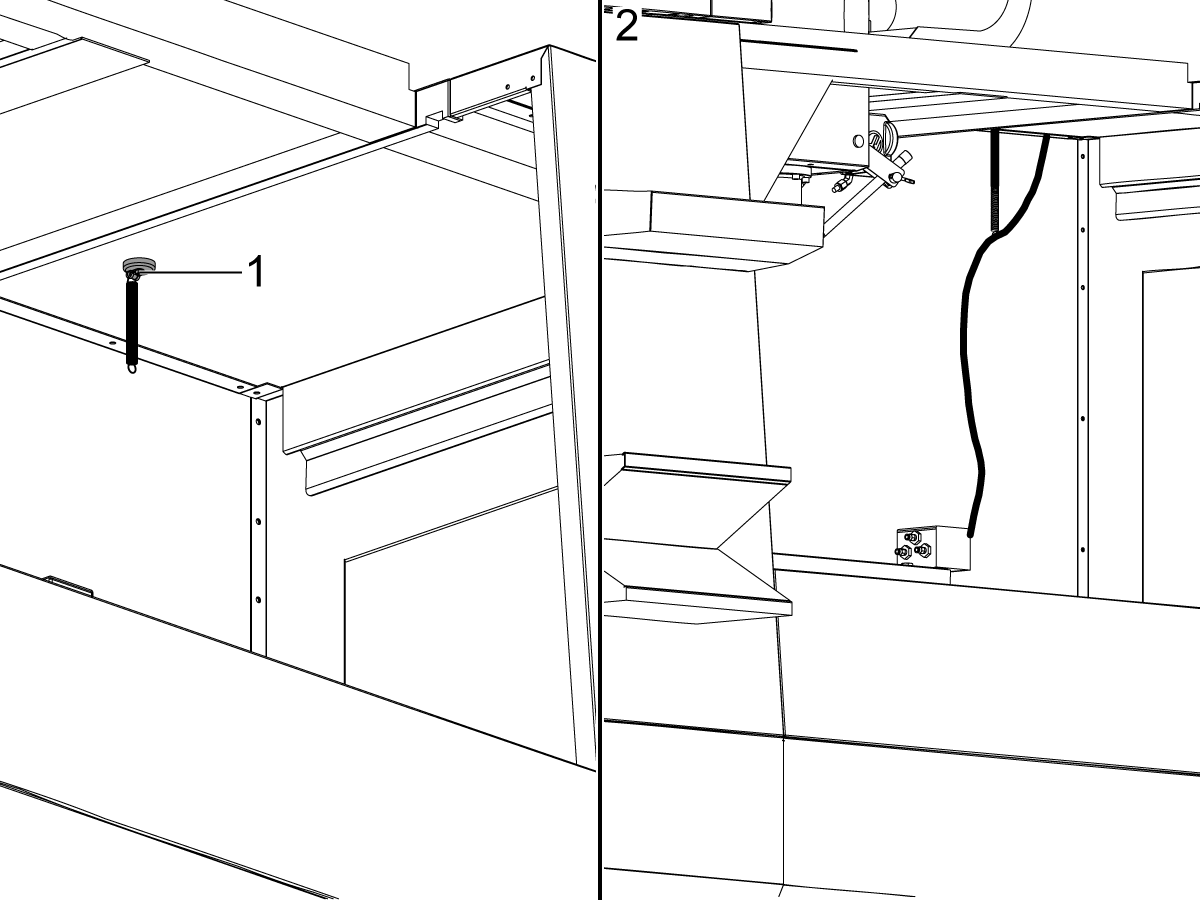
For VF-3 to VF-5 and VF-6 to VF-14

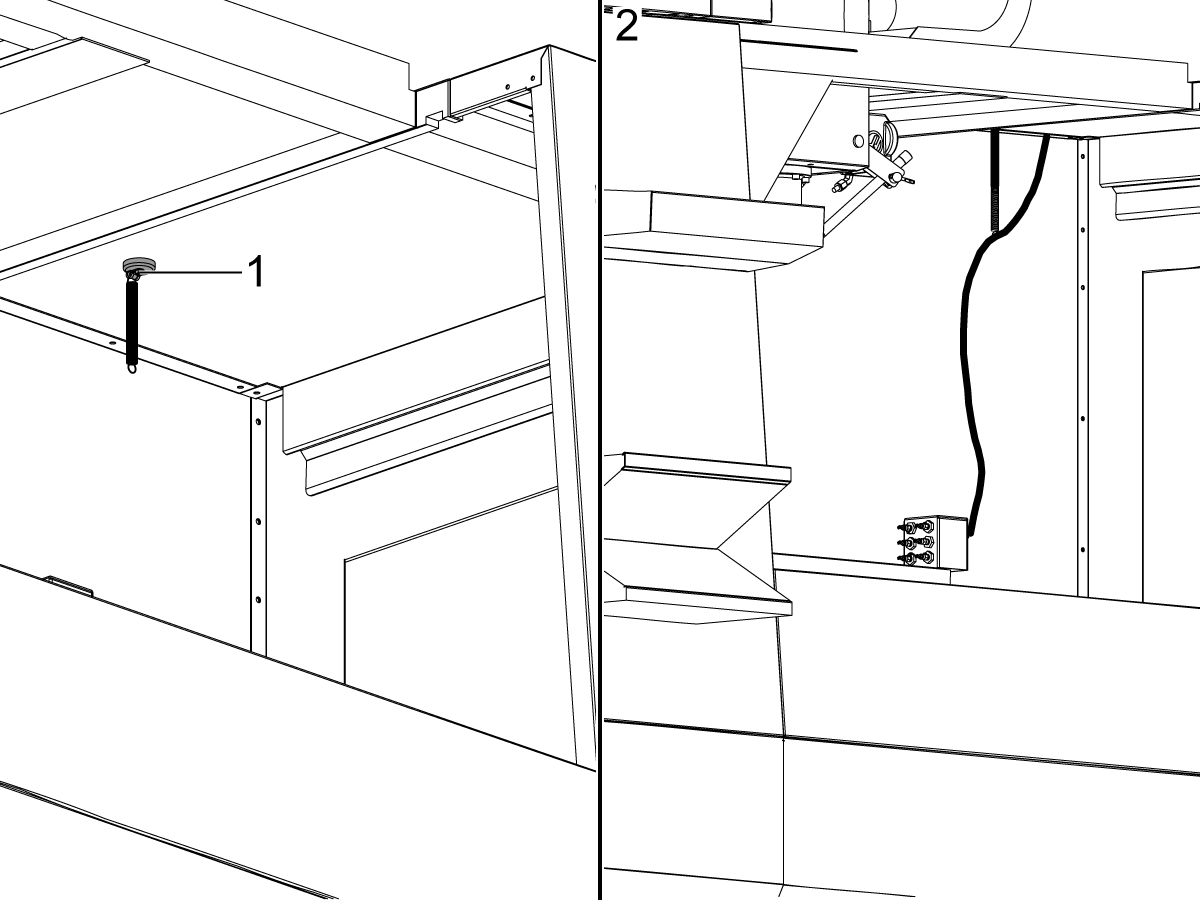
Attach the spring/magnet [1] assembly to the top panel of the machine as shown. Use it to help the drop of the cable conduit as shown in [2].

4

For CM-1/2 Machines

NOTE: Only applies to machines built BEFORE 1/1/2023.

Run the cable conduit up the machine. Secure the cable conduit inside the opening [1] on top of the enclosure.

From outside the machine, route the cable conduit down the column and into the CALM cabinet. 

Foot Pedal Cable - Installation

1

Drill a 5/8" hole in the front skirt to install the foot pedal cable.

Route cable 32-1390 from P14 on the I/O PCB along the side skirt using the magnetic mounts to the front skirt of the machine to connect to the foot pedal.

2

Mini Mill Install

On Mini Mills a sheet metal bracket [2] will need to be installed on the front of the machine for the foot pedal as shown with the magnet [1] given in the kit. 

Route cable 32-1390 from P14 on the I/O PCB and install the cable to the bracket [2].

3

 Note: The short connector [1] does not need to be connected. This is for daisy chaining multiple foot pedals together when using dual programmable air. 

Programmable Air Activation

Turn on the machine.

Login to the HBC Portal.

Download the Programmable Air option configuration patch files.

Note: The option files will appear on the configuration download page after the Programmable Air Kit has been ordered.  If the option does not appear contact the service department.

Load the option configuration patch file to the control.  Refer to the NEXT GENERATION CONTROL - CONFIGURATION FILE - DOWNLOAD/LOAD procedure.

Setup

1

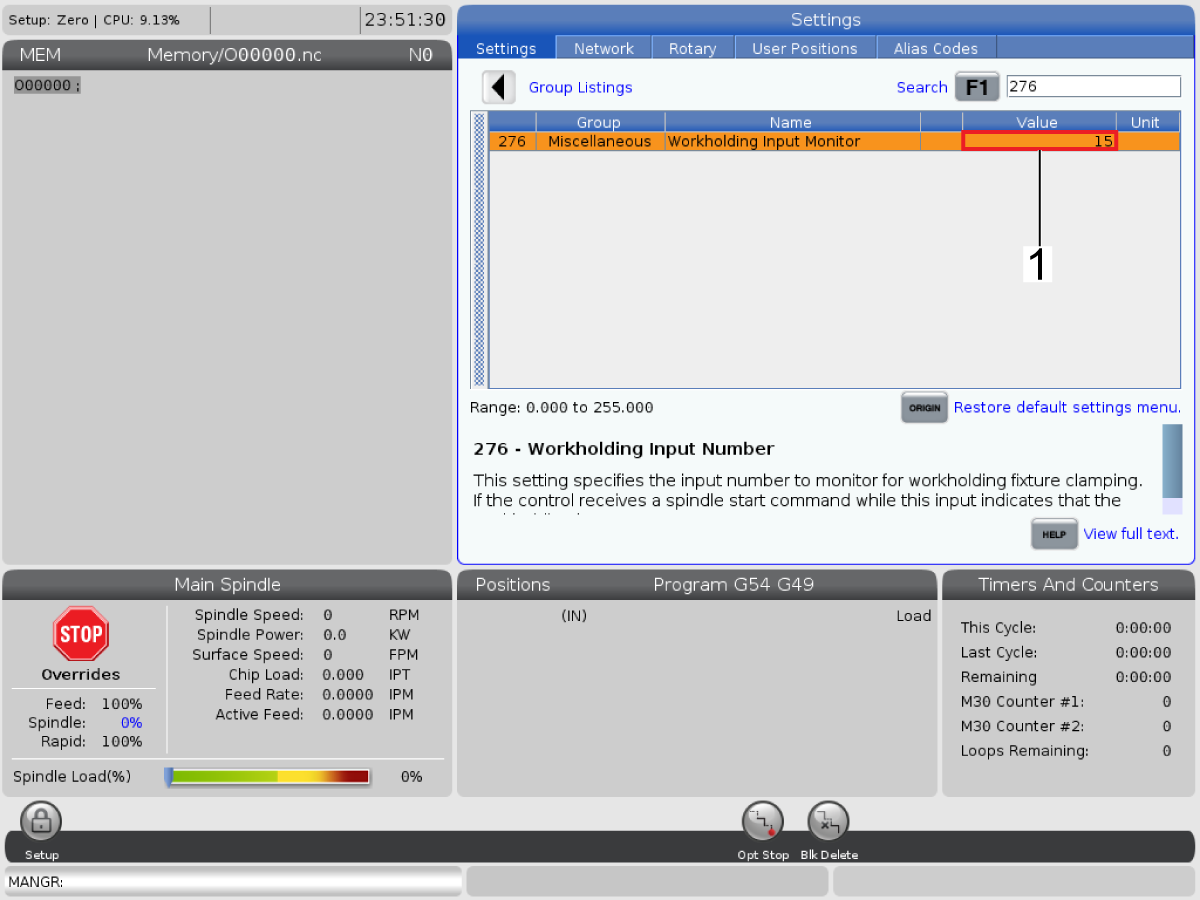
Press SETTING and set Setting 276 Workholding Input Number to 15.

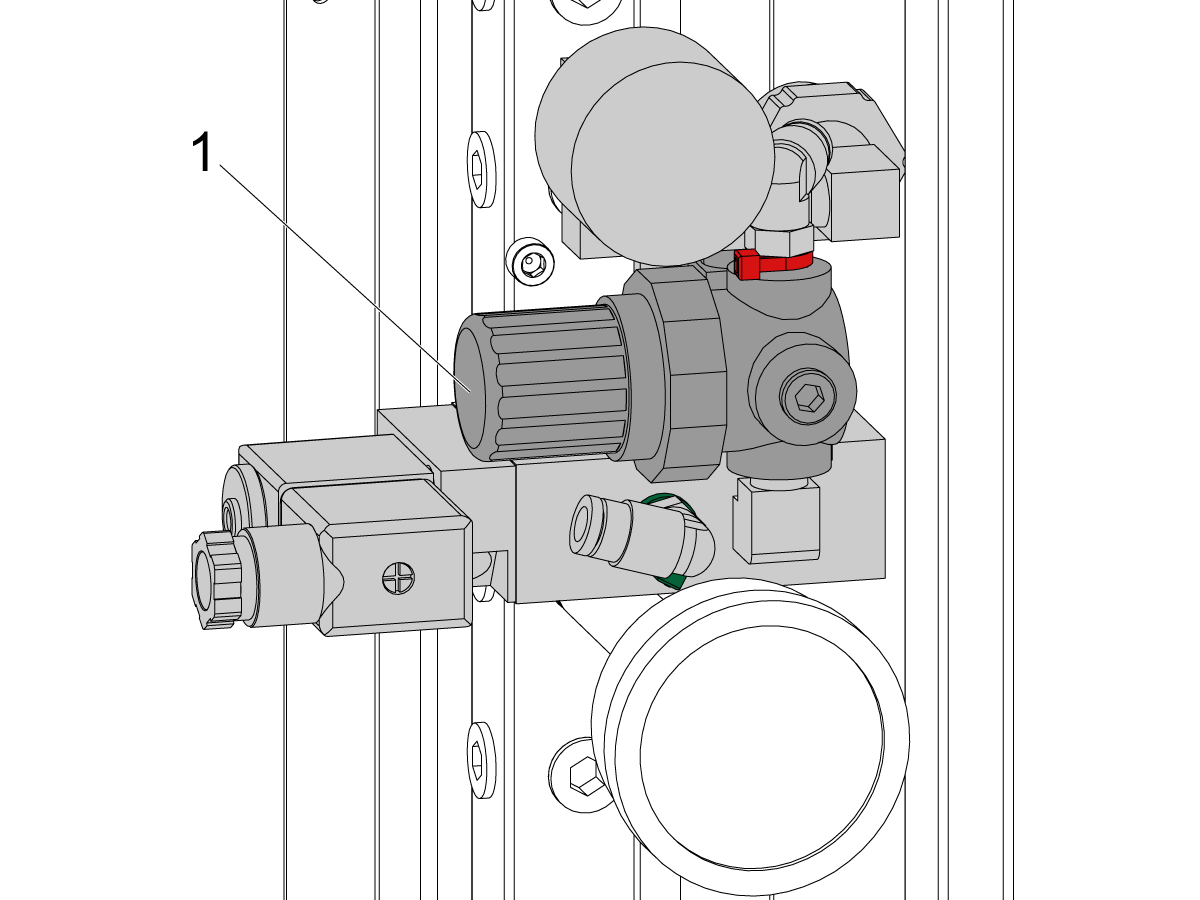
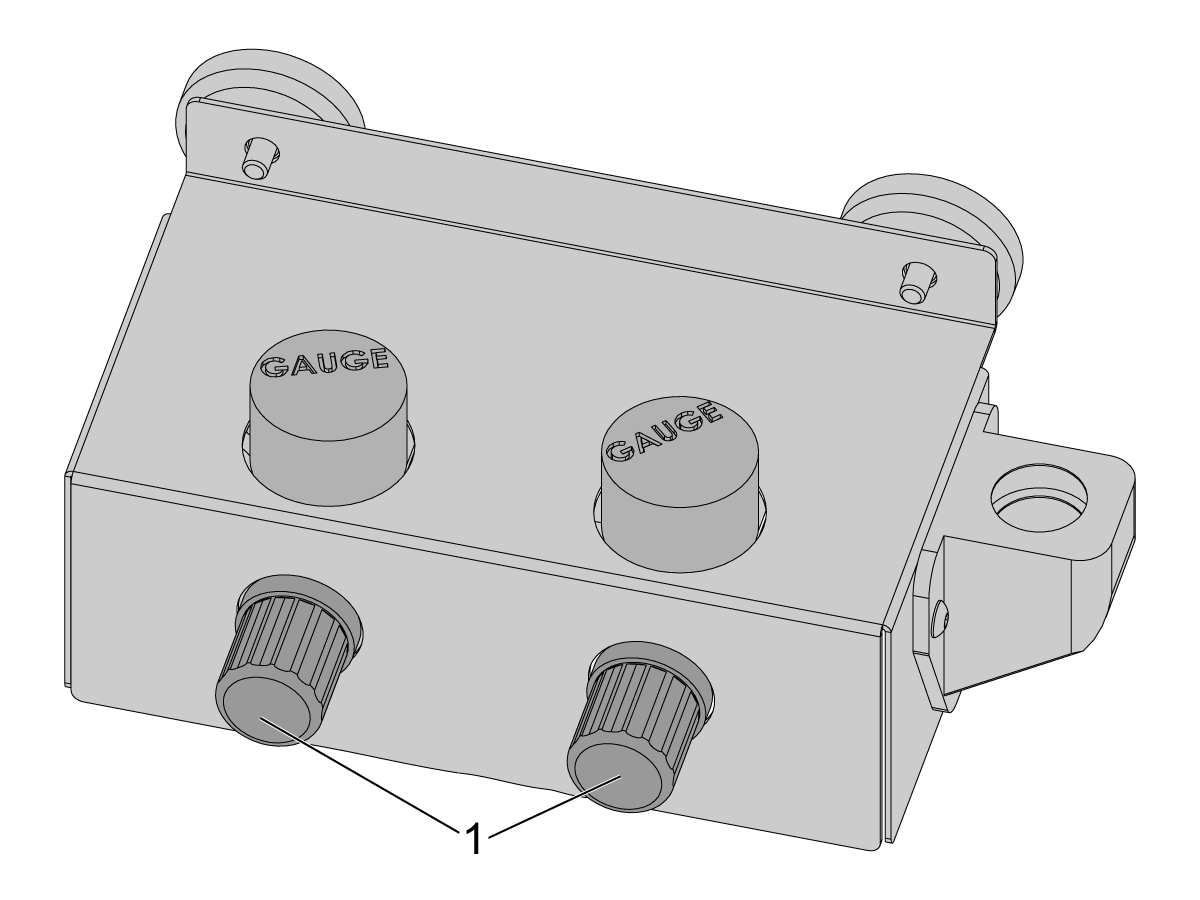
The clamp force of the Pneumatic Vise can be adjusted by adjusting the Air Regulator[1] on the Clamp/Unclamp solenoid. The higher the pressure, the greater the clamp force.

Verify the pressure switch functions by running the spindle in MDI: M03 S100;

Lower the air pressure all the way by turning down the regulator until the machine alarms with Alarm 180 Fixture Not Clamped. Adjust the pressure back to the desired pressure.

2

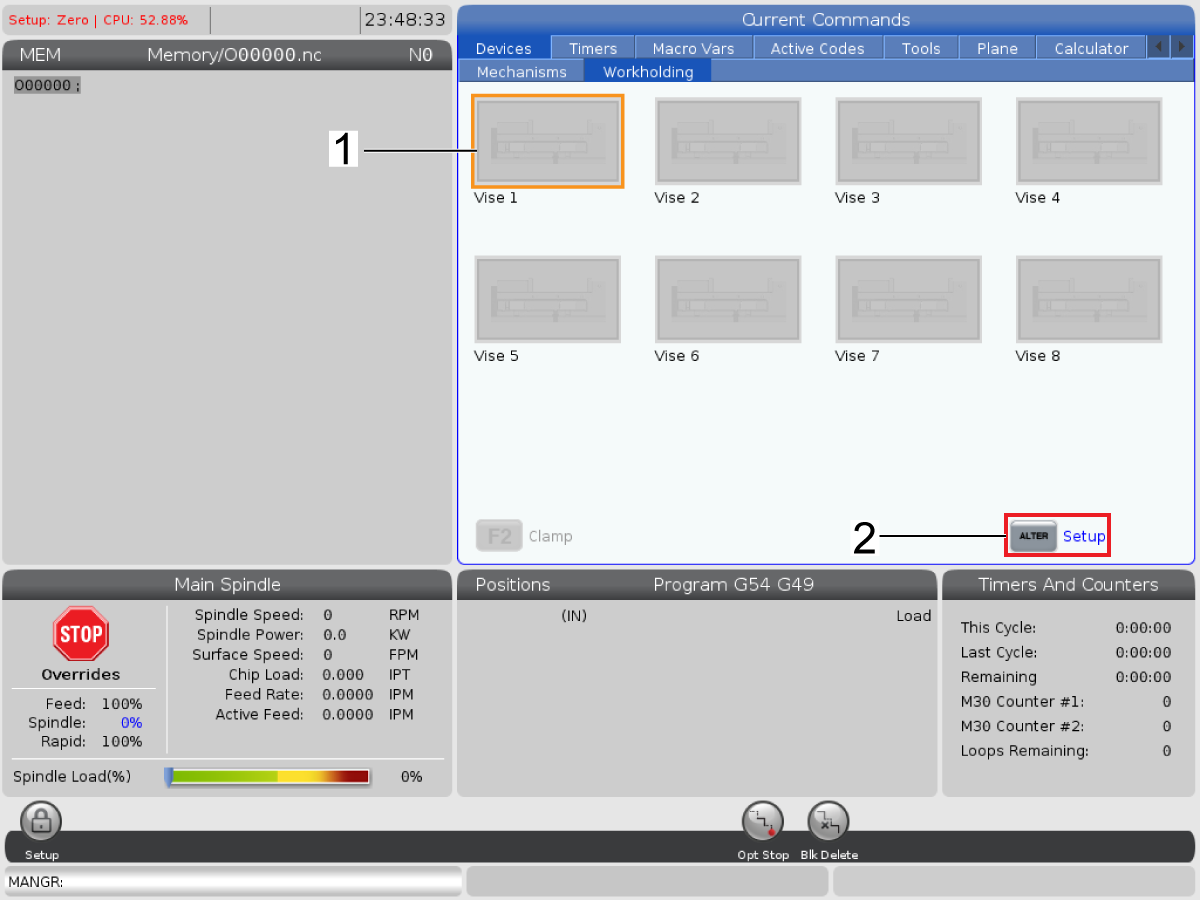
Press [CURRENT COMMANDS] and navigate to Devices > Workholding > Vise 1.

Press [ALTER] to setup the vise.

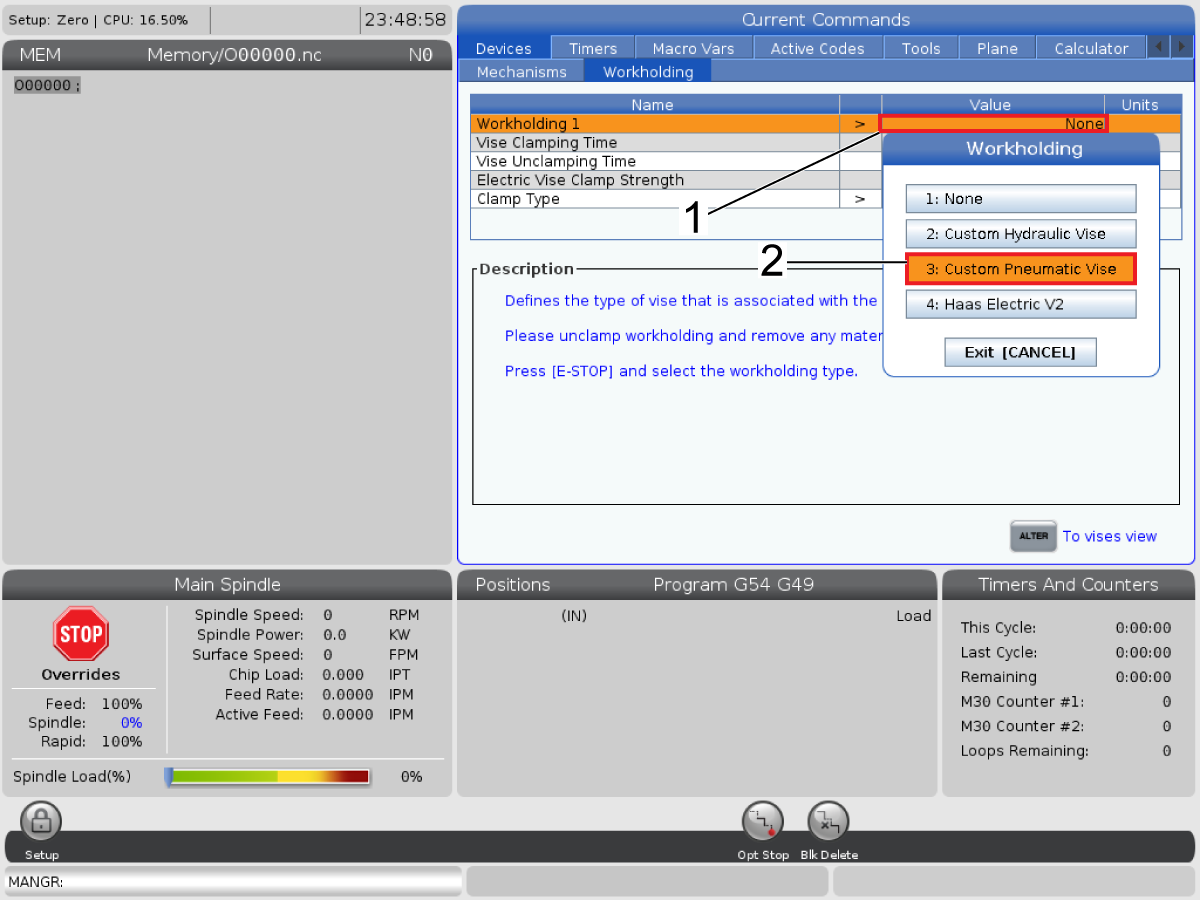
Press [E-Stop] and select 3. Custom Pneumatic Vise.

M70/71 CLAMP/UNCLAMP

M116/M117 AIR BLAST ON/OFF

Note: Use M70 Pn / M71 Pn to clamp or unclamp the vises setup on the workholding page. The P code defines the vise number. The range is P1 - 8. For example, M70 P1 clamps Vise 1 and M71 P1 unclamps it. The system will default to Vise 1, if no P-Code is specified with M70 or M71.

Note: If alarm 391: Feature Disabled is generated when commanding the workholding, the workholding has not been setup correctly on the Workholding tab. Perform the previous steps again.

Clamp/Unclamp can be operated from the Workholding tab or by commanding the Foot Pedal.

Air Blast can be operated from the Devices tab.

Verify Pressure Switch

1

Verify the pressure switch functions by clamping the workholding and running the spindle in MDI: M03 S100;

Lower the air pressure to zero by turning down the regulator[1] until the machine alarms with Alarm 180 Fixture Not Clamped. Adjust the pressure back to the desired pressure.

Recently Updated

Dual Programmable Air - Installation


AD0637

Revision A 08/2025

Introduction

This procedure will show you how to install the Programmable Air Option [1] on the following machines and their variants:

  • VF-1/2/3/4/5/6/7/8/9
  • VM-2/3
  • DM-1/2
  • DT-1/2
  • MM
  • CM-1

Machine Requirements

  • NGC Software Requirements: 100.20.000.1200 or later.
  • Minimum Main IO firmware Version: 4.0 or higher. 
  • 93-1000878 - PROGRAMMABLE AIR DUAL FIELD INSTALL KIT
  • 93-1000910 - PROGRAMMABLE AIR DUAL FIELD INSTALL KIT

Important: The Dual Programmable Air option is NOT compatible with the Single Programmable Air option or the E-vise option.

 Important: The Dual Programmable Air option is NOT COMPATIBLE with machines with the TAB option built before June 2019.

 IMPORTANT: Depending on the machine's built by date, seperate brackets may need to be ordered to make the machine compatible. The brackets that are sold seperately are 25-12138, 25-14177 & 25-12749. Refer to the below table to determine what brackets are needed for each machine:

Machine Date Part Number
VF-1/2 Built before 7/22/2022 25-12138 & 25-14177
Built after 7/22/2022 25-15873 & 25-15875
VF-1/2YT Built before 7/21/2022 25-12138 & 25-14177
Built after 7/21/2022 25-15873 & 25-15875
VF-3/4 Built before 7/30/2022 25-12749 & 25-14177 
Built after 7/30/2022 25-15873 & 25-15875
VF-3YT/40 Built before 8/16/2022 25-12749 & 25-14177 
Built after 8/16/2022 25-15873 & 25-15875
VF-3YT/50 Built before 12/1/2022 25-12749 & 25-14177 
Built after 12/1/2022 25-15873 & 25-15875
VF-5/40/XT Built before 9/20/22 25-12749 & 25-14177 
Built after 9/20/22 25-15873 & 25-15875
VF-5/50/XT Built before 10/16/22 25-12749 & 25-14177 
Built after 10/16/22 25-15873 & 25-15875
VF-6/40/50 Built before 5/1/2022 25-12138 & 25-14177
Built after 5/1/2022 25-15873 & 25-15875
VF-7/40/50 Built before 5/1/2022 25-12138 & 25-14177
Built after 5/1/2022 25-15873 & 25-15875
VF-8/40/50 Built before 2/28/2022 25-12138 & 25-14177
Built after 2/28/2022 25-15873 & 25-15875
VF-9/40/50 Built before 2/28/2022 25-12138 & 25-14177
Built after 2/28/2022 25-15873 & 25-15875
VR-8/9 Built before 2/28/2022 25-12138 & 25-14177
Built after 2/28/2022 25-15873 & 25-15875
VM-2/3 Built before 5/1/2022 25-12138 & 25-14177
Built after 5/1/2022 25-15873 & 25-15875
DT/DM-1/2 Built before 1/28/2022 25-12138 & 25-14177
Built after 1/28/2022 25-15873 & 25-15875
TM-0 Built before 9/1/2022 25-12138 & 25-14177
Built after 9/1/2022 25-15873 & 25-15875
TM-1 Built before 1/28/2022 25-12138 & 25-14177
Built after 1/28/2022 25-15873 & 25-15875
TM-2 Built before 9/10/2022 25-12138 & 25-14177
Built after 9/10/2022 25-15873 & 25-15875
CM-1 Built before 8/25/2022 25-12138 & 25-14177
Built after 8/25/2022 25-15873 & 25-15875

Air Manifold Installation

1

Table Locations

DT-1/2 - DM-1/2 - VF-1/2 - MM

The programmable air manifold can be installed almost anywhere on the table. Verify that the conduit has enough slack and does not catch on the waycovers when at its travel limits. 

VF-3/4/5

The programmable air manifold can be mounted to most locations on the table. Verify that the conduit has enough slack and does not catch on the waycovers when at its travel limits.

VF-5/40XT/50XT & VF-6/7/8/9

Install the programmable air manifold to the right side and middle of the table[1]. Verify that the conduit has enough slack and does not catch on the waycovers when at its travel limits.

VM-2/3

The programmable air manifold can be mounted to most locations on the table. Verify that the conduit has enough slack and does not catch on the waycovers when at its travel limits.

CM-1

The programmable air manifold can be installed almost anywhere on the table. Verify that the conduit has enough slack and does not catch on the waycovers when at its travel limits. 

 Note: These machines come standard with Table Auxiliary Air Supply. To install the programmable air manifold, a new location on the CALM air manifold will need to be used. Depending on the machine configuration an adapter will need to be made to add the programmable air solenoid.

2

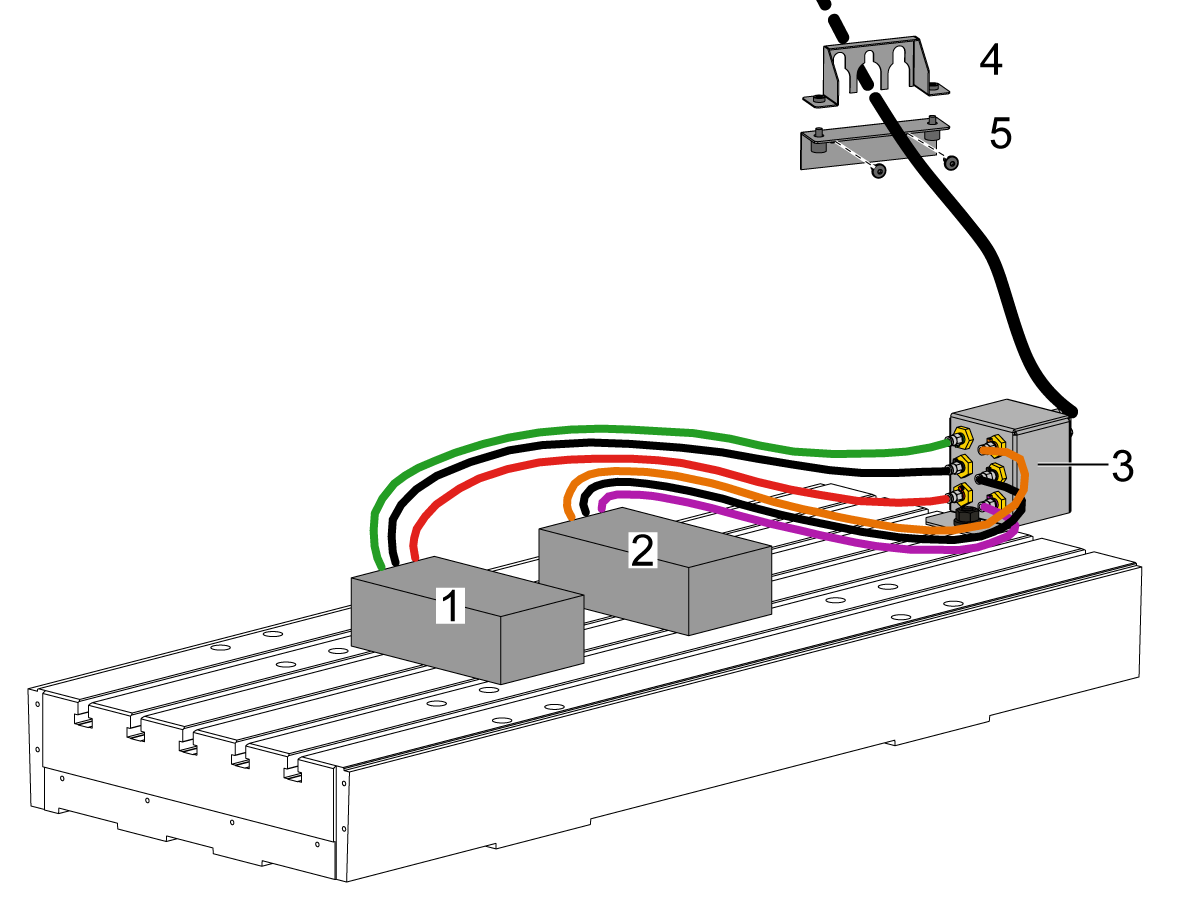
The user supplied programmable vise's should be installed to the desired table locations [1],[2].

Use the included T-nut to attach manifold bracket to the table [3].

Install the cable clamp conduit [4] into the sheet metal panel [5] of the machine.

NOTE: The image shows for a VF-Small, on VF-Med and VF-Large machines the sheet metal panel opening for the conduit may be on the back of the right panel or the back right of the top panel.

Jog the table into the furthest corner from the cable clamp conduit to set the travel length of the cable.

Jog the table into the closest corner of the conduit cable clamp and verify that the conduit doesn't interfere with the Z-Axis waycover, OMI sensor, or WIFI camera if these options are installed.

Plug the user supplied vise and airblast into the air manifold on the table.

Red ziptie location for clamp on Vise 1.

Green ziptie location for unclamp on Vise 1.

Purple ziptie location for clamp on Vise 2.

Orange ziptie location for unclamp on Vise 2.

Black ziptie location for air blast on both Vise's

 Note: On VF-Small's and DT/DM machines, it is best to place the vises so that the air connections are to the front of the machine. If the air connections are to the back of the machine, the hoses will hit the way covers.

 Note: The hoses may be too short to reach the second vise on the table, there are extension hoses in the kit to use if this happens.

3

For VF-3 to VF-5 and VF-6 to VF-14

Attach the spring/magnet [1] assembly to the top panel of the machine as shown. Use it to help the droop of the cable conduit as shown in [2].

4

For CM-1/2 Machines

 NOTE: Only applies to machines built BEFORE 1/1/2023.

Run the cable conduit up the machine. Secure the cable conduit inside the opening on top of the enclosure [1].

From outside the machine, route the cable conduit down the column and into the CALM cabinet. 

Solenoid Installation

1

Warning: E-Stop and turn off the machine before any electrical installation

Attach the solenoid assembly [1] to the middle of the CALM cabinet door [2] using the magnets in the kit.

2

Route the cable conduit from the Dual Programmable Air manifold out through the back or top of the machine [1].

Route the other end of the cable conduit to the solenoid assembly to the solenoid assembly intake [2].

Use the mangets provided to secure the conduit to the machine [3]. 

3

Route the air hoses from the conduit into the solenoid assembly [1].

Connect each air hose to the solenoid connector with the matching color ziptie. 

4

Connect the electrical cables to the pressure switches [1].

The cable labeled V1 should be attached to the switch for Vise 1.

The cable labeled V2 should be attached to the switch for Vise 2. 

5

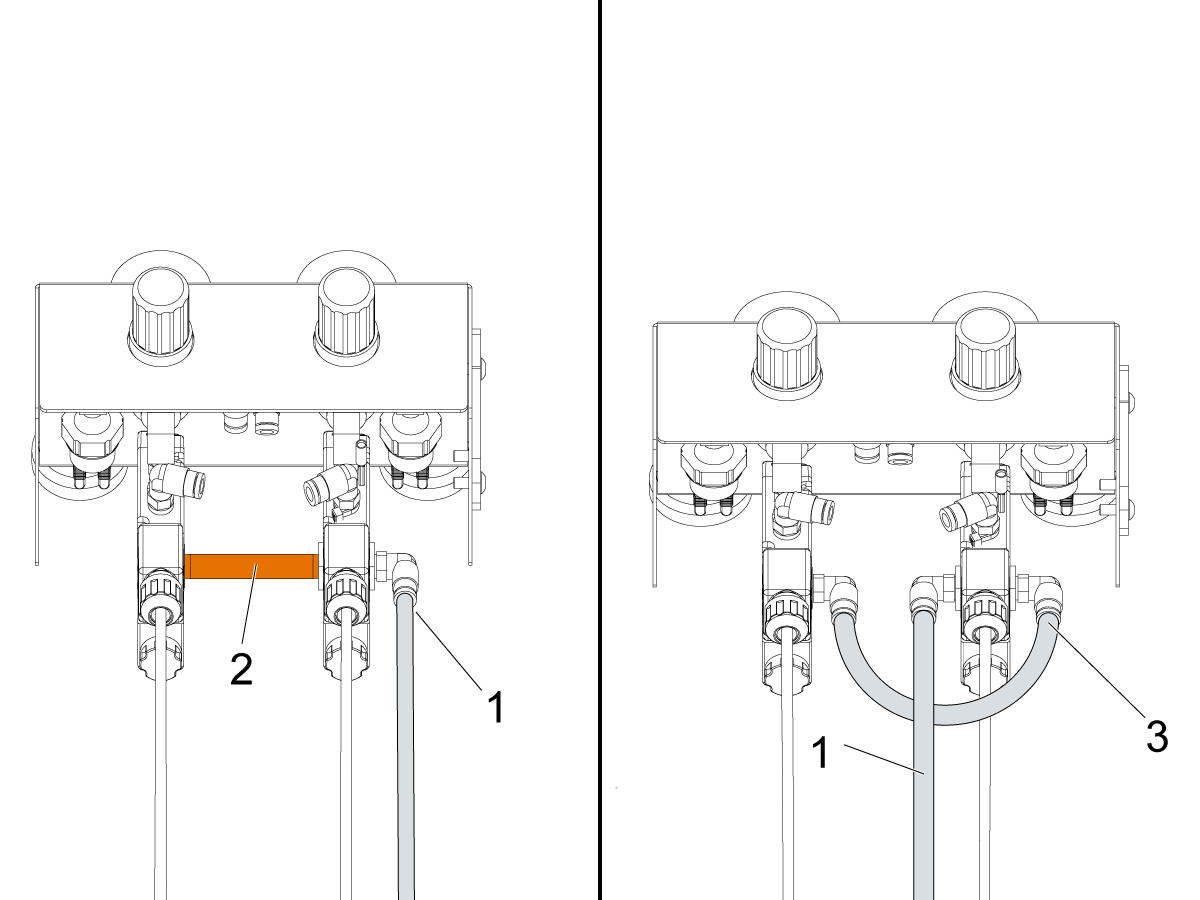
Route the clear air line to the Vise 2 solenoid [1]. If the two solenoids are not already connected [2], use extra hose to connect them [3]. 

6

Route the electrical cables from the solenoid assembly to the electrical cabinet.

Remove the panel at the bottom of the electrical cabinet and route the cables as shown [1]. Refer to the diagram in Step 7 for where to route cables on the I/O PCB. 

Note: Refer to the Air-Lubrication System decal for the location and labels of air ports. 

The air lines from the solenoid assembly are routed into the air/lube cabinet [2]. Use a tee fitting to attach both black air hoses to the port labelled Programmable Air. Route the clear air line to the air port labelled Auxiliary Air Valve Supply Port/Programmable Air Blast Solenoid. 

7

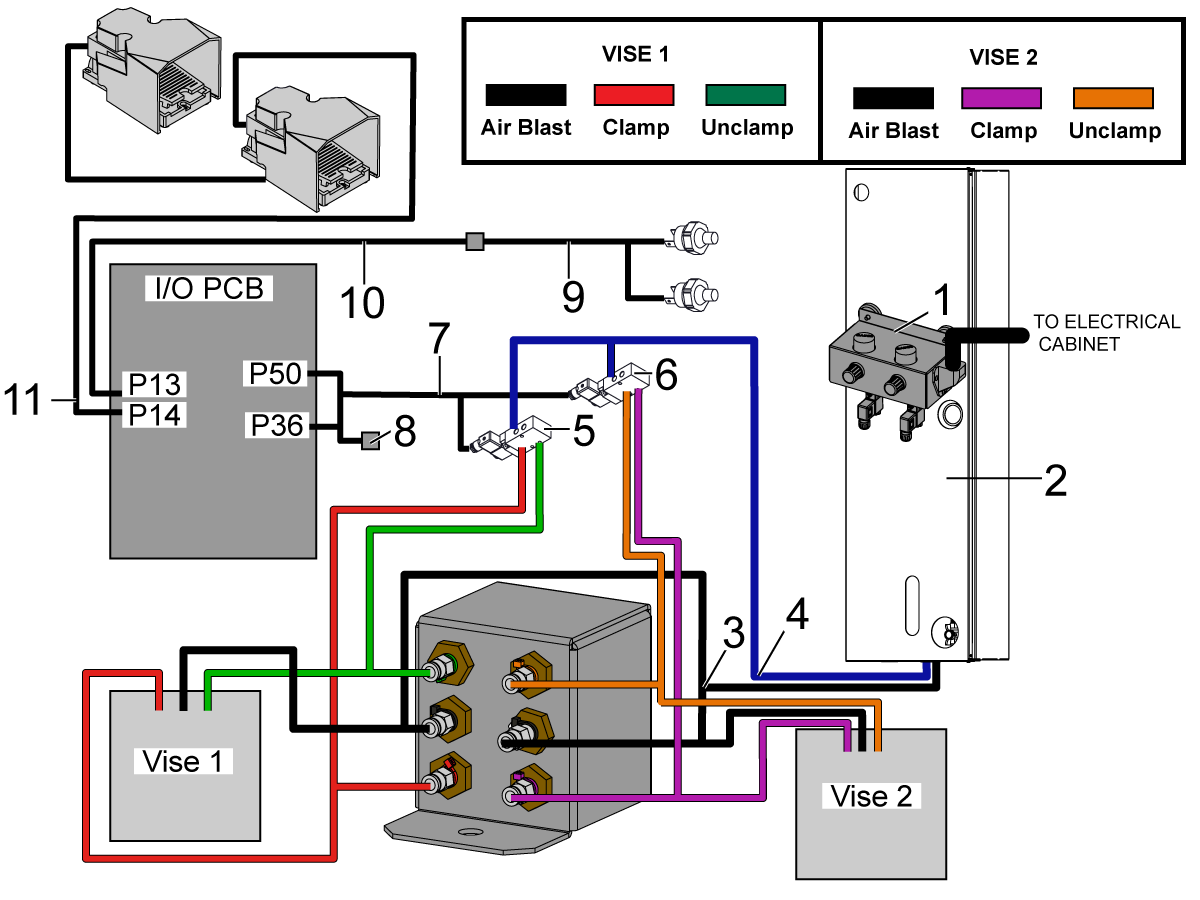
Refer to the chart to verify wiring. 

Cable 33-1206 [7] connects to P36 and P50 on the IOPCB and to the vise's solenoids [5],[6]. If the machine is equipped with the coolant refill option, remove the cable from P36 and connect it to the pigtail [8] on cable 33-1206.

Cable 33-1207 [9] connects to the adapter from cable 33-0738 [10] at P13.
 Note: If the machine is equipped with other options that utilize P13, connect it to the pigtail cable coming out of P13.

Cable 32-1390 [11] connects to the foot pedal at the front of the machine. It is routed to P14 on the I/O board. 

Foot Pedal Cable - Installation

1

Drill a 5/8" hole in the front skirt to install the foot pedal cable.

Route cable 32-1390 from P14 on the I/O PCB along the side skirt using the magnetic mounts to the front skirt of the machine to connect to the foot pedal.

Important: Use the next step if installing on a Mini Mill.

2

Mini Mill Install

On Mini Mills a sheet metal bracket [2] will need to be installed on the front of the machine for the foot pedal as shown with the magnet [1] given in the kit. 

Route cable 32-1390 from P14 on the I/O PCB and install the cable to the bracket [2].

3

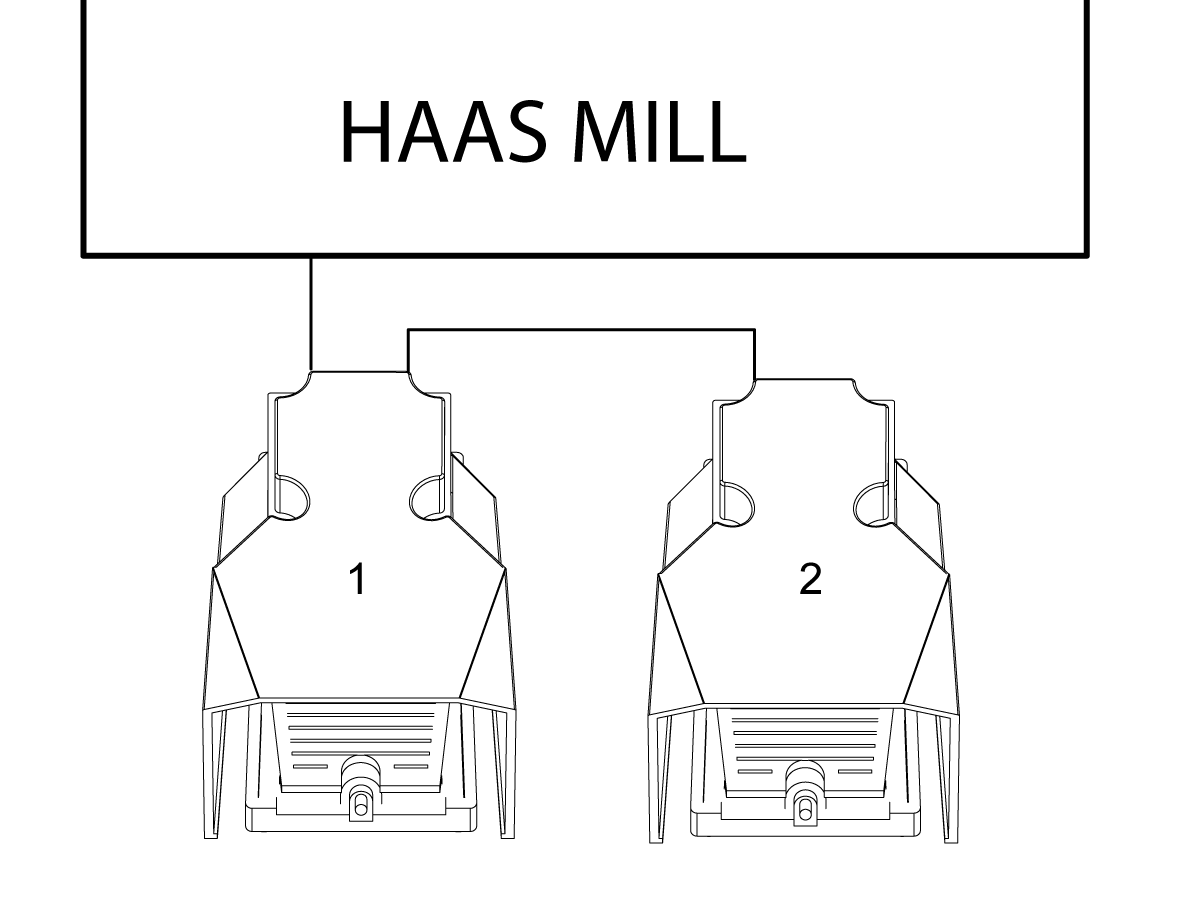
Connect the second foot pedal [2] to the first pedal [1] as shown.

Dual Programmable Air Activation

Turn on the machine.

Login to the HBC Portal.

Download the Dual Programmable Air option configuration patch files.

Note: The option files will appear on the configuration download page after the Dual Programmable Air Kit has been ordered.  If the option does not appear contact the service department.

Load the option configuration patch file to the control.  Refer to the NEXT GENERATION CONTROL - CONFIGURATION FILE - DOWNLOAD/LOAD procedure.

Setup

1

Press SETTING and set Setting 276 Workholding Input Number to 15.

The clamp force of the Pneumatic Vise's can be adjusted by adjusting the Air Regulator's[1] on the Clamp/Unclamp solenoid. The higher the pressure, the greater the clamp force.

Verify the pressure switch's function by clamping the workholding and running the spindle in MDI: M03 S100;

Lower the air pressure to zero by turning down the regulator[1] until the machine alarms with Alarm 180 Fixture Not Clamped. Adjust the pressure back to the desired pressure.

2

Press [CURRENT COMMANDS] and navigate to Devices > Workholding > Vise 1.

Press [ALTER] to setup the vise.

Press [E-Stop] and select 3.Custom Pneumatic Vise.

M70/71 CLAMP/UNCLAMP

M116/M117 AIR BLAST ON/OFF

Repeat the above steps to set up Vise 2.

Note: Use M70 Pn / M71 Pn to clamp or unclamp the vises setup on the workholding page. The P code defines the vise number. The range is P1 - 8. For example M70 P1 clamps Vise 1 and M71 P1 unclamps it. The system will default to Vise 1, if no P-Code is specified with M70 or M71.

Note: If alarm 391: Feature Disabled is generated when commanding the workholding, the workholding has not been setup correctly on the Workholding tab. Perform the previous steps again.

Clamp/Unclamp can be operated from the Workholding tab or by commanding the Foot Pedal(s).

Air Blast can be operated from the Devices tab.

Recently Updated

Pneumatic Vise - Mill - Installation


AD0554

Introduction

This procedure tells you how to install a Pneumatic Vise on the following machines and their variants:

  • VF-1/2/3/4/5/6/7/8/9
  • VM-2/3/6
  • VR-8/9
  • DM-1/2
  • DT-1/2
  • MM-1/2

Machine Requirements

  • The programmable air option must be installed prior to this procedure. Refer to Programmable Air - Installation.

This procedure applies to the following kits:

  • 08-1858 : AIR VISE-100MM FIELD INSTALL VMC
  • 08-1859 : AIR VISE-150MM FIELD INSTALL VMC
  • 08-1857 : AIR VISE-75MM FIELD INSTALL VMC

Installation

1

Before placing the vise, clear the table of chips and do a quick wash down.

Note: Make sure the t-slots are completely cleared of chips as well.

Clean and stone the table, then spray on a rust preventative.

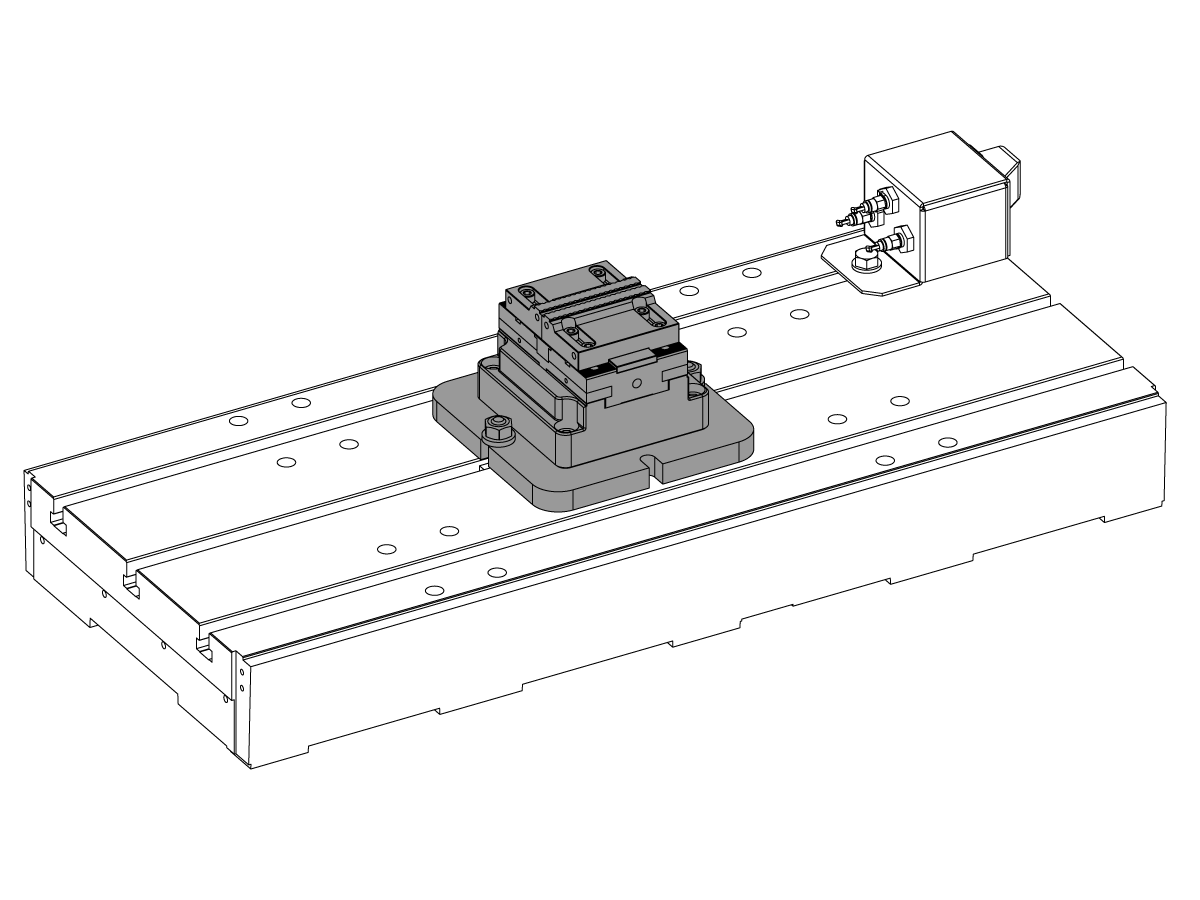
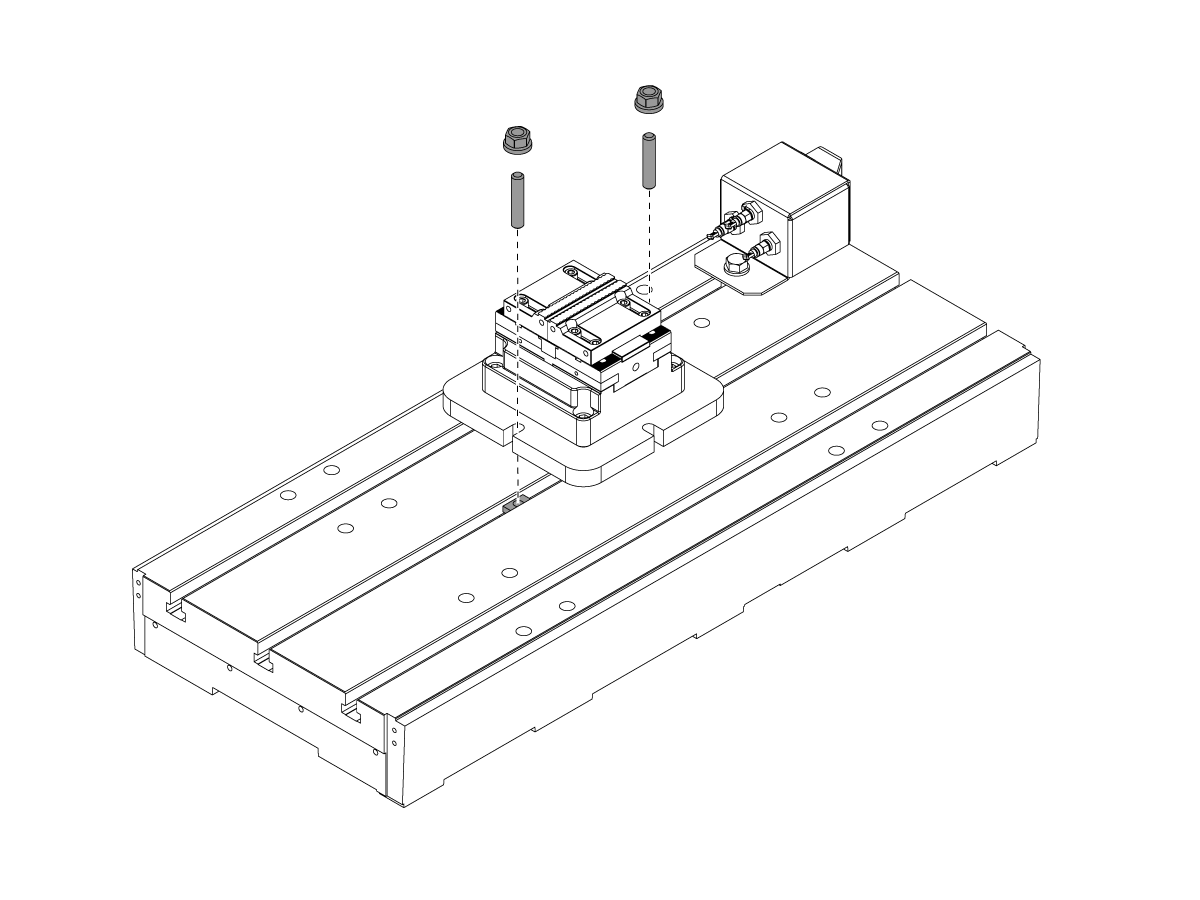
Carefully place the vise on the table and use the provided T-nuts and other hardware to secure the pneumatic vise to the table.

2

If the air blast feature is going to be installed, start by assembling the air blast manifold.

The components are: 

  1. 58-1560
  2. 58-2100
  3. 58-2110
  4. 58-2170
  5. 58-0562

Note: The copper tubes will be straight and 15" long. You will need to bend and cut them to length. 

Note: 58-0562 is not included in the air blast manifold kit. It will be included in the programmable air kit. 

3

Attach the manifold to the vise using the two included bolts [1]. 

Bend and trim the copper tube to the desired shape. 


4

Change the clamp and unclamp fittings on the programmable air manifold to the brass fittings given in the kit.

Connect the Clamp/Unclamp hoses to the programmable air manifold. The hose fittings are notated by their ziptie colors:

  • Red for Clamp/Lock
  • Green for Unclamp/Open
  • Black for Air Blast Manifold. 

5

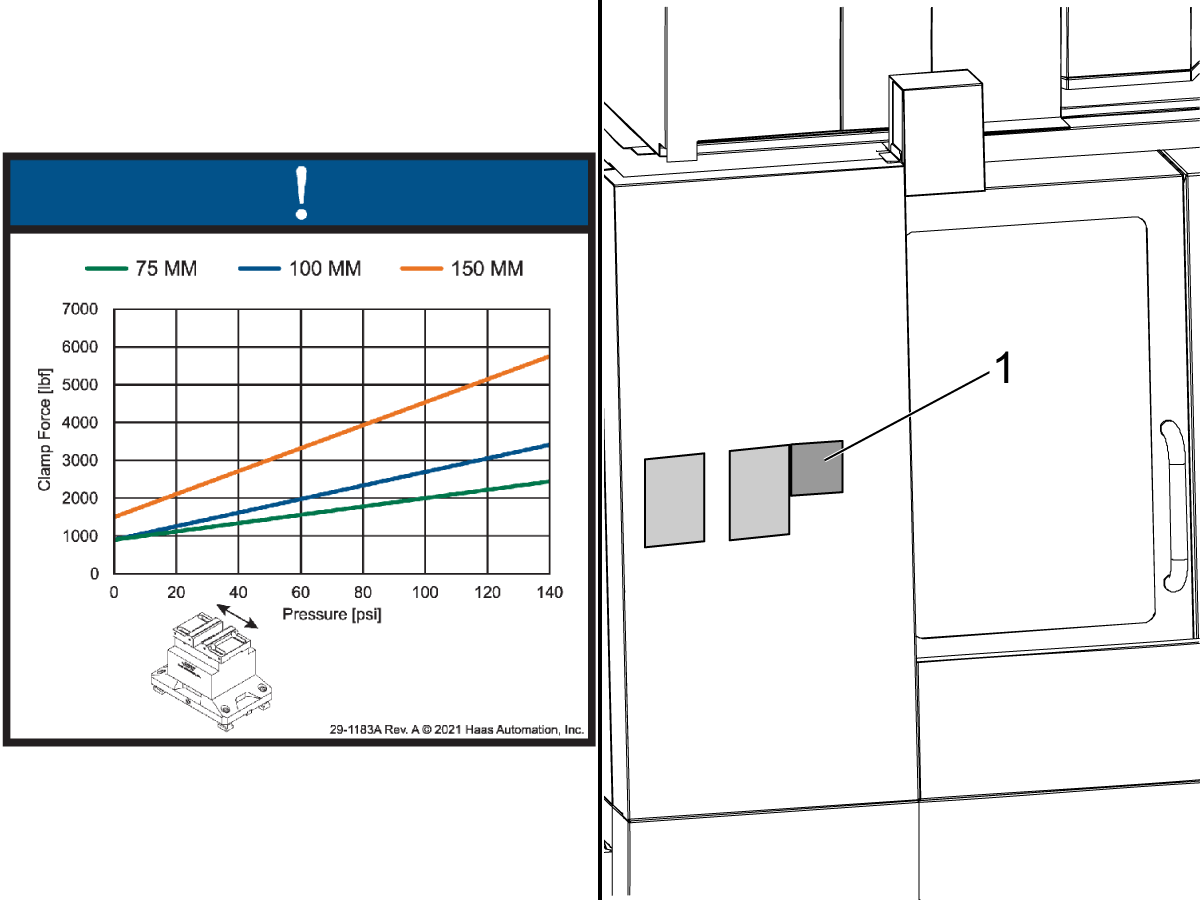
Place the the Force-Pressure decal for the vise on the front of the machine as shown [1].

Setup

1

Before enabling the vise press [SETTING], find Setting 276 and make sure the value is 15. 

2

Press [CURRENT COMMAND] and navigate to the Work holding tab under the Devices tab.

Highlight the vise you want to setup [1] and press [ALTER] to setup the vise [2].

3

Press [E-Stop] 

Press the right arrow on the keyboard to change the value from NONE [1] to 3:Custom Pneumatic Vise [2].

4

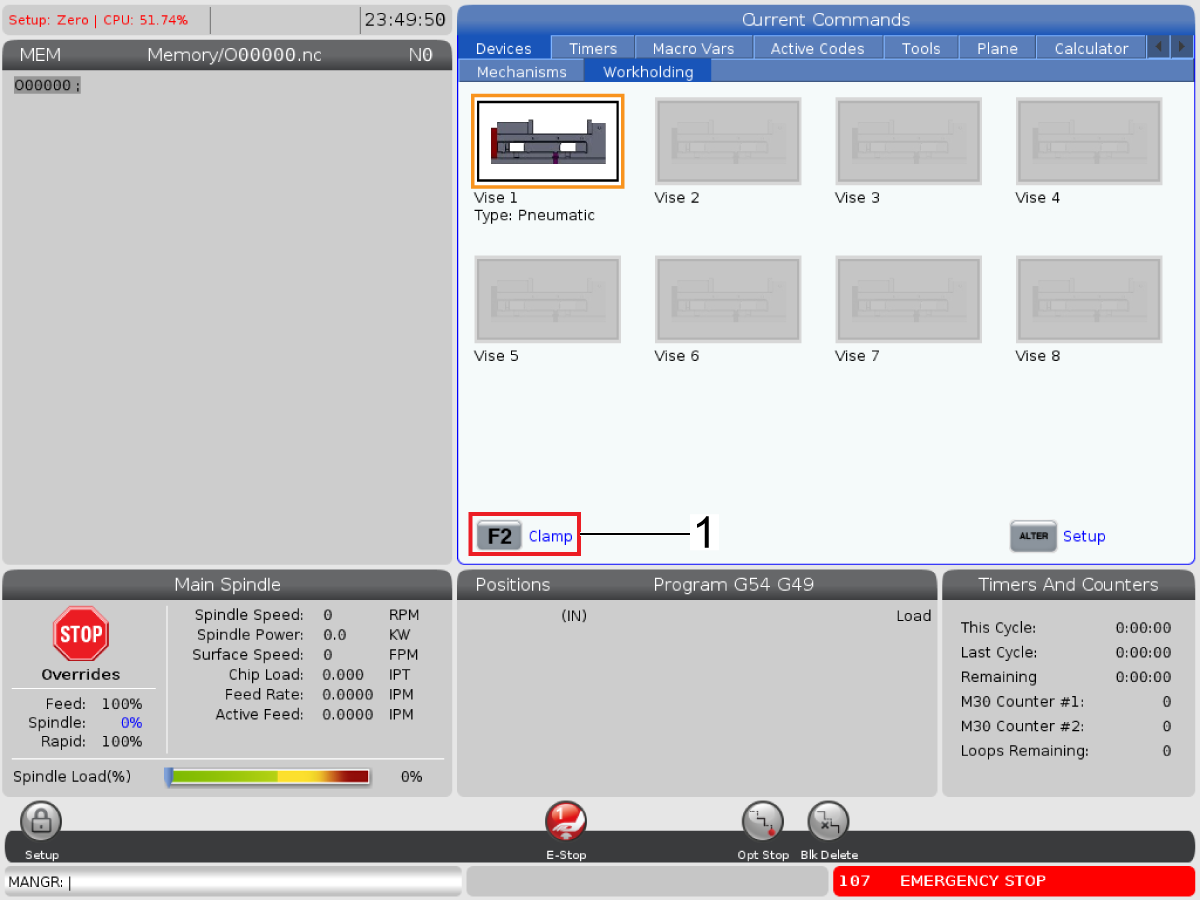
Make sure the vise clamps/unclamps correctly by pressing F2 [1].

Note: If the vise is not clamping/unclamping correctly, check the hoses routed to the programmable air manifold and reverse them if necessary.

Recently Updated

Pneumatic Vise - Troubleshooting Guide


TG0111

Symptom Table

Symptom Possible Cause Corrective Action
Alarm 391 FEATURE DISABLED Workholding is not setup on Workholding Tab. Enable the workholding on the Workholding tab. See the Programmable Air - Installation procedure for more information.
Message: Foot pedal 1 is locked out. The foot pedal is pressed when in the EDIT mode or LIST PROGRAM mode. Navigate off of the EDIT mode or LIST PROGRAM mode.
Foot pedal not actuating auto vise.  Software version not high enough. 

Update to 100.20.000.1200 or later. 

Minimum IO firmware: version 4.0 or higher. 

Workholding tab not showing in control panel.  Software version not high enough. 

Update to 100.20.000.1200 or later. 

Minimum Main IO firmware: version 4.0 or higher. 

Broken dove tail jaw. Incorrect part setup on jaws. Refer to the Proper Dovetail Usage reference document. 

Electrical Diagram

APC Door Interlock/Programmable Air Molex connector[1].

Air Blast Solenoid 30-11050[2]

Unclamp/Clamp Solenoid 30-13112[4]

PALLET AIR BLAST/PROGRAMMABLE AIR Molex connector[6]

Cable 33-0732[7]

Cable 33-0738[8]

Cable 33-0631[9]

Pneumatic vise - seal kit

Recently Updated

Pneumatic Vise - Seal kit


Introduction

This procedure will demonstrate how to change seals on HAAS Pneumatic vises for UMC and VMC machines.

Note : UMC machines have a removable and non-removable puck varients.

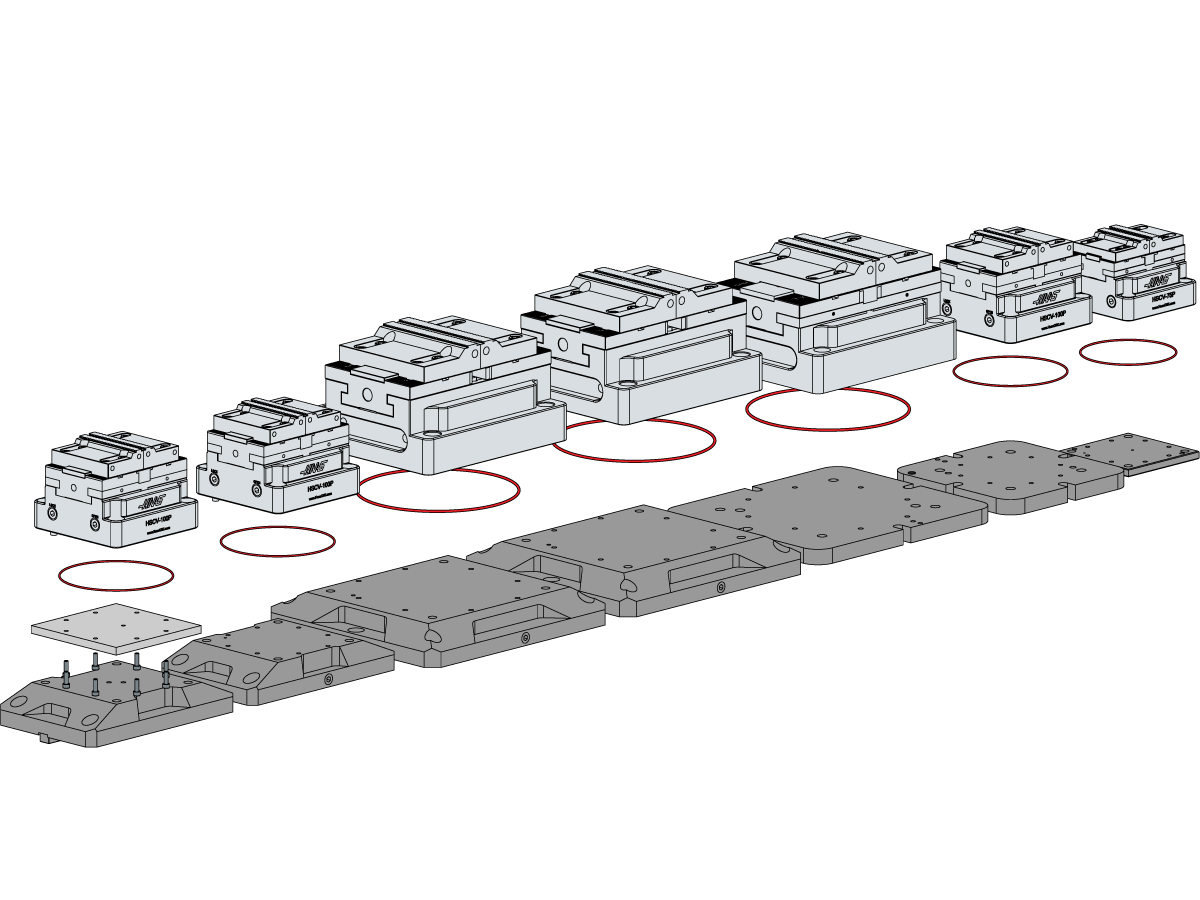
This document applies to the following part numbers :

  • 06-0213 100mm SEAL KIT, UMC B-VERSION
  • 06-0214 100mm SEAL KIT, UMC A-VERSION W/ PLATE
  • 06-0215 150mm SEAL KIT, UMC W/ REMOVEABLE SPUD
  • 06-0216 150mm SEAL KIT, VMC & UMC W/O REM. SPUD
  • 06-0217 100mm SEAL KIT, VMC
  • 06-0219 75mm SEAL KIT, ROTARY
  • 06-0220 75mm SEAL KIT, VMC

Note : Refer to Haas Fastener Torque Specifications during assembly.

Replacement

UMC Removable Puck (100-150) mm

1

Remove the top vise bolts.

2

Remove bottom bolts [2] and hard washers [1].

Note : Only 100mm vises use hard washers.

3

Seperate the vise [2] from the body [1].

4

Remove and replace the o-rings [1] and [2] from the bottom of the vise.

Note : Use multipurpose grease on o-rings and grooves. Ensure o-rings are properly seated. 

5

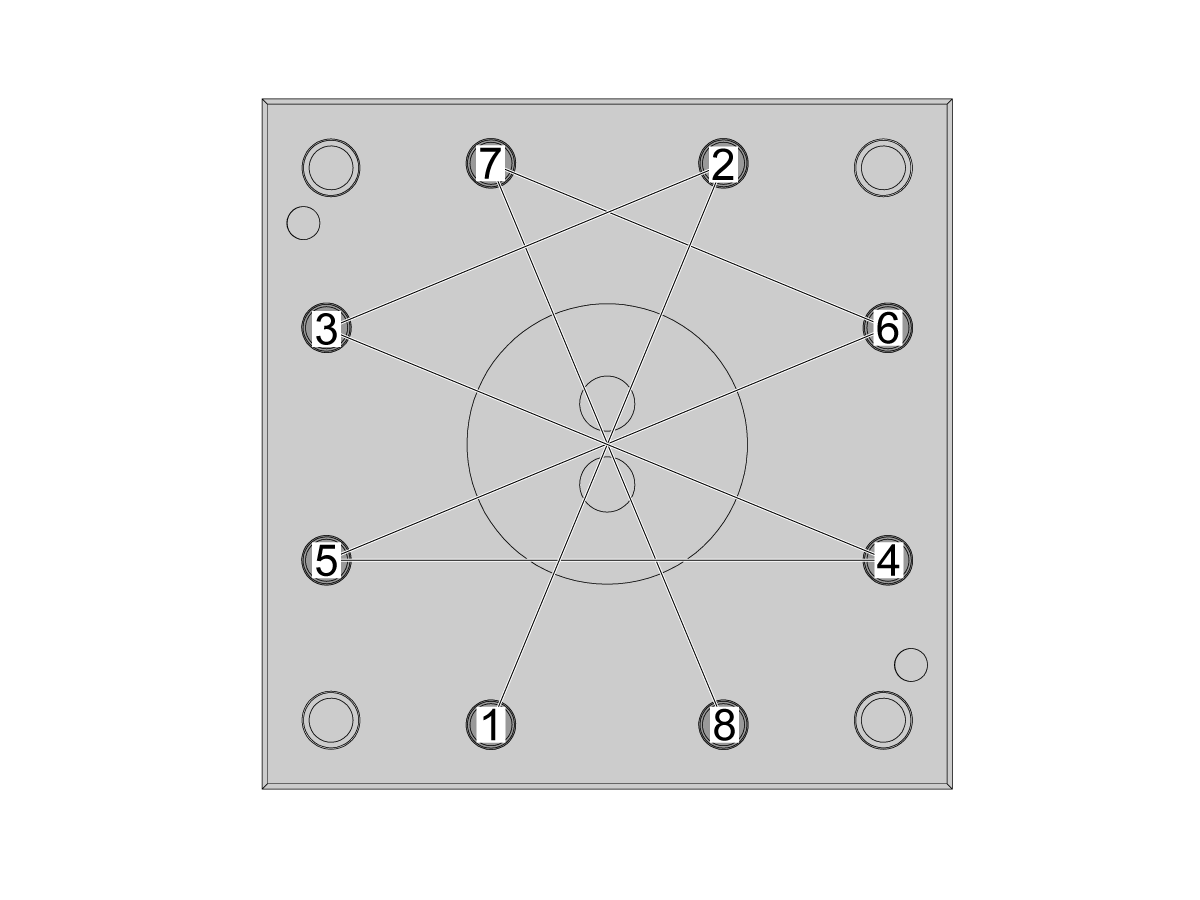
Assemble the vise and torque the body bolts in a star pattern for even clamping.

Note : Ensure that the air ports are aligned and orientated properly during re-assembly.

Important : Replace the hard washers.

6

Remove the bottom puck [3] by removing the hardware [4] to replace the o-rings [2].

Note : Use multipurpose grease on o-rings [2] and grooves [1]. Ensure o-rings are properly seated. 

7

Torque  the top vise bolts in a star pattern ensuring propper clamping.

Note : Re-torque the bottom 8 and top 4 bolts to ensure that the vise is fully seated.

Important : Test vise to ensure that there are no air leaks present.

UMC Non-removable Puck (100-150) mm

1

Remove the top bolts [1] and seperate the vise from the body [2].

Note : The 150mm vises need to have the bottom 8 bolts removed aswell to be seperated from the body

2

Remove the spacer plate [3] from the vise by removing the bottom bolts [2].

Note : Only the 100mm UMC vises have a spacer plate.

3

Remove and replace the o-rings [1] and [2] from the bottom of the vise.

Note : Use multipurpose grease on o-rings and grooves. Ensure o-rings are properly seated. 

4

Install the spacer plate [3] and torque the bolts [2] in a star patter.

Note : If the vise did not come with hard washers [1] make sure to install the provided ones.

Note : Only the 100mm vises have a spacer plate.

5

Remove the bottom o-rings from the spacer plateand replace them. Assemble the vise to the body while ensuring correct orientation.

Note : Use multipurpose grease on o-rings [2] and grooves. Ensure o-rings are properly seated. 

Note: Only 100mm UMC vises have these o-rings.

Note : Ensure that the air ports are aligned and orientated properly during re-assembly.

6

Assemble the vise and torque the body bolts in a star pattern for even clamping.

7

Torque  the top vise bolts in a star pattern ensuring propper clamping.

Note : Re-torque the bottom 8 and top 4 bolts to ensure that the vise is fully seated.

Important : Test vise to ensure that there are no air leaks present.

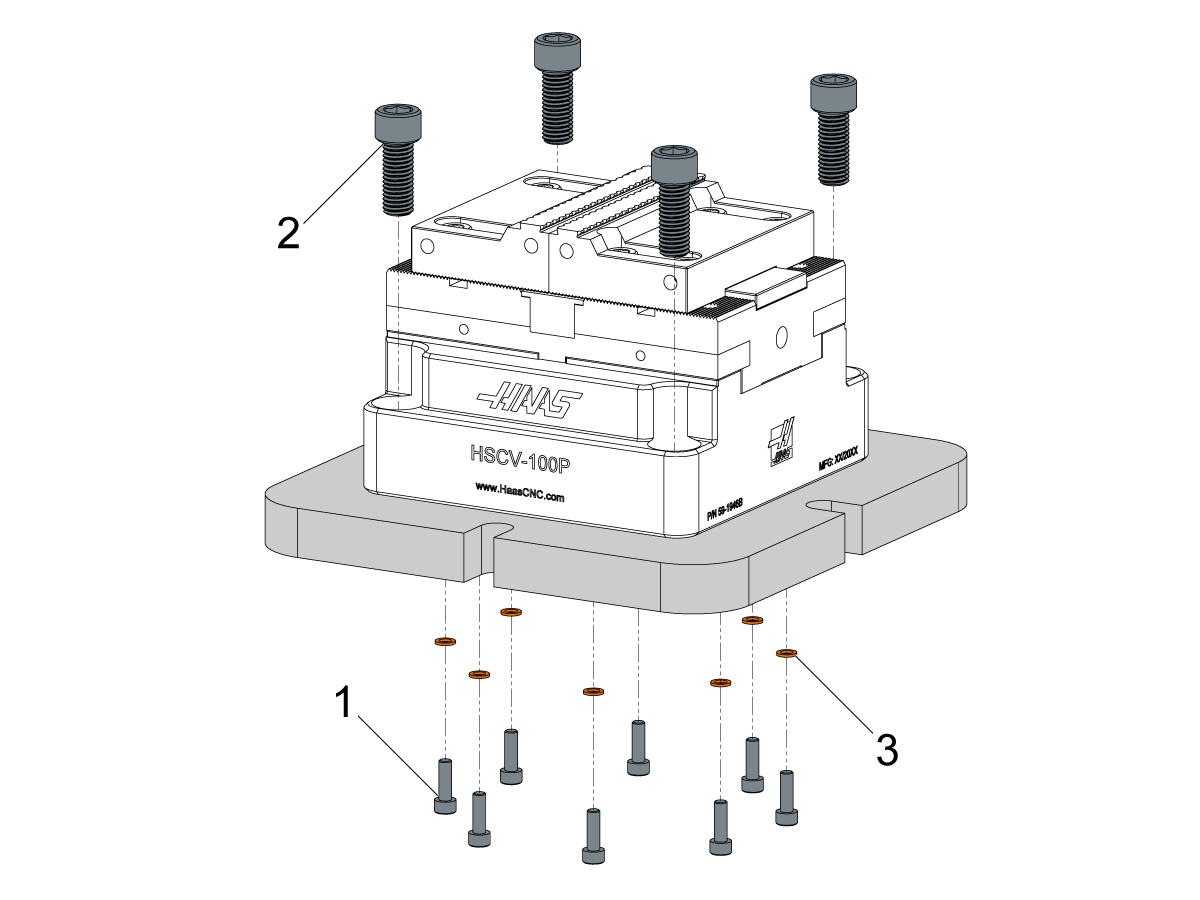
VMC (100-150) mm

1

Remove the top [2] and bottom bolts [1].

Note : Only 100mm VMC vises have the bottom washers [3].

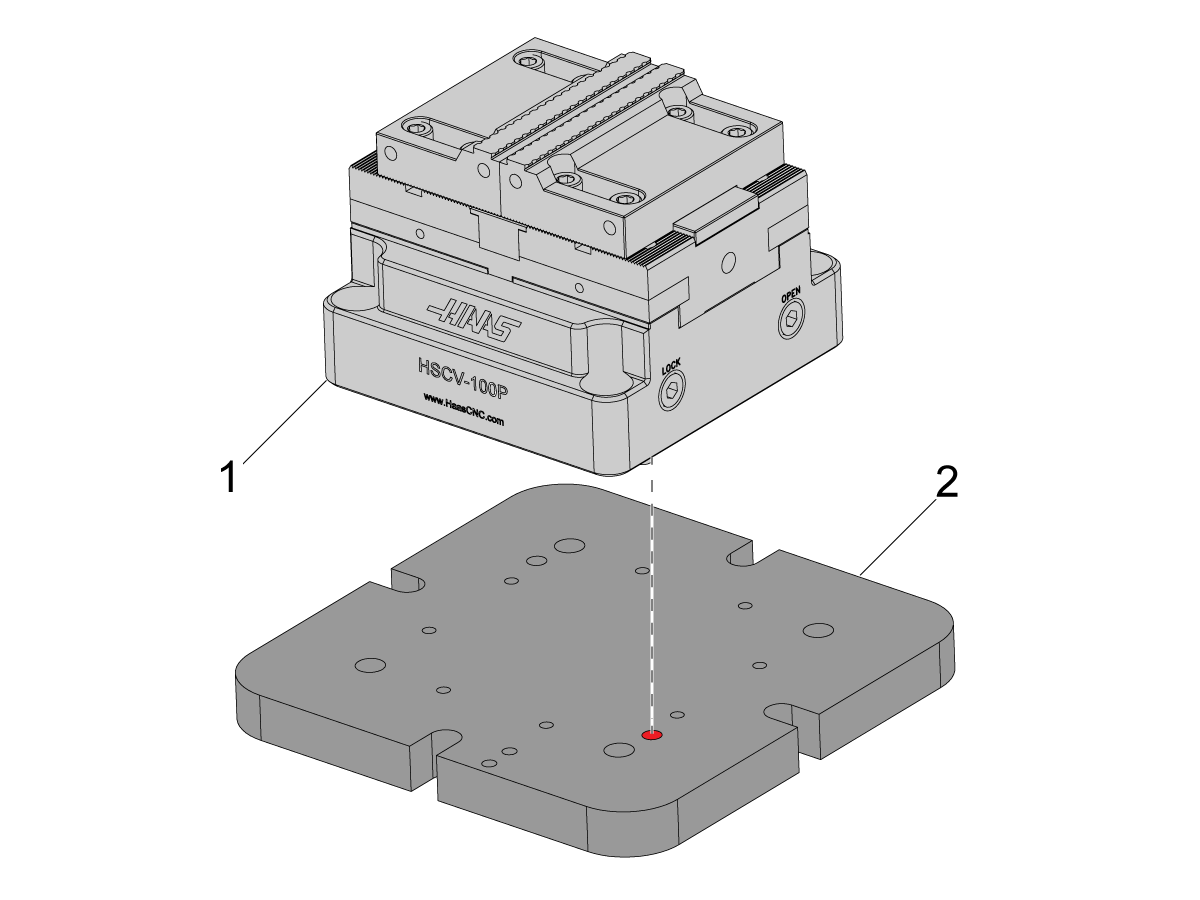
2

Seperate the vise [1] from the base plate [2].

3

Remove and replace the o-rings [1] and [2] from the bottom of the vise.

Note : Use multipurpose grease on o-rings and grooves. Ensure o-rings are properly seated. 

4

Attach the vise with the base plate ensuring correct orientation.

Note : Ensure that the air ports are aligned and orientated properly during re-assembly.

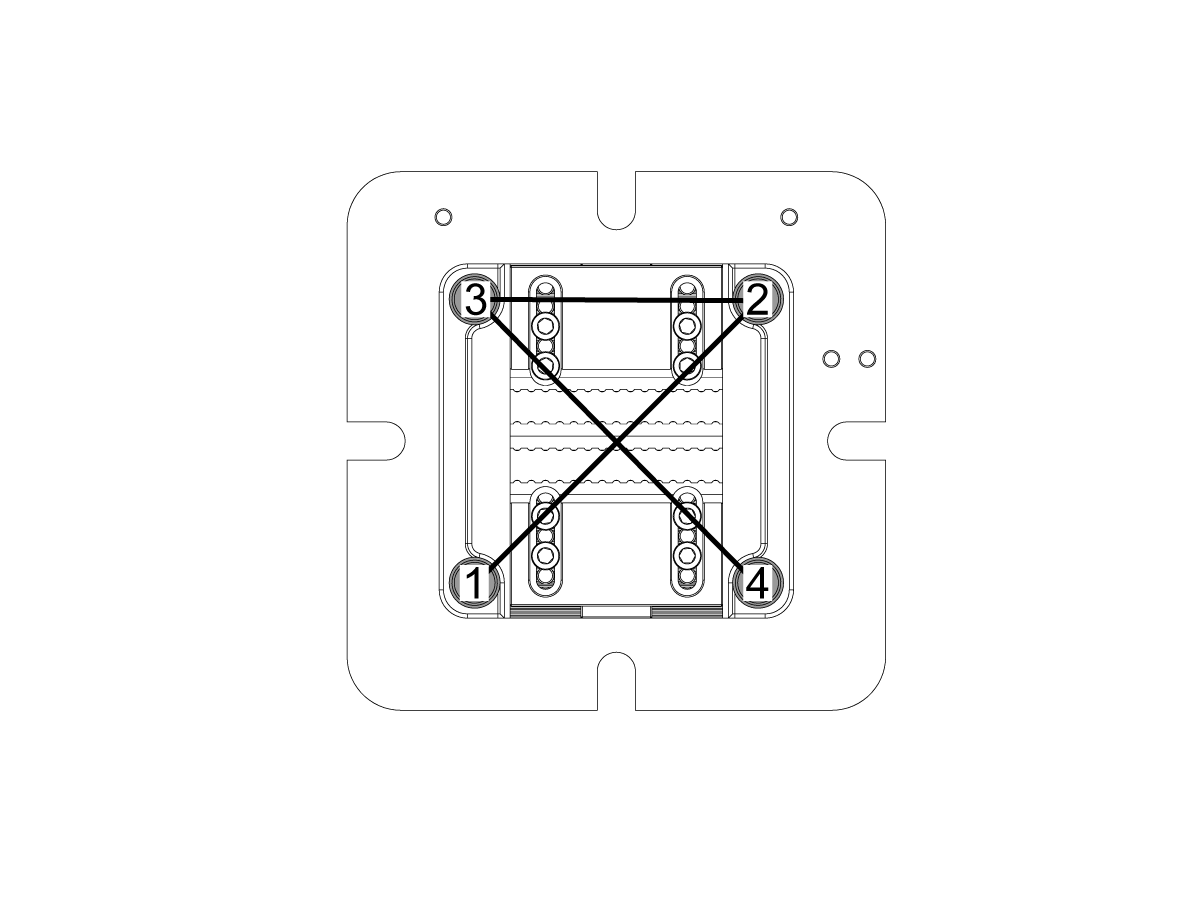
5

Torque the bottom bolts [1] through [8] in a star pattern to ensure even clamping on the o-rings.

6

Torque the top bolts [1] through [4] in a star pattern.

Note : Re-torque the bottom 8 and top 4 bolts to ensure that the vise is fully seated.

Important : Test vise to ensure that there are no air leaks present.

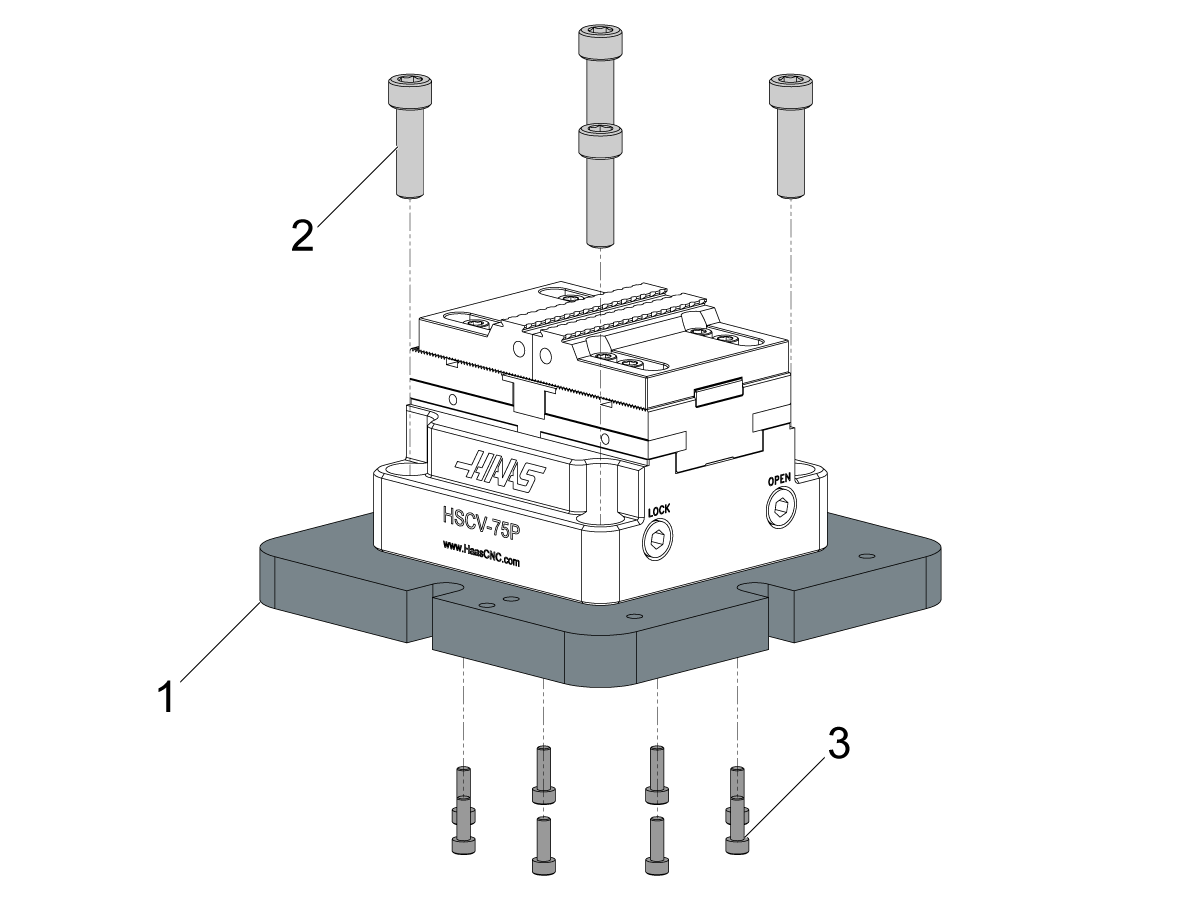
VMC (75) mm

1

Remove the bottom bolts [3] then the top bolts [2] to seperate the top the vise from the base plate [1].


2

Remove and replace the o-ring [1] and ensure that the vise plug [2] is properly seated into the vise body.

Note : Use multipurpose grease on o-rings and grooves. Ensure o-rings are properly seated. 

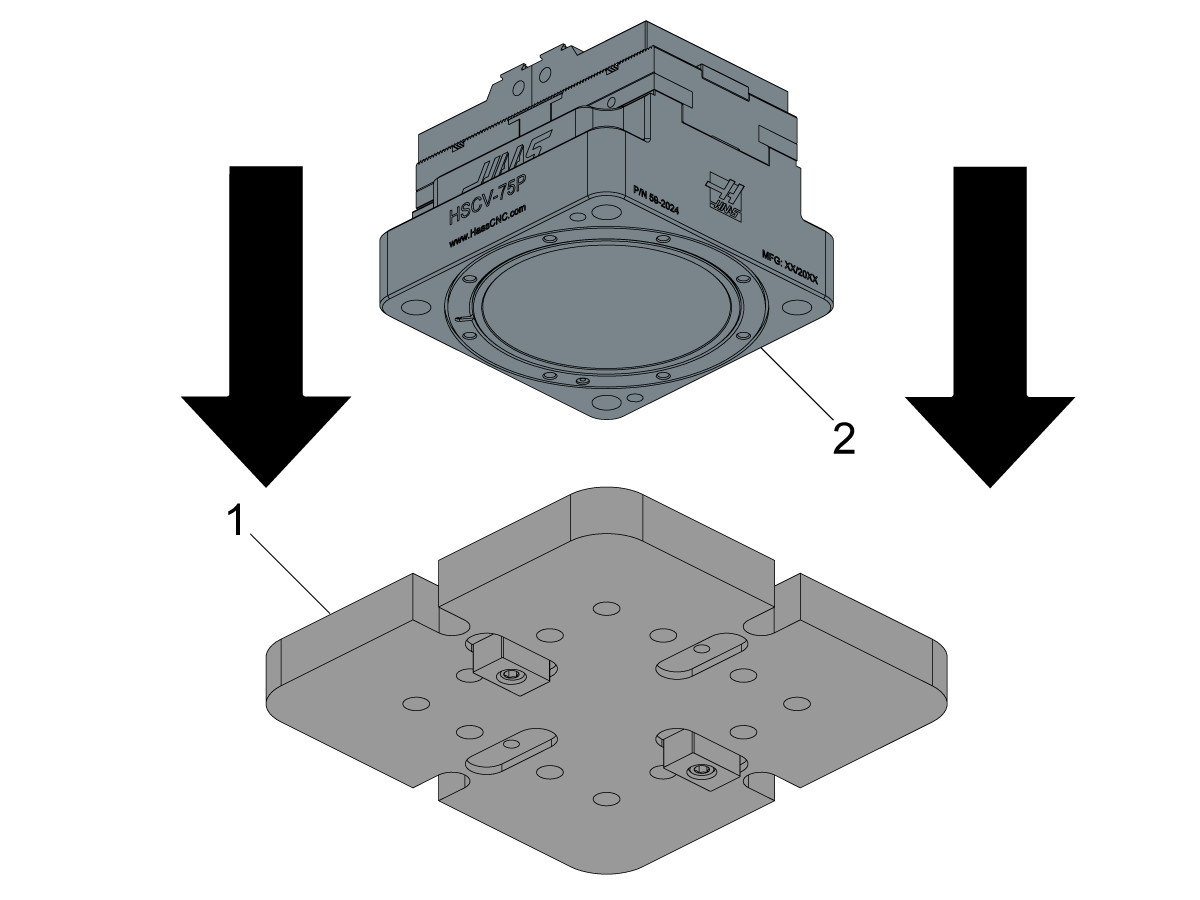
3

Attach the vise [2] with the base plate [1].

Note : Ensure that the air ports are aligned and orientated properly during re-assembly.


4

Torque the bottom bolts [1] through [8] in a star pattern to ensure even clamping on the o-rings.

5

Torque the top bolts [1] through [4] in a star pattern.

Note : Re-torque the bottom 8 and top 4 bolts to ensure that the vise is fully seated.

Important : Test vise to ensure that there are no air leaks present.

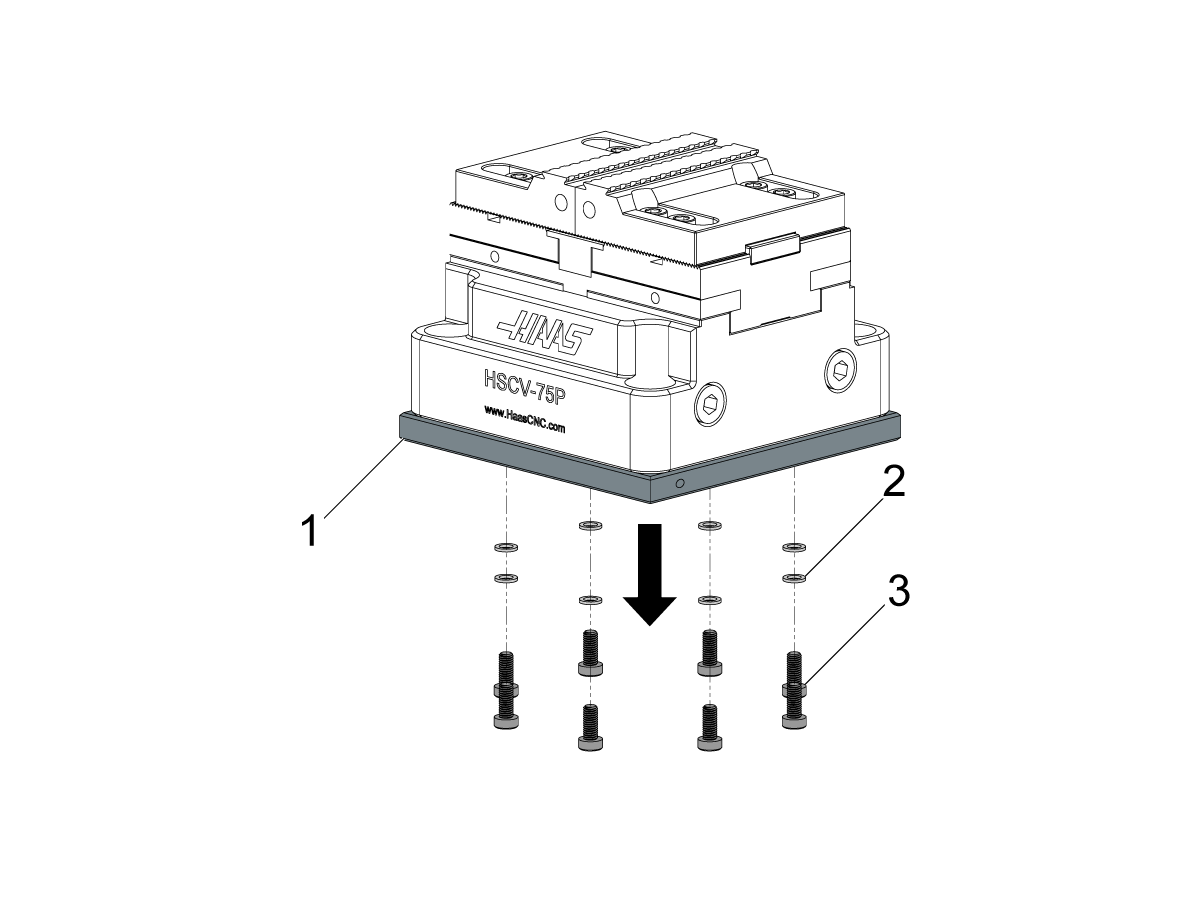
Rotary (75) mm

1

Remove the bottom bolts [3] and washers [2] to seperate the top the vise from the spacer plate [1].

Note : Replace washers.


2

Remove and replace the o-rings [1] and [2] from the bottom of the vise.

Note : Use multipurpose grease on o-rings and grooves. Ensure o-rings are properly seated. 

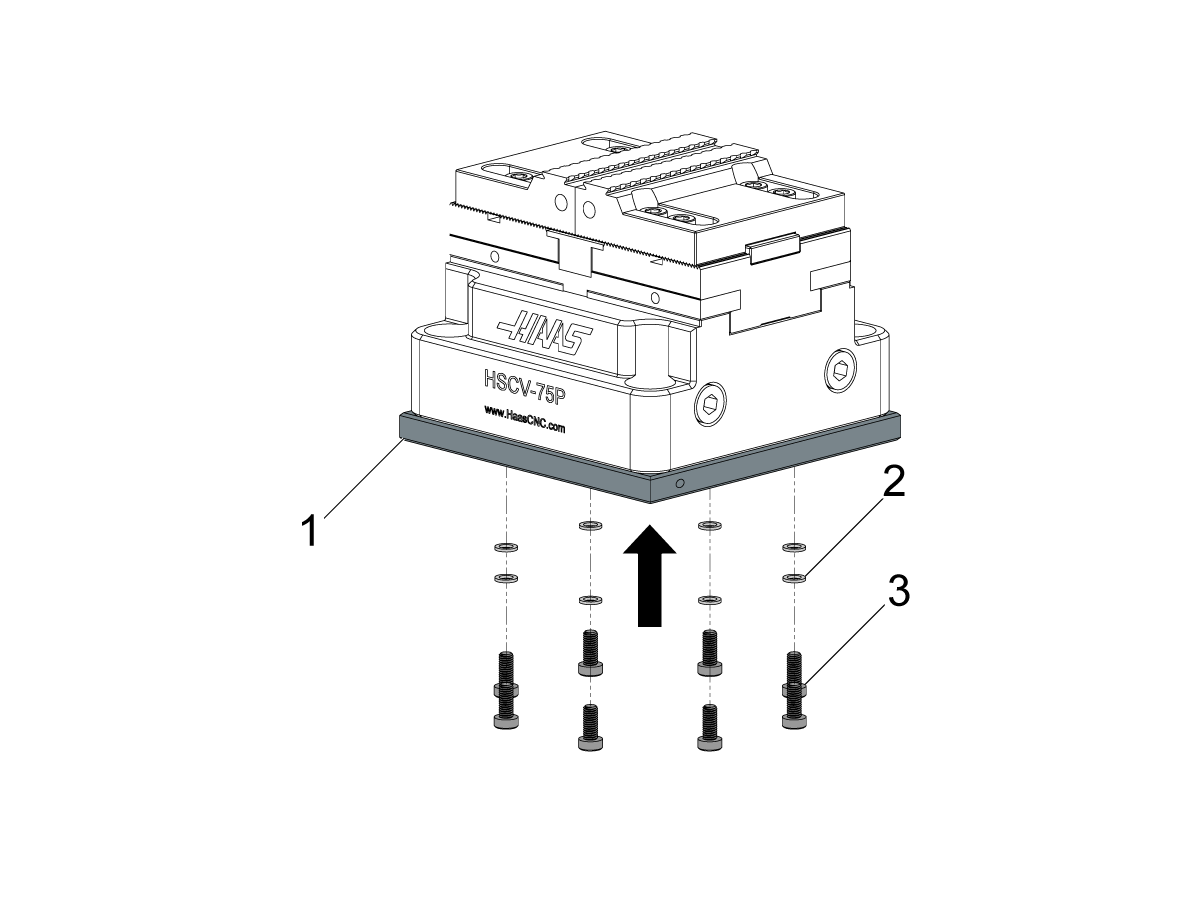
3

Assembly the vise to the spacer plate by installing the bottom bolts [3] and washers [2].

Note : Ensure that the air ports are aligned and orientated properly during re-assembly.

4

Torque the bottom bolts [1] through [8] in a star pattern to ensure even clamping on the o-rings.

Note : Re-torque the bottom 8 and top 4 bolts to ensure that the vise is fully seated.

Important : Test vise to ensure that there are no air leaks present.

6.6 Pneumatic Chuck HRT 210 - Installation

Recently Updated

Pneumatic Chuck HRT 210 - Installation


AD0882

Revision A - 5/2025

Introduction

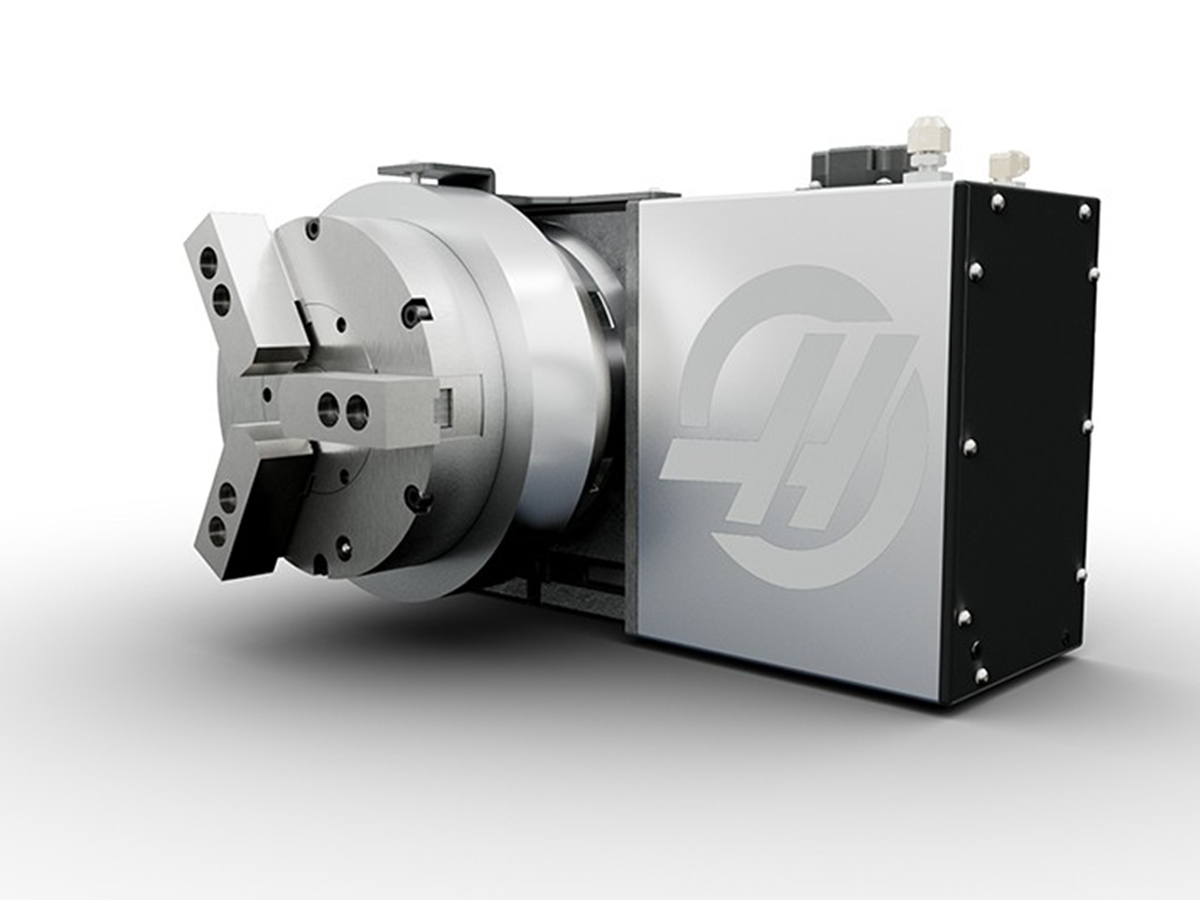
The following procedure will guide you through the installation of the pneumatic 3-jaw air chuck on an HRT-210.

The following installation applies to the following kit

  • 08 - 1931 HRT210 AIR CHUCK KIT


Important: The machine must meet the necessary requirements before installing the 3 - Jaw Air Chuck. The programmable air option must be installed prior to this procedure. Refer to Programmable Air - Installation for more information. 


Air Chuck Installation

1

Important: Before installing the chuck be sure to shut off air to the machine and bleed out the air from the main manifold in the machine's lube cabinet. 

Using the hardware kit that was provided with the chuck, install the 6 T- Nuts  into the T- Slots of the HRT's Platter [1].

Using the 6 x M12 socket head cap screws install the adapter plate to the HRT's platter [2]. 


2

Using the six socket head cap screws provided with the air chuck, align the air chuck with the adapter plate and torque the bolts to securely fasten the chuck to the plate.

Note: When installing the air chuck to the adapter plate ensure that the following airports are located on the left side of the rotary as shown [2].


3

Using the bracket provided in the kit, remove the two button head cap screws located at [1], then attach the bracket using those same screws.

Install one of the extra fasteners provided in the kit into the top mounting hole of the chuck [2].

Note:  This top screw will serve as an anti-rotation stop, preventing the plate with the chuck’s air ports from rotating a full 360 degrees and causing the hoses to bind once installed.


4

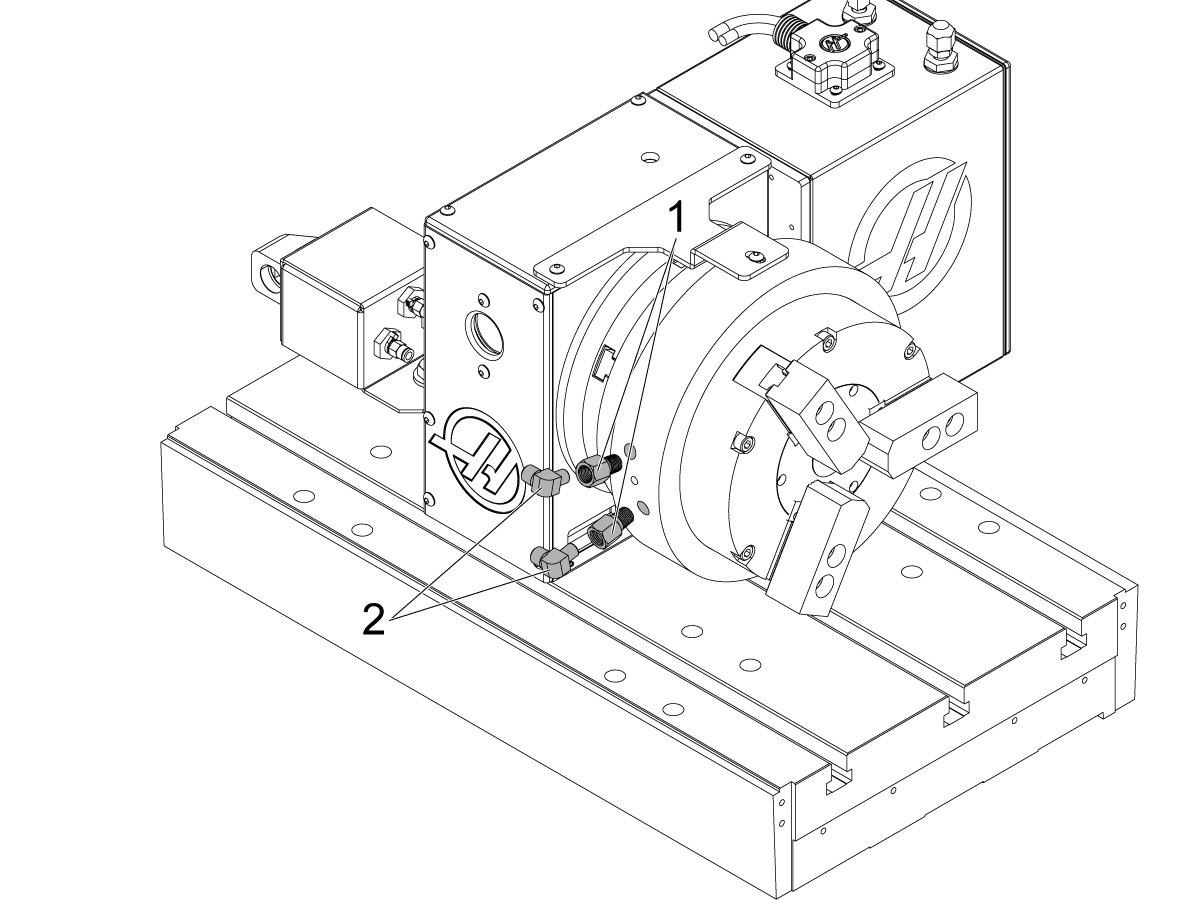
Using the fittings provided from the installation kit install the two 1/4 NPT Female  x 1/4 NPT Male to the 3 - Jaw Air Chuck [1].

Install the two 90-degree 1/4 NPT Male x 1/4 NPT Male to the two female fittings [2]. 


5

Remove the current 1/4 inch fittings on the programmable air manifold. 

Note: When removing the original fittings, make sure to note which port is for clamping and which is for unclamping, as this information will be needed in the next step.

Using the two 1/4 NPT Male x 1/4 NPT male fittings install them to the programmable air manifold [1].


6

Using the one of the hoses provided in the kit, route the 1/4" female-ended hose from the air manifold to the unclamp fitting on the air chuck [1].

Use the remaining hose provided in the kit, and route the 1/4" female-ended hose from the air manifold to the clamp fitting on the air chuck [2].

Note: Use the Rotary Cable Management Kit to secure excess hoses and prevent them from hanging loosely inside the machine. Refer to the Rotary Cable Management Installation Guide for more information. 

Setup

1

Before enabling the vise press [SETTING], find Setting 276 and make sure the value is 15. 

2

Press [CURRENT COMMAND] and navigate to the Work holding tab under the Devices tab.

Highlight the vise you want to setup [1] and press [ALTER] to setup the vise [2].

3

Press [E-Stop] 

Press the right arrow on the keyboard to change the value from NONE [1] to 3:Custom Pneumatic Vise [2].

4

Make sure the vise clamps/unclamps correctly by pressing F2 [1].

Note: If the vise is not clamping/unclamping correctly, check the hoses routed to the programmable air manifold and reverse them if necessary.

Recently Viewed Items

You Have No Recently Viewed Items Yet

Feedback
Haas Logo

Haas Delivered Price

This price includes shipping cost, export and import duties, insurance, and any other expenses incurred during shipping to a location in France agreed with you as a buyer. No other mandatory costs can be added to the delivery of a Haas CNC Product.

KEEP UP WITH THE LATEST HAAS TIPS AND TECHNOLOGY...

Sign up now!   

HAAS TOOLING ACCEPTS THE FOLLOWING:

  • Service & Support
  • Owners
  • Request Service
  • Operator Manuals
  • Haas Parts
  • Rotary Repair Request
  • Pre-Install Guides
  • Shopping Tools
  • Build & Price a New Haas
  • Available Inventory
  • The Haas Price List
  • CNCA Financing
  • About Haas
  • Accessibility Statement
  • DNSH Statement
  • Export Compliance
  • Careers
  • Certifications & Safety
  • Contact Us
  • History
  • Terms & Conditions
  • Haas Tooling Terms & Conditions
  • Privacy
  • Warranty
  • Haas Community
  • Haas Certification Program
  • Haas Motorsports
  • Gene Haas Foundation
  • Haas Technical Education Community
  • Events
  • Join the Conversation
  • Facebook
  • X
  • Flickr
  • YouTube
  • LinkedIn
  • Instagram
  • TikTok
© 2026 Haas Automation, Inc – CNC Machine Tools

This site is protected by reCAPTCHA and the Google Privacy Policy and Terms of Service apply.

2800 Sturgis Rd., Oxnard, CA 93030
Toll Free: (888) 817-4446 / Fax: 805-278-8554