My Haas Welcome,
!
Haas Tooling MyHaas/HaasConnect Sign In Register Haas Tooling MyHaas/HaasConnect Sign Out Welcome, My Machines Latest Activity My Quotes My Account My Users Sign Out
Find Your Distributor
  1. Select Language
    1. English
    2. Deutsch
    3. Español - España
    4. Español - México
    5. Français
    6. Italiano
    7. Português
    8. Český
    9. Dansk
    10. Nederlands
    11. Magyar
    12. Polski
    13. Svenska
    14. Türkçe
    15. 中文
    16. Suomi
    17. Norsk
    18. الإنجليزية
    19. български
    20. Hrvatski
    21. Ελληνικά
    22. Română
    23. Slovenský
    24. Slovenščina
    25. 한국어
    26. 日本語
    27. Українська
  • machines Main Menu
    • Vertical Mills
      Vertical Mills
      Vertical Mills View All
      • Vertical Mills
      • VF Series
      • Universal Machines
      • VR Series
      • VP-5 Prismatic
      • Pallet-Changing VMCs
      • Mini Mills
      • Mold Machines
      • High-Speed Drill Centers
      • Drill/Tap/ Mill Series
      • Toolroom Mills
      • Pocket Mill
      • Compact Mills
      • Gantry Series
      • SR Sheet Routers
      • Extra-Large VMC
      • Double-Column Mills
      • 3+2 Positioning Machines
    • Multi-Axis Solutions
      Multi-Axis Solutions
      Multi-Axis Solutions View All
      • Multi-Axis Solutions
      • Y-Axis Lathes
      • 5-Axis Mills
    • Lathes
      Lathes
      Lathes View All
      • Lathes
      • ST Series
      • Dual-Spindle
      • Box Way Series
      • Toolroom Lathes
      • Chucker Lathe
      • Haas Bar Feeders
    • Horizontal Mills
      Horizontal Mills
      Horizontal Mills View All
      • Horizontal Mills
      • 50-Taper
      • 40-Taper
    • Rotaries & Indexers
      Rotaries & Indexers
      Rotaries & Indexers View All
      • Rotaries & Indexers
      • Rotary Tables
      • Indexers
      • 5-Axis Rotaries
      • Extra-Large Rotaries
    • Special Series
      Special Series
      Special Series View All
      • Special Series
      • EU_Series_Redirect
    • Automation Systems
      Automation Systems
      Automation Systems View All
      • Automation Systems
      • Mill Automation
      • Lathe Automation
      • Automatic Parts Loaders
      • Automation Models
    • Desktop Machines
      Desktop Machines
      Desktop Machines View All
      • Desktop Machines
      • Desktop Mill
      • Desktop Lathe
      • Control Simulator, Standard
      • Control Simulator, Premium
    • Shop Equipment
      Shop Equipment
      Shop Equipment View All
      • Shop Equipment
      • Knee Mill
      • Haas Manual Lathes
      • Haas Saws
    • Fabrication Machines
      Fabrication Machines
      Fabrication Machines View All
      • Fabrication Machines
      • Laser Cutting Machines
      • CNC Press Brakes
    • QUICK LINKS Special Series  Special Series 
      EU SERIES EU SERIES BUILD & PRICE | PRICE LIST BUILD & PRICE | PRICE LIST In-Stock Machines In-Stock Machines WHAT’S NEW WHAT’S NEW YOUR FIRST CNC YOUR FIRST CNC
      SHOPPING TOOLS
      • Build & Price a Haas
      • Price List
      • Available Inventory
      • CNCA Financing
      WANT TO TALK TO SOMEONE?

      A Haas Factory Outlet (HFO) can answer your questions, and walk you through your best options.

      CONTACT YOUR DISTRIBUTOR >
  • Options Main Menu
    • The Haas Control Value Option Packages
      Value Option Packages
      Value Option Packages View All
      • Value Option Packages
    • Product Image Spindles
      Spindles
      Spindles View All
      • Spindles
    • Product Image Tool Changers
      Tool Changers
      Tool Changers View All
      • Tool Changers
    • Product Image 4th- | 5th-Axis
      4th- | 5th-Axis
      4th- | 5th-Axis View All
      • 4th- | 5th-Axis
    • Product Image Turrets & Live Tooling
      Turrets & Live Tooling
      Turrets & Live Tooling View All
      • Turrets & Live Tooling
    • Product Image Probing
      Probing
      Probing View All
      • Probing
    • Haas Chip & Coolant Management Chip & Coolant Management
      Chip & Coolant Management
      Chip & Coolant Management View All
      • Chip & Coolant Management
    • The Haas Control The Haas Control
      The Haas Control
      The Haas Control View All
      • The Haas Control
    • Product Image Product Options
      Product Options
      Product Options View All
      • Product Options
    • Product Image Tooling & Fixturing
      Tooling & Fixturing
      Tooling & Fixturing View All
      • Tooling & Fixturing
    • Product Image Workholding
      Workholding
      Workholding View All
      • Workholding
    • Product Image 5-Axis Solutions
      5-Axis Solutions
      5-Axis Solutions View All
      • 5-Axis Solutions
      • 5 Easy Steps to 5-Axis
    • QUICK LINKS Special Series  Special Series 
      EU SERIES EU SERIES BUILD & PRICE | PRICE LIST BUILD & PRICE | PRICE LIST In-Stock Machines In-Stock Machines WHAT’S NEW WHAT’S NEW YOUR FIRST CNC YOUR FIRST CNC
      SHOPPING TOOLS
      • Build & Price a Haas
      • Price List
      • Available Inventory
      • CNCA Financing
      WANT TO TALK TO SOMEONE?

      A Haas Factory Outlet (HFO) can answer your questions, and walk you through your best options.

      CONTACT YOUR DISTRIBUTOR >
  • Why Haas Main Menu
      Discover the Haas Difference
    • Why Haas
    • MyHaas
    • Education Community
    • Industry 4.0
    • Haas Certification
    • Customer Testimonials
  • Service Main Menu
      Welcome to Haas Service
      SERVICE HOME Operator’s Manuals How-To Procedures Troubleshooting Guides Preventive Maintenance Haas Parts Haas Tooling Videos
  • Videos Main Menu
  • Main Menu
    • View All
    • View All
    • View All
    • View All
      • HTEC Curriculum Support
      • Haas Value Option Packages (VOP) Journey
    • View All
      • Haas 10 kg Cobot Package
      • Cobot Kits
      • DC-1 Drill Center
      • CNC Sales News
      • Do More With Your Haas
    • View All
    • View All
      • contact-us-test
      • 4 - AUTOMATION SYSTEMS
      • Carousel-V2
      • expert test
      • Demo_Day_Trident-test
      • Link Test
      • image-sale-tag-test
      • article-list-test
      • Haas 25 kg Robot Package
      • test-algolia-page
    • View All
    • View All
    • View All
    • View All
      • calc-test
    • View All
    • QUICK LINKS Special Series  Special Series 
      EU SERIES EU SERIES BUILD & PRICE | PRICE LIST BUILD & PRICE | PRICE LIST In-Stock Machines In-Stock Machines WHAT’S NEW WHAT’S NEW YOUR FIRST CNC YOUR FIRST CNC
      SHOPPING TOOLS
      • Build & Price a Haas
      • Price List
      • Available Inventory
      • CNCA Financing
      WANT TO TALK TO SOMEONE?

      A Haas Factory Outlet (HFO) can answer your questions, and walk you through your best options.

      CONTACT YOUR DISTRIBUTOR >
  • Haas Tooling Main Menu
  • Haas Service Parts Main Menu

My Haas Welcome,
!
Haas Tooling MyHaas/HaasConnect Sign In Register Haas Tooling MyHaas/HaasConnect Sign Out Welcome, My Machines Latest Activity My Quotes My Account My Users Sign Out
Find Your Distributor
  1. Select Language
    1. English
    2. Deutsch
    3. Español - España
    4. Español - México
    5. Français
    6. Italiano
    7. Português
    8. Český
    9. Dansk
    10. Nederlands
    11. Magyar
    12. Polski
    13. Svenska
    14. Türkçe
    15. 中文
    16. Suomi
    17. Norsk
    18. الإنجليزية
    19. български
    20. Hrvatski
    21. Ελληνικά
    22. Română
    23. Slovenský
    24. Slovenščina
    25. 한국어
    26. 日本語
    27. Українська
×

Search Results

Web Pages

Images

    • <
    • 1
    • >

Haas Cobot - Joint Module Replacement - AD0767

Service Home How To Procedures Haas Cobot - Joint Module Replacement - AD0767

Haas Cobot - Joint Module Replacement - AD0767

- Jump to Section - 1. Introduction 2. Joint Replacement (13 steps) 3. Update Firmware Version (19 steps) Back to Top
Recently Updated Last updated: 05/09/2024

Haas Cobot - Joint Module - Replacement


AD0767

Introduction

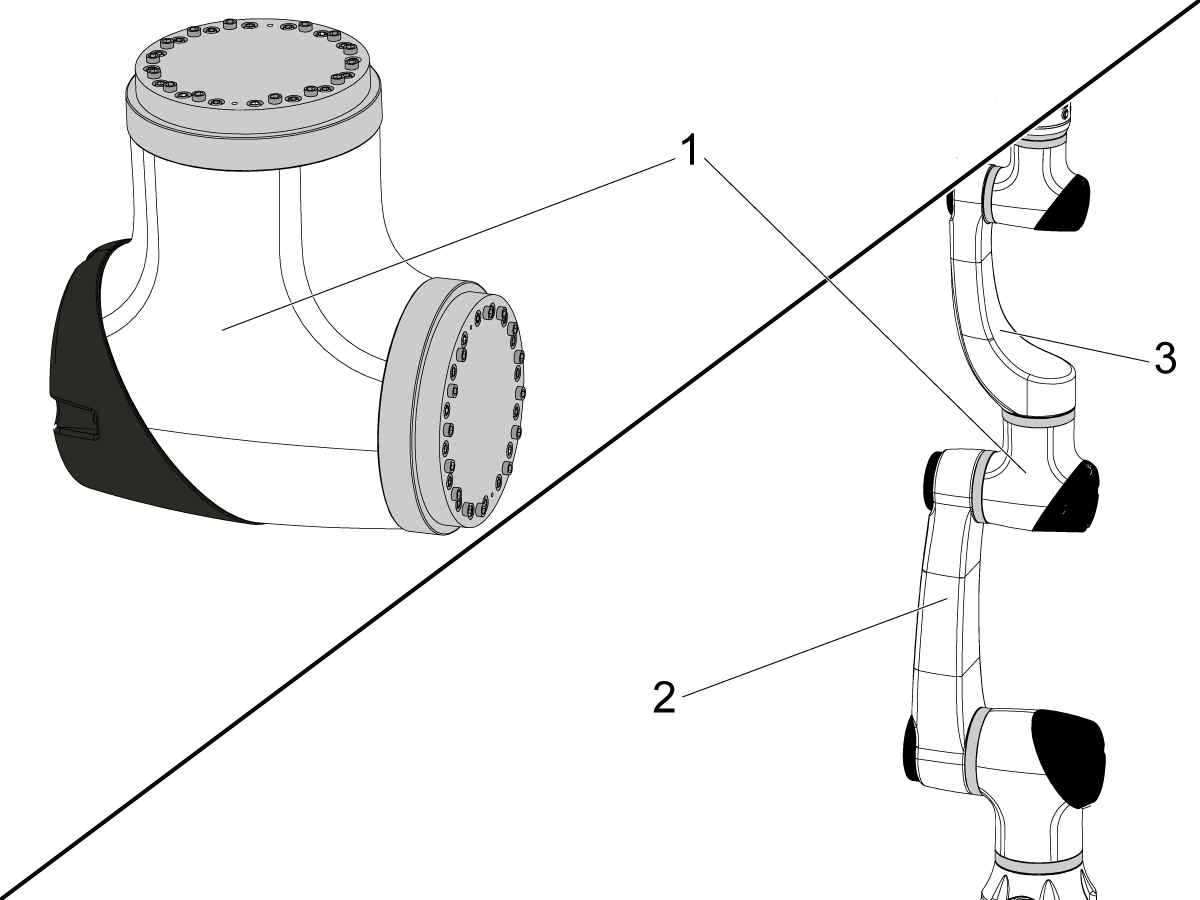
This procedure will show how to replace one of the joint modules of a haas cobot. A cobot has a total of 6 joints which are comprised of 3 joint modules. 

Each joint module [1] has the same installation process outlined in this procedure. 

To replace a joint [1] you will access the arm module below [2] (or base for bottom joint) and the arm module above [3] the joint (or end effector for top joint module).

Important: Joint modules are all the same design but the size of each joint module is different. Refer to the table below for what part number should be ordered based on the joint being replaced.

Required tools:

  • A set of metric hex bits
  • A pack of small zipties
  • A laptop that can connect to ethernet cable
  • RJ-45 (Ethernet) cable
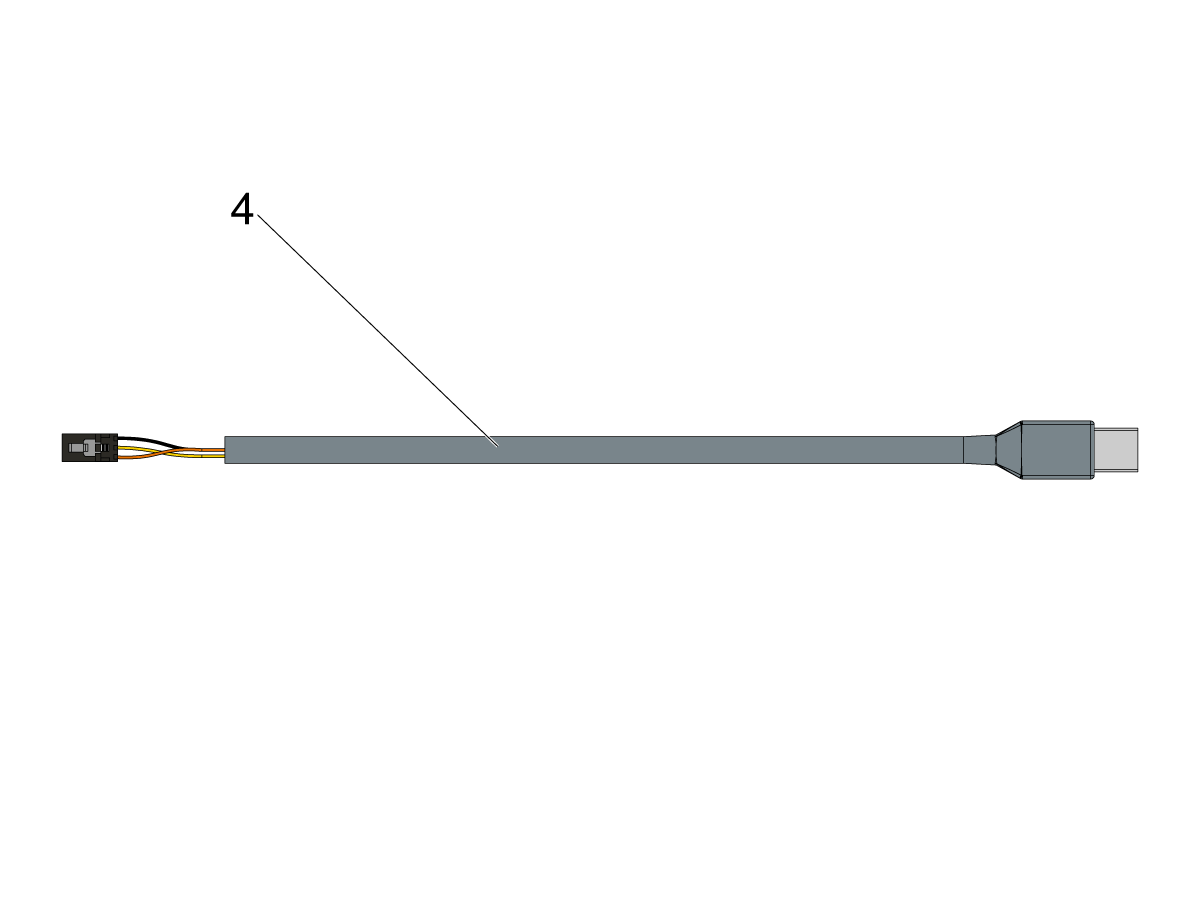
  • T-0193 - Cobot joint module usb cable [4]

Required Software:

  • HMServoV4.6.4 - Sofware needed to read/upload firmware to joint module
  • HRTool - Software needed to remaster cobot zero positions.

Note: These software prgrams can be downloaded from HBC in the 09_Cobot Software inside the Next Generation Control folder.

Note: T-0193 is a cable that has a USB port on one end and then a 3 pin connector that connects to the PCB on the joint module. This cable to needed to upload firmware to the joint module.

The joint may need to have firmware loaded in order to have joint match the firmware on the rest of the cobot.

Note: Haas Service will need to be contacted in order to get the correct firmware version. Refer to the section on uploading firmware for what information Haas Service needs in order to get the matching firmware.

Haas Cobot Model Joint Module (Joint1, Joint2) Joint Module (Joint3, Joint4) Joint Module (Joint5, Joint6)
HC10 93-3907 93-3868 93-3908

Joint Replacement

1

Power off the cobot. Once the cobot has been powered off, turn off the power switch on the control box. Then continue with the mechanical replacement of the joint module.

Important: The images and instructions in this procedure are for replacing the (Joint3, Joint4) joint module which is located in the middle of the arm modules. It is the same process for replacing the (Joint1, Joint2) joint module and the (Joint5, Joint6) joint module. It's recommended to take a picture of wires, and bolt positions before taking it apart. Those pictures should serve as a reference for installing the replacement joint after disassembly.

2

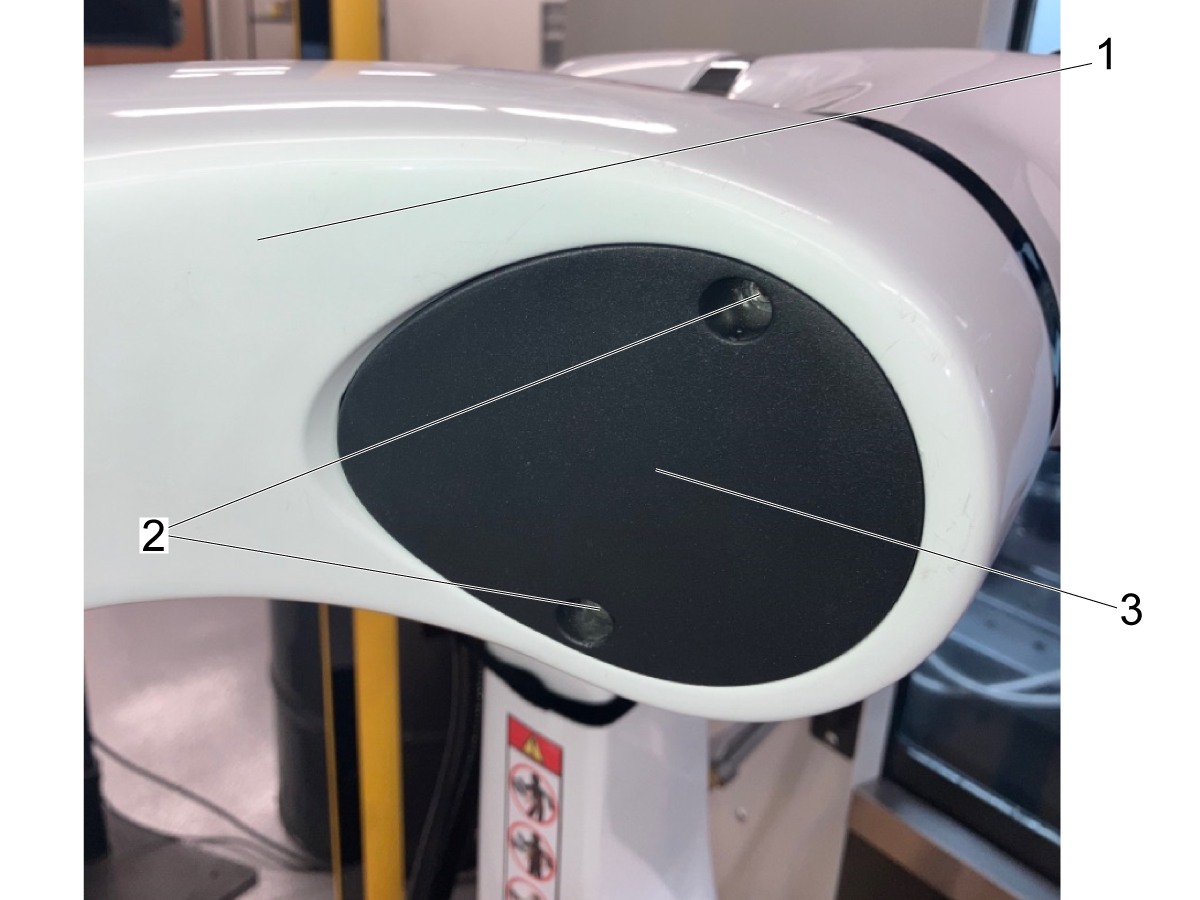
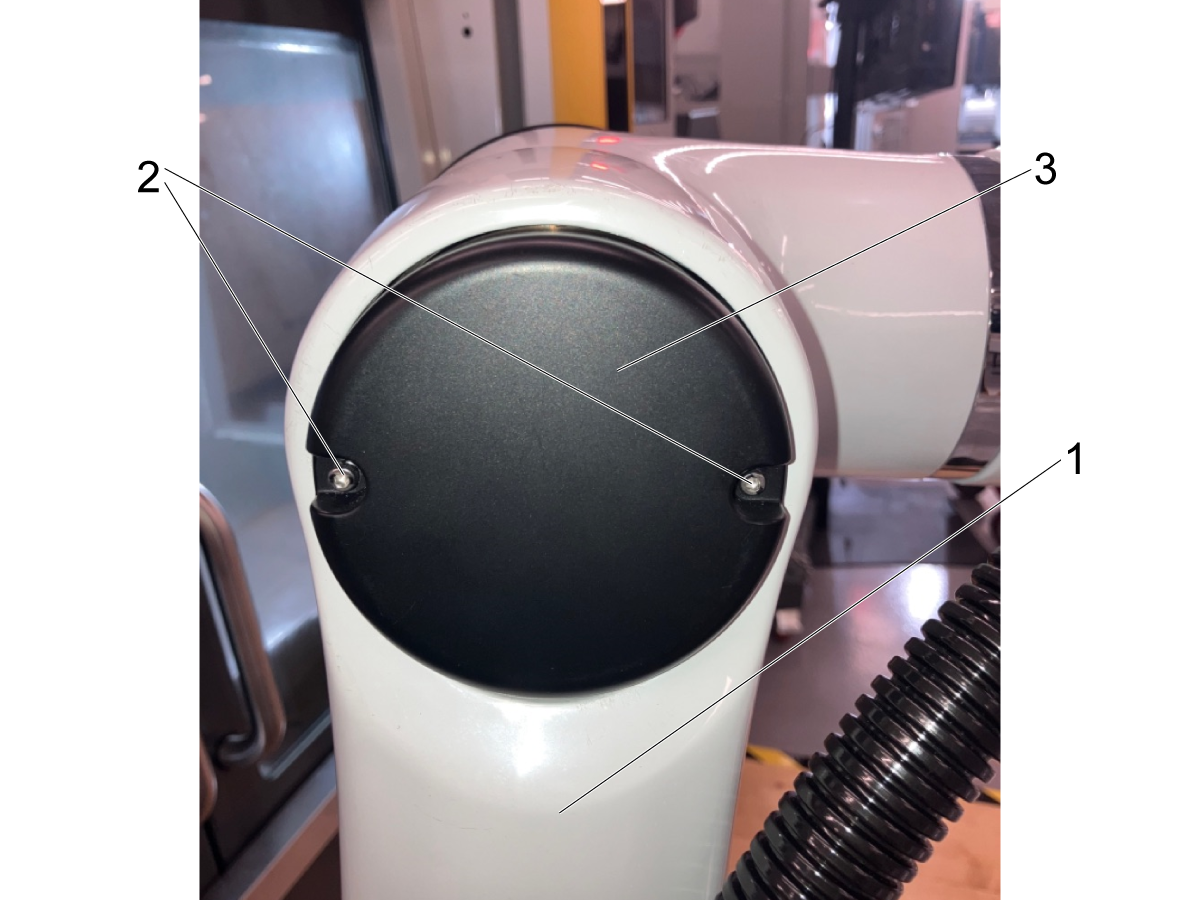
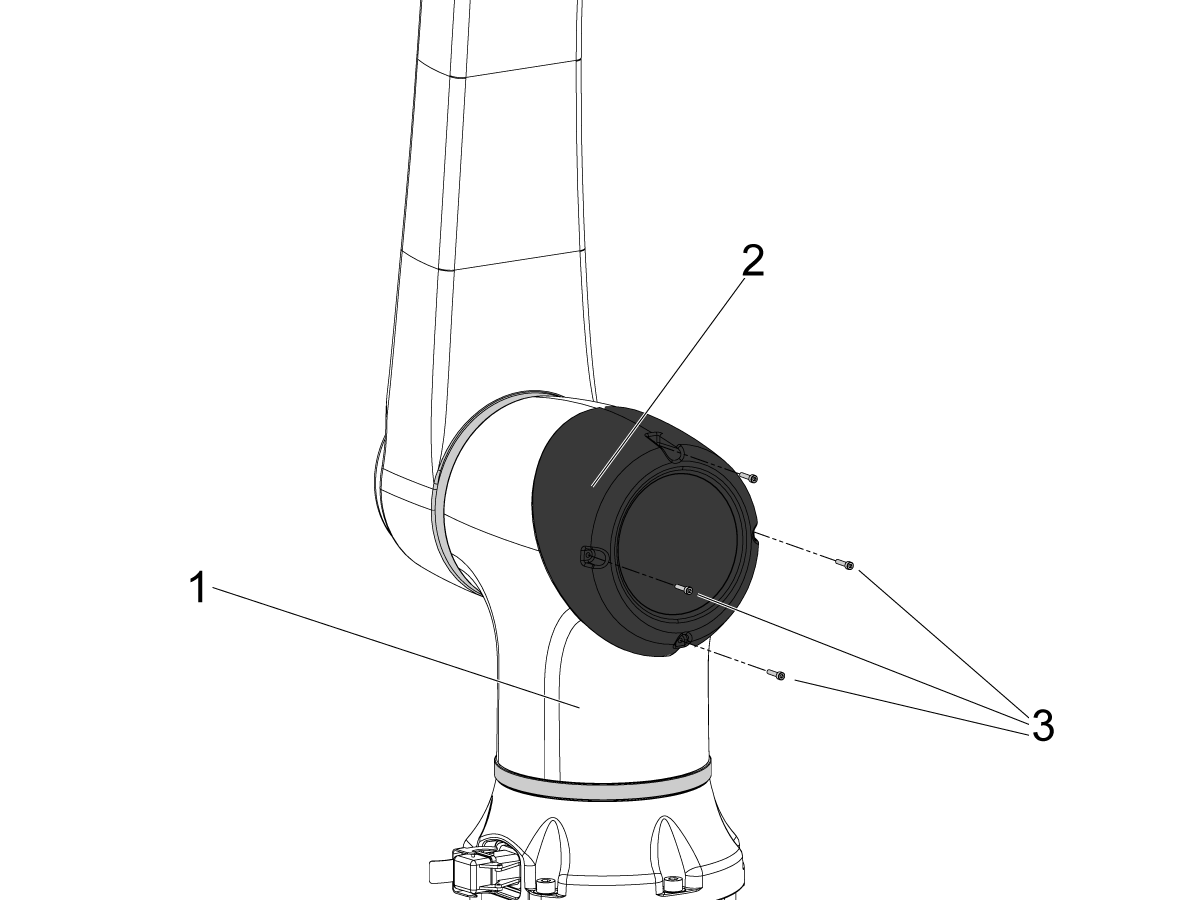
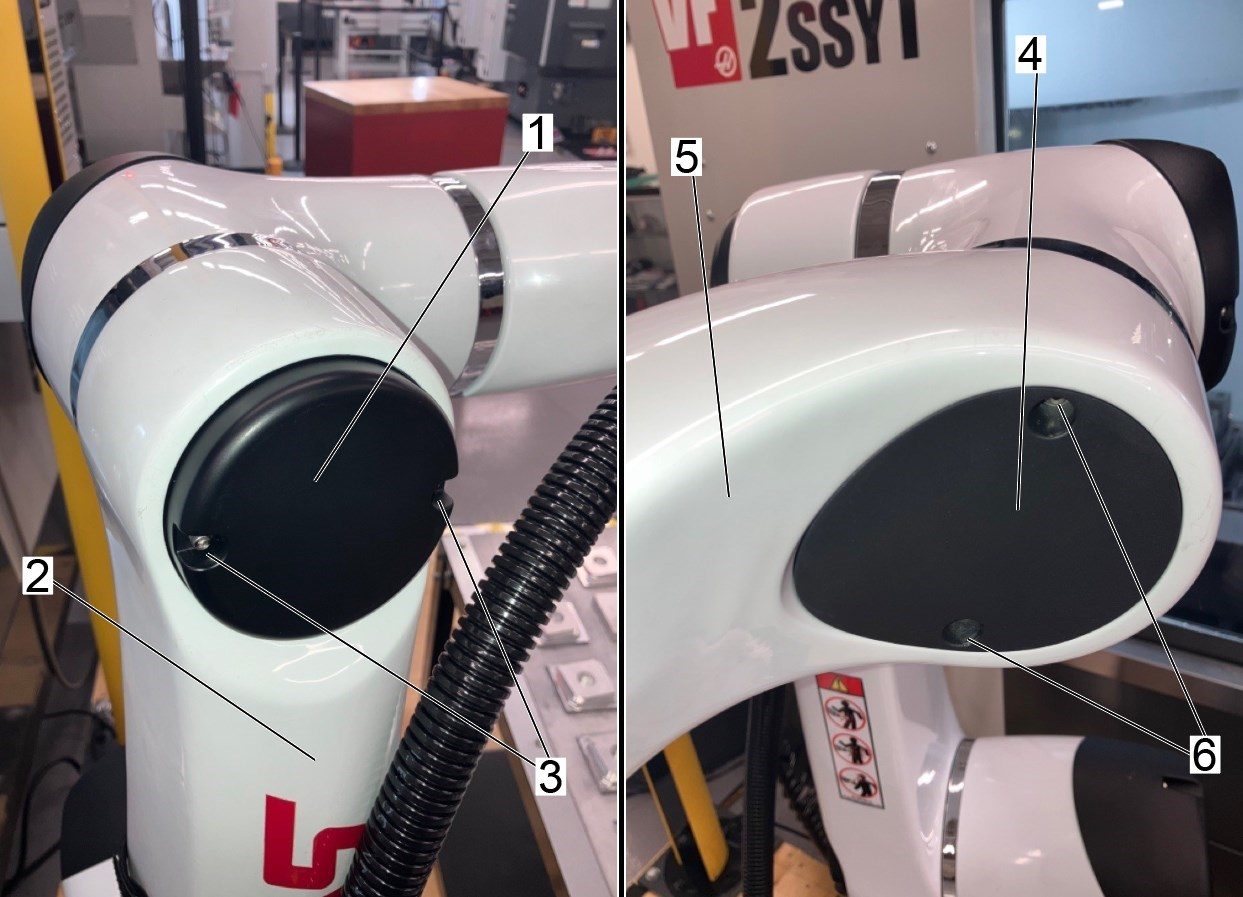
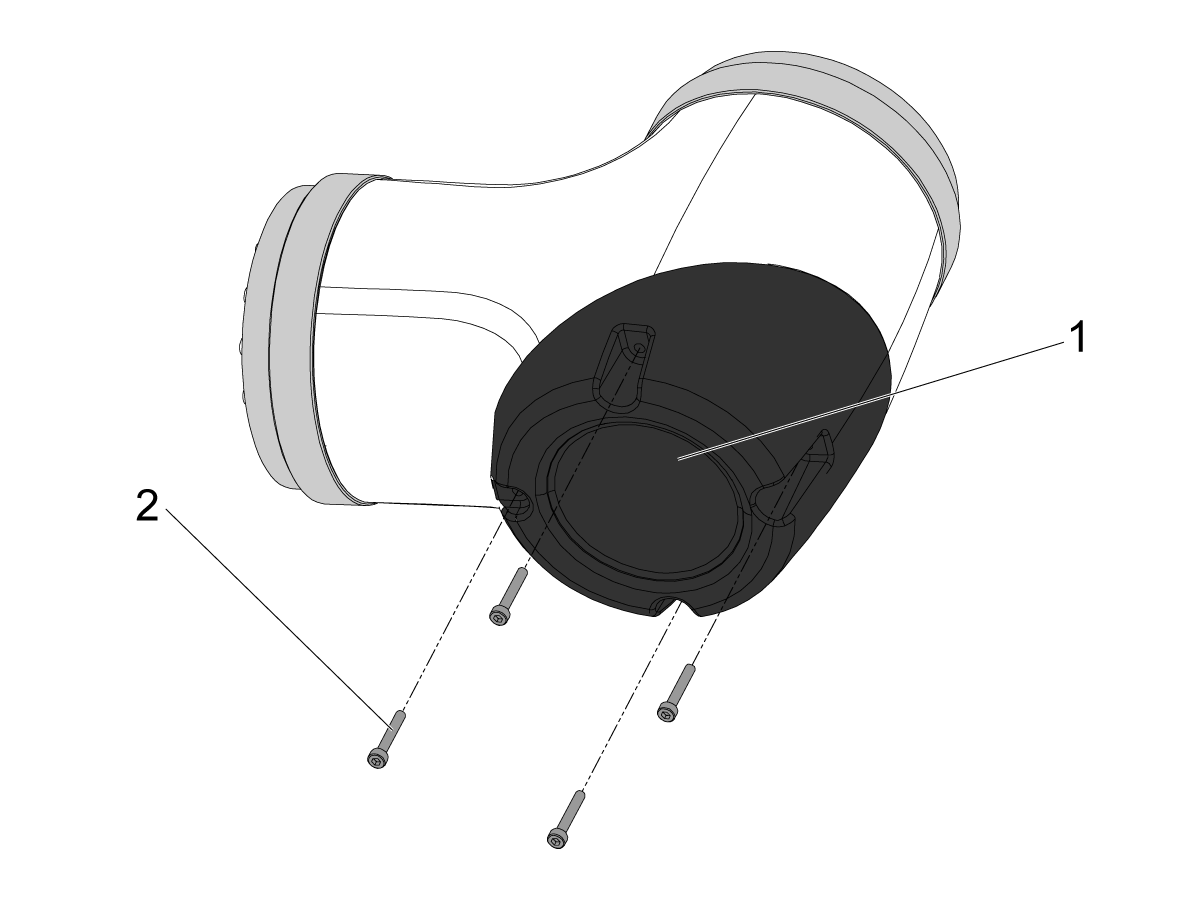
Move to the upper arm [1] side of the joint module. 

There is a black cover that needs to be removed in order to access the mounting bolts and joint wires.

Remove the 2 SHCS [2] that are securing the black cover in position.

Remove the black cover [3]

3

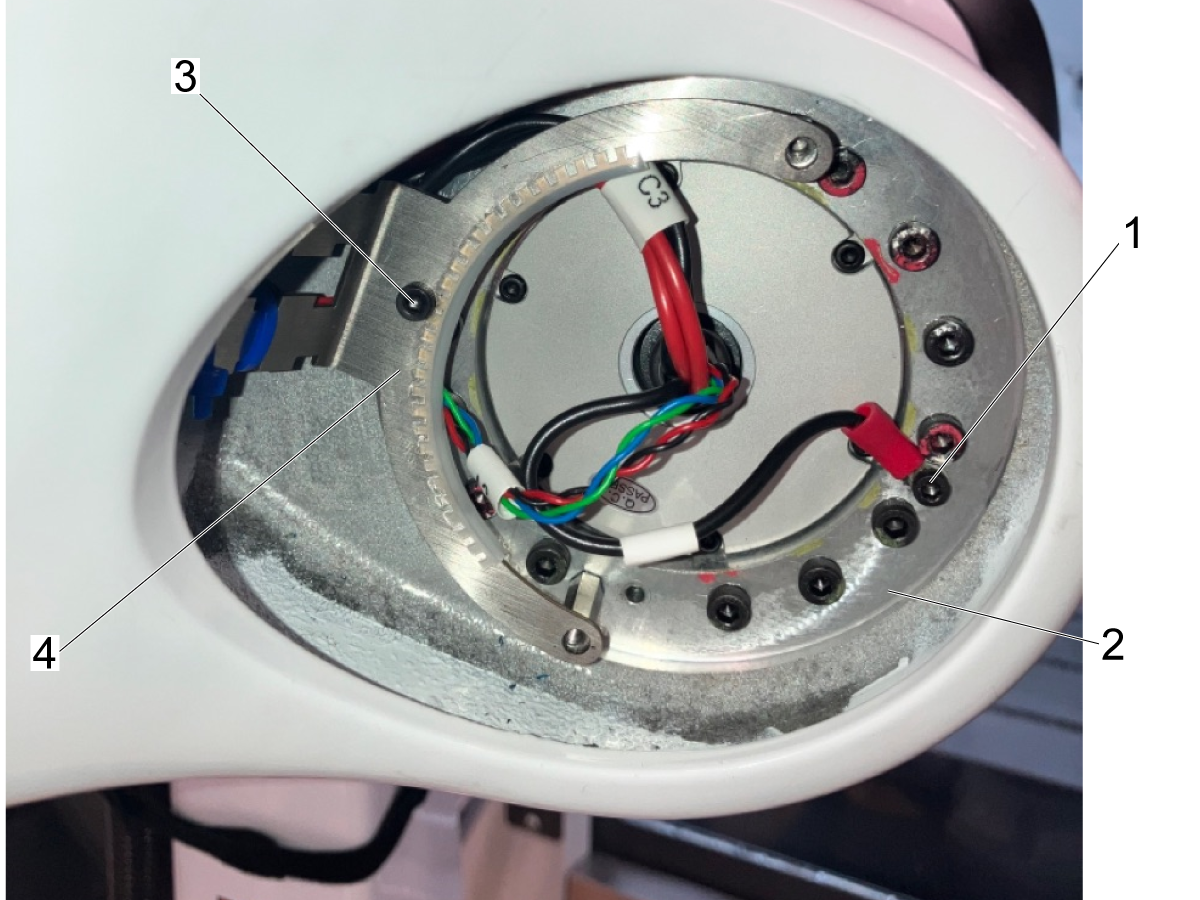
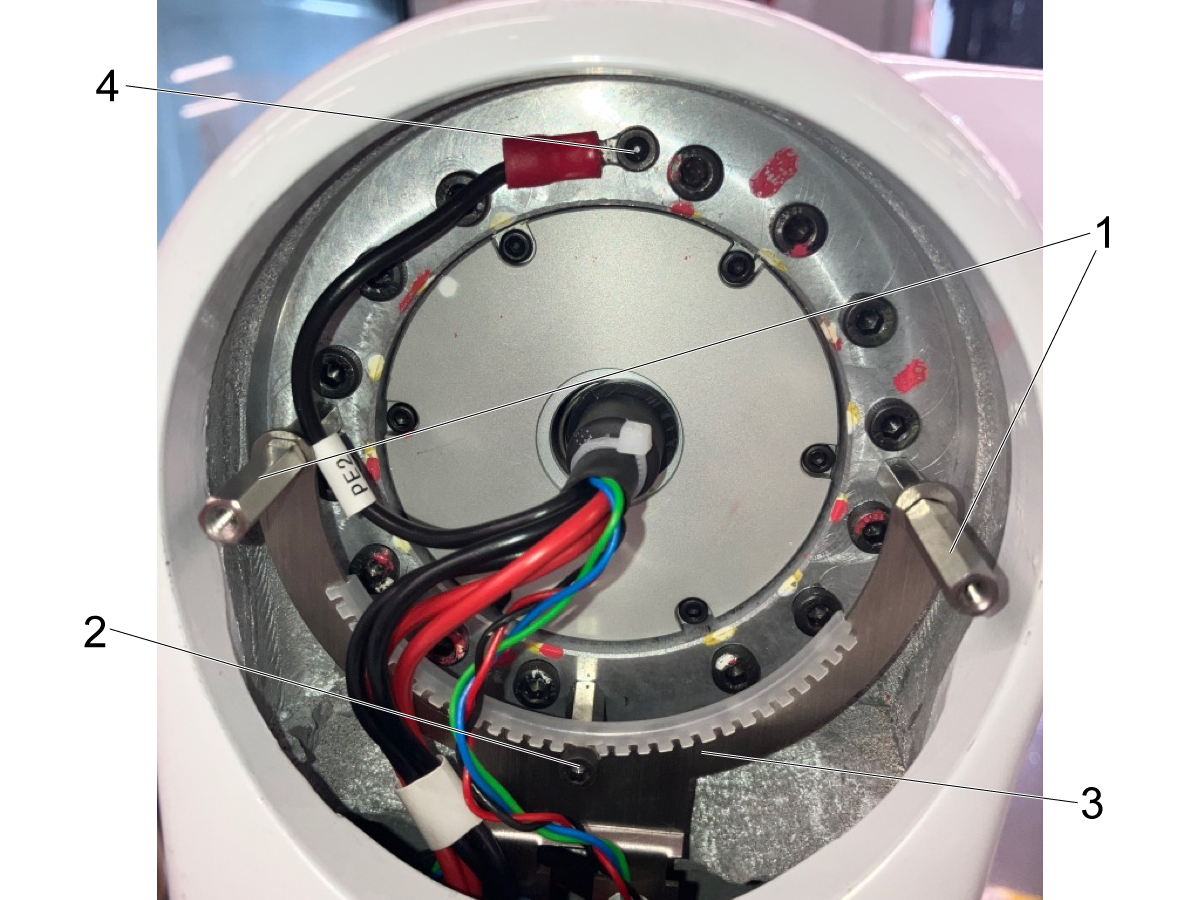
Remove the SHCS [1] holding the black ground wire in position on the arm module [2].

Note: Make a note of the position of the ground wire. It will be reinstalled in this same position once the new joint module is installed.

Remove the SHCS [3] holding the cable connector bracket [4] in place. 

4

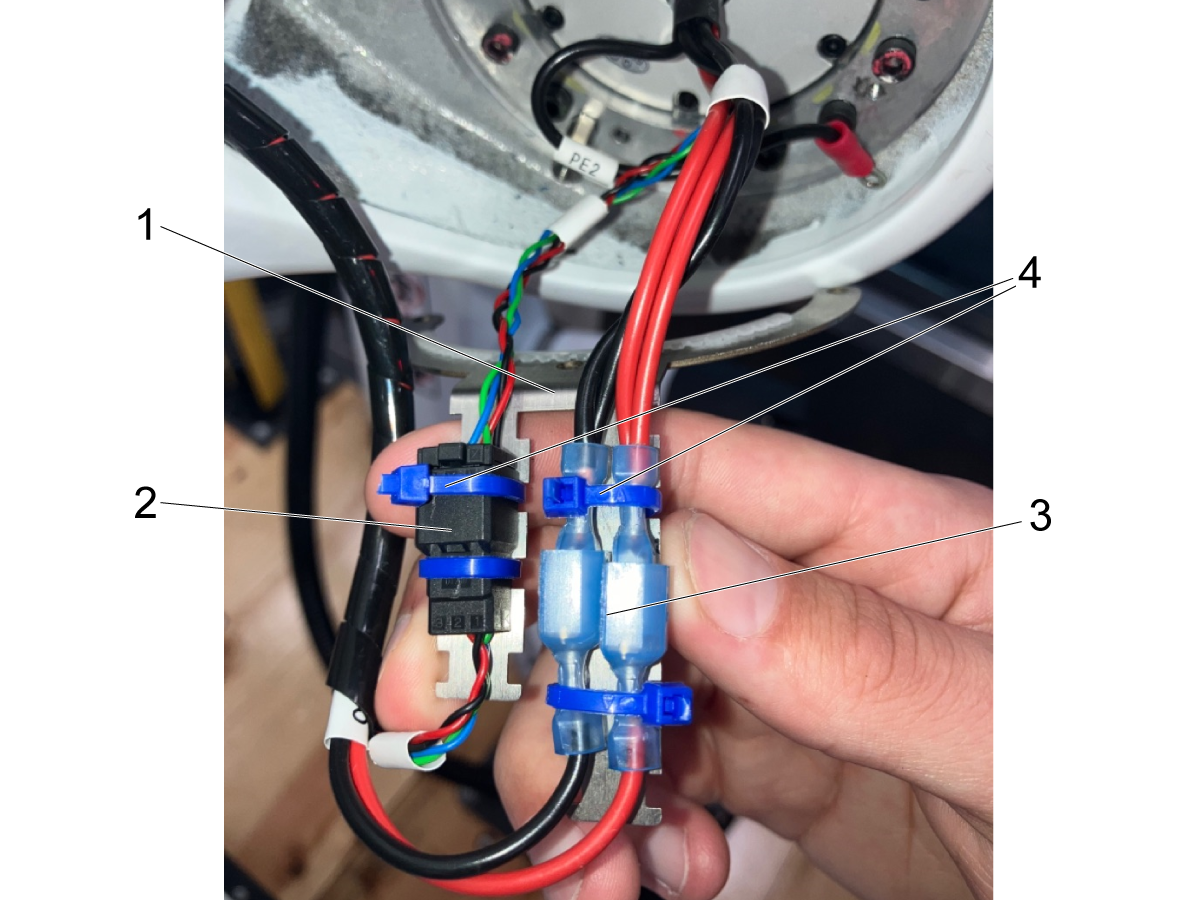
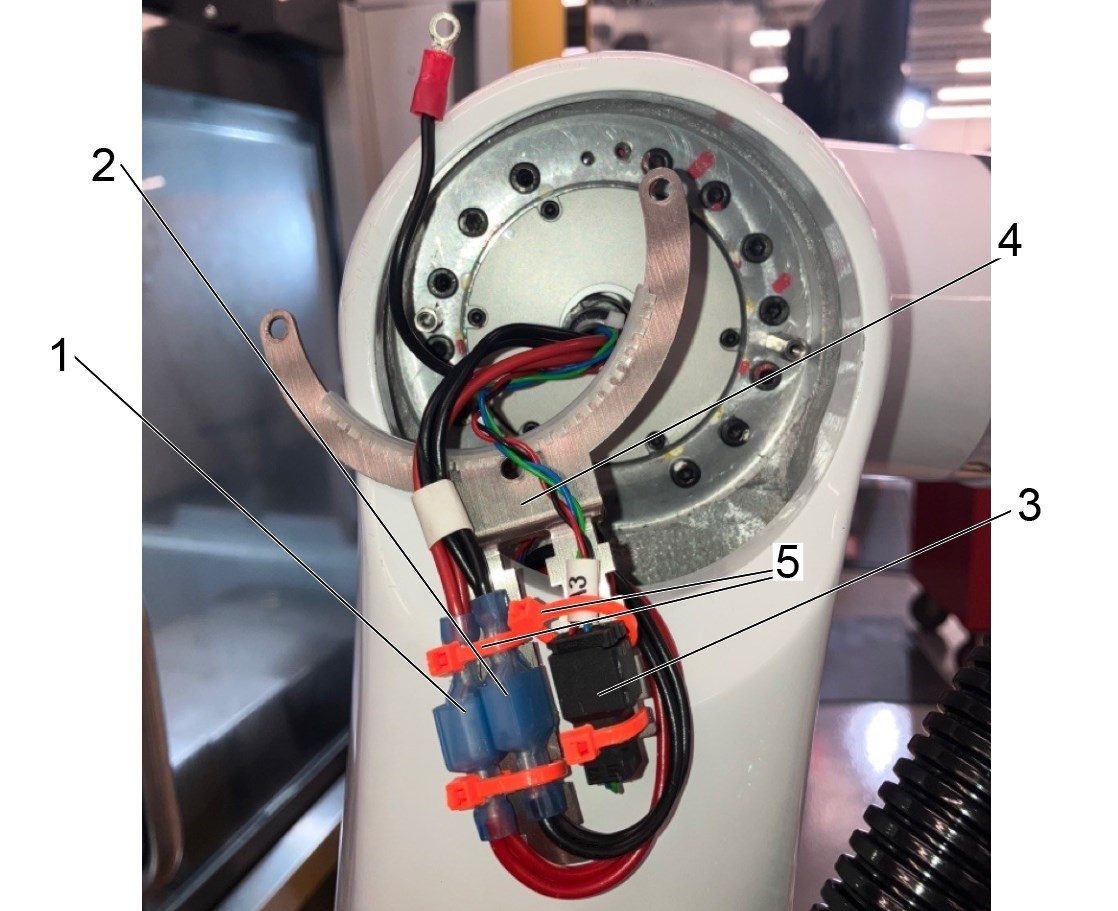
Once the cable connector bracket [1] is unfastened, remove it from the arm module.

Remove the 2 zipties [4] so that the connectors can be disconnected.

Disconnect the etherCAT cable [2] and the joint module power and ground connectors [3].

Important: At this point all wires coming from the joint module should be disconnected. Verify that the ground cable, joint power cables, and the etherCAT cable coming from the upper arm and lower arm are disconnected.

5

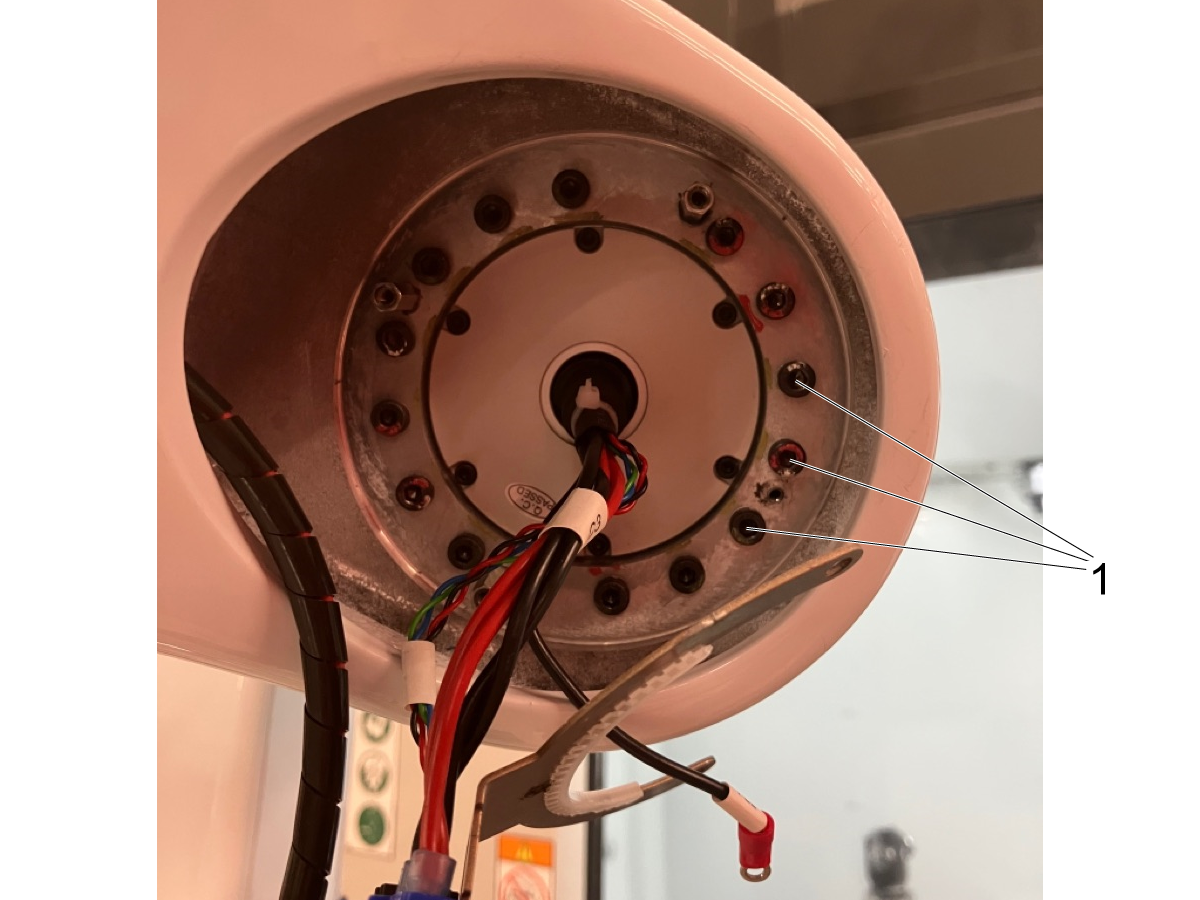
Unfasten the 14 M2.5 fasteners [1] that hold the arm module, to the joint module. 

Remove the upper arm module from the joint module.

Note: If replacing the (Joint1, Joint2) module, make sure the weight of the cobot is supported before unfastening all the screws. The cobot components vary in weight depending on the model.

6

Move to the lower arm [1] side of the joint module.

Unfasten the 2 SHCS [2]  that are holding the black access cover [3] in position.

Remove the access cover.

7

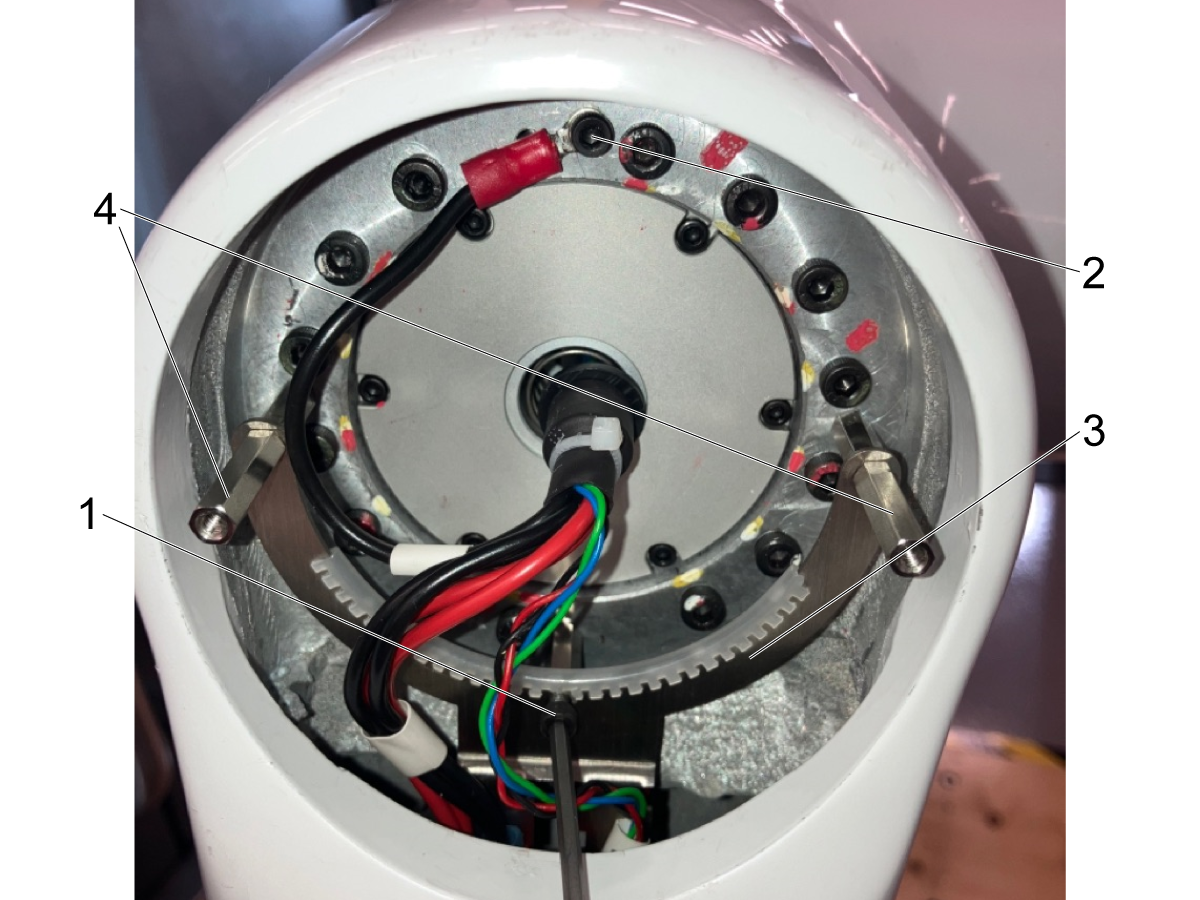
Once the cover is removed you will see the joint wire bracket [3] and the ground wire [4].

Remove the fastener [2] holding the wire bracket [3] and remove the standoffs [1].

Remove the fastener holding the ground wire [4] in position.

Pull the wire bracket out of the arm module so that the cables can be disconnected.

8

Once the wire bracket and ground wire are disconnected from the arm module, disconnect the joint module power [1] ground [2] and etherCAT [3] connectors which are ziptied to the wire bracket [4].

Note: The connectors are ziptied to the wire mount bracket. The zipties [5] need to be cut in order to disconnect the connectors. 

Important: The orientation of the connectors on the bracket. Once the connectors are reconnected they should be ziptied in the same orientation.

9

Install the replacement joint module.

Start by bringing the joint module close to it's position with the arm module.

Important: Pull all the cables from the joint module through the arm to avoid damaging them.

Align the hole pattern of the joint module.

Important: Make sure that the hole pattern of the joint module is matching the hole pattern of the arm module. 

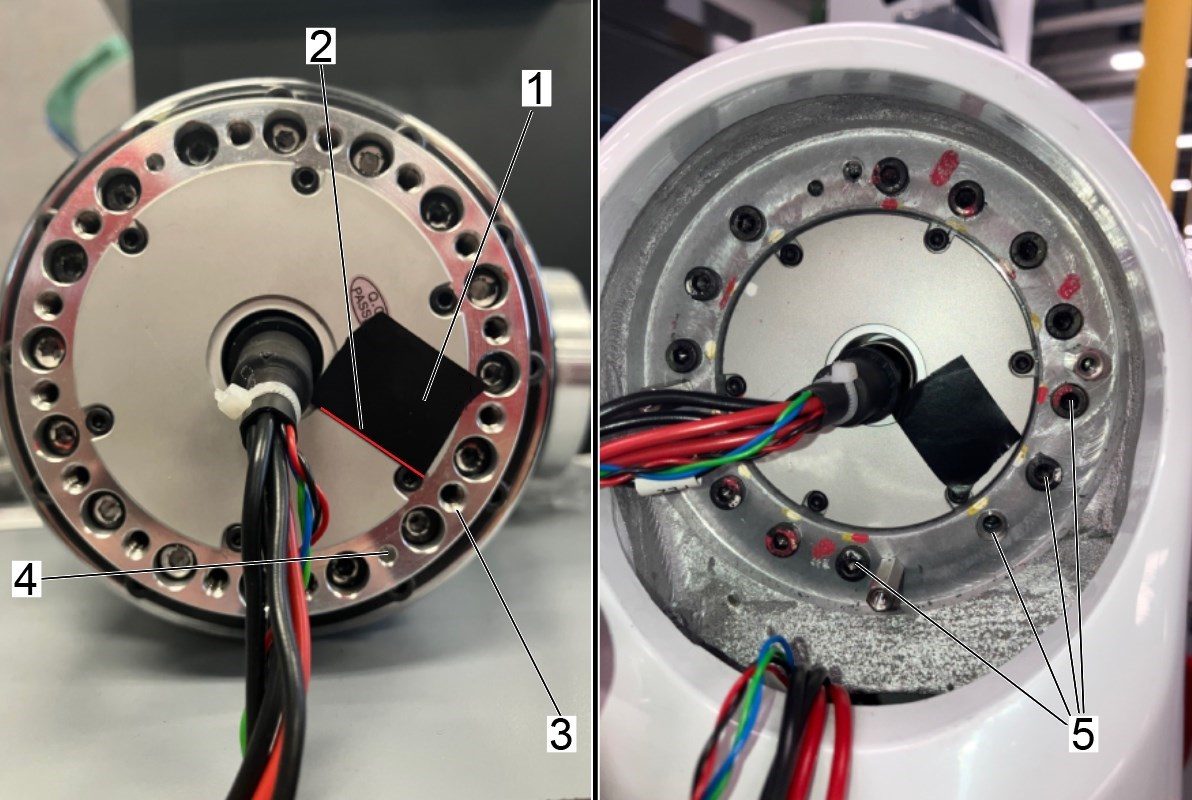
To make it easier to align the hole pattern, place a piece of tape [1] so that the edge of the tape [2] is lined up with the screw hole [3] closest to the gap in the hole pattern. 

Note: The alignment pin [4] is not for a SHCS. The joint module needs to be oriented so that this alignment hole isn't in line with any of the SHCS bores on the arm module.

Fasten the 14 SHCS to secure the joint module to the lower arm.

10

Repeat step 10 for the upper arm side of the joint module.

Note: This step of mounting the new joint module is recommended to be done by 2 people. One person needs to hold the cobot arm and the other person can align the arm to the joint module. 

Make sure all 14 SHCS [5] get fastened on both the lower arm side and upper arm side of the joint module.

Note: Remove the piece of tape from the faces of the joint module. This tape is just used to help with alignment.

11

Do this step on both the upper arm and lower arm side of the joint module:

Connect the motor power and etherCAT cables.

Ziptie the cable connectors back to the cable mounting bracket [3].

Reinstall the cable mounting bracket using the SHCS [1].

Reinstall the ground wire [2] in position.

Connect the standoffs [4] if applicable to the joint module.

12

Reinstall the black cover [1] to the lower arm joint [2] by fastening the 2 SHCS [3].

Reinstall the cover [4] from the upper arm joint [5] by fastening the 2 SHCS [6].

13

Try to connect to the cobot so that you can verify that it can operate. 

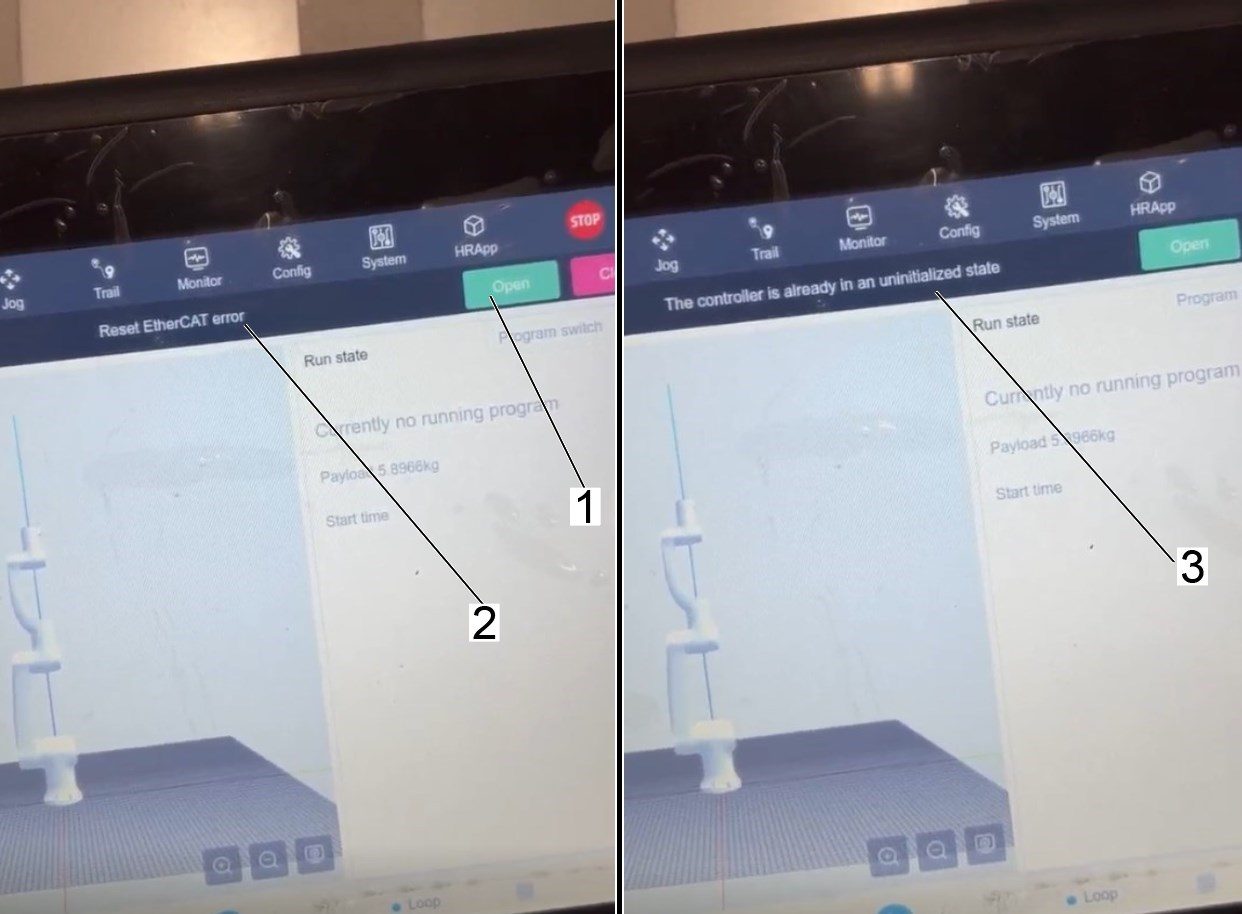
Connect by pressing the green Open button [1] on the main screen.

If the cobot connects, jog the cobot and verify that the cobot is fully operational.

If you see a message saying "Reset EtherCAT error" [2] followed by a message saying "The controller is already in an uninitialized state" [3], then the replacement joint module has a mismatched firmware on it. 

Note: If you encounter the Reset EtherCAT error, proceed to the next section on loading firmware onto the joint module.

Update Firmware Version

1

If there is an error that pops up when trying to connect to the cobot through the teach pendant that says EtherCAT Error  then the firmware on the replacement joint may need to be changed.

Note: The EtherCAT Error message indicates a mismatch in firmware between joint modules.

The steps to fixing the EtherCAT Error are:

  1. Get firmware version from replacement joint module.
  2. Get firmware version from a joint module that doesn't need to be replaced.
  3. Contact Haas Service and provide these 2 firmware versions. The needed firmware package will be made available through HBC.
  4. Download User Defined Motion file from the replacement joint by using the T-0193 cable to connect to the joint PCB.
  5. Upload the firmware to the replacement joint module.
  6. Compile, upload, and run the User Defined Motion (UDM) file on the replacement joint that was downloaded in step 4.
  7. Remaster the cobot using the HRTool software.

Follow this section and video for how to use the HMServo software to read firmware version from a joint, and how to upload firmware to the joint PCB. 

Important: The same video is referenced at several different steps. Pay close attention to the time stamps shown in each step. Do not go passed the time stamp without looking at the next step. There are adjustments that need to be made to the physical cobot in between each step.

2

Connect a laptop to the cobot control box. 

Connect an ethernet cable [1] from the Cobot control box into a computer.

On the computer, change the adapter setting to enable the ethernet port. 

Note: See next steps for help on changing adapter settings.

3

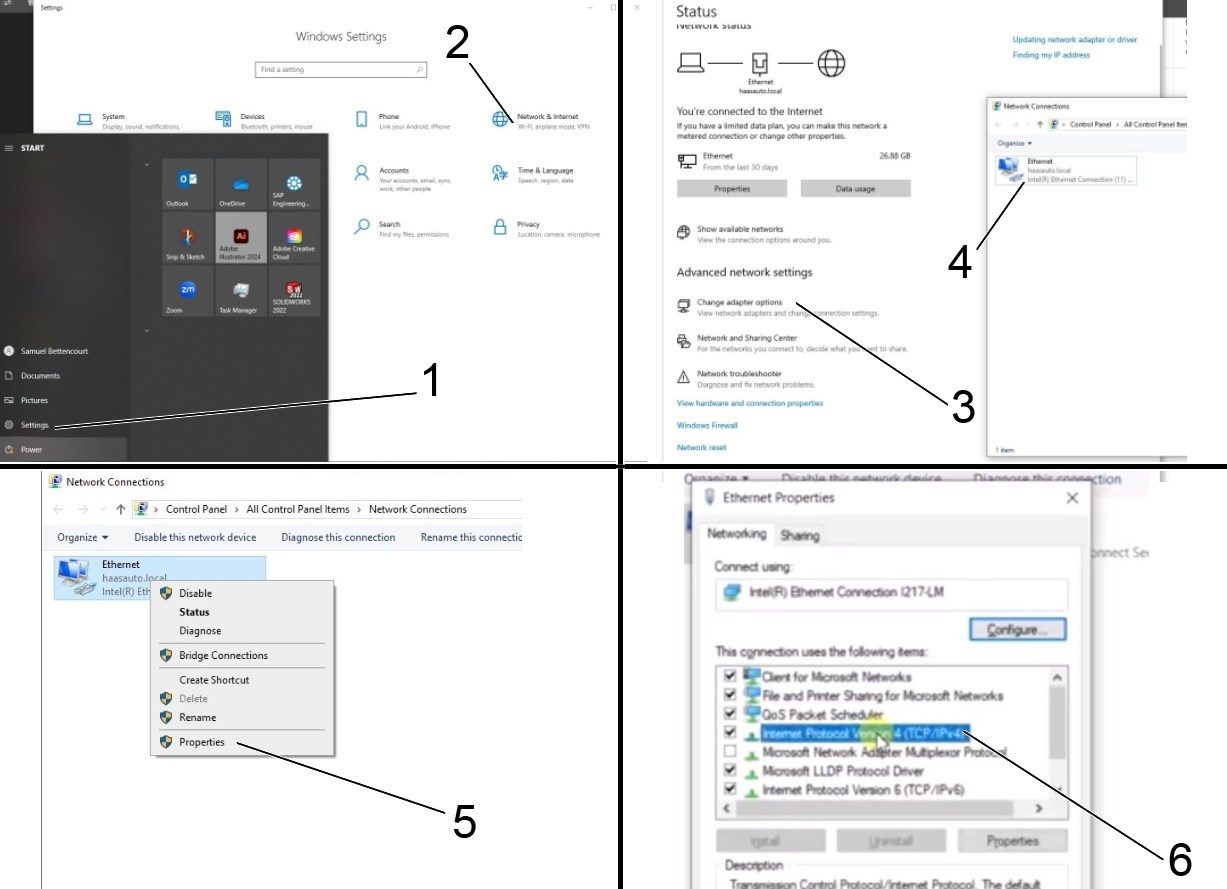
To change the adapter settings, open the settings page [1] on the computer, then click on Network & Internet [2] which will bring up the network status page.

Click on Change adapter options [3] then right click on Ethernet [4] and open up the properties window [5].

From there select the Internet Protocol Version 4 (TCP/IPv4) [6] option and click Ok. 

4

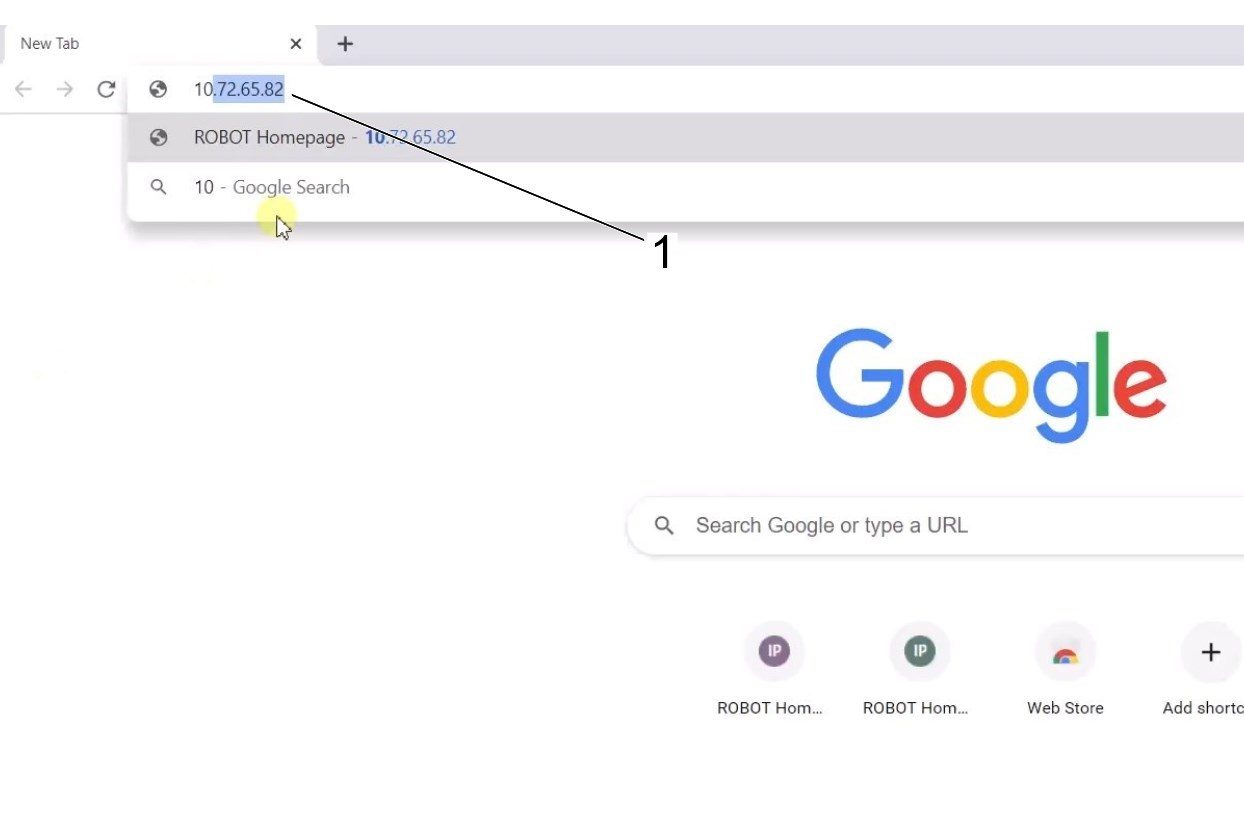
The ethernet settings will now be correct. Open a web browser window and type in the IP address of the cobot[1]. 

Note: This is the same process as connecting a laptop to an HRP-1/2/3. For more information on connecting to the cobot via ethernet, refer to the video on the HRP-Troubleshooting page that is in the Connect & Jog Haas Robot section. 

The HMServo software on the laptop can now be used to connect to the cobot joint module.

5

Remove the cover [1] of the replacement joint module by removing the 4 SHCS fasteners [2]. 

This will expose the joint module PCB board.

Note: The cover is tightly sealed on the joint module in order to protect debris from damaging the PCB. It may be difficult to pry the cover off. 

6

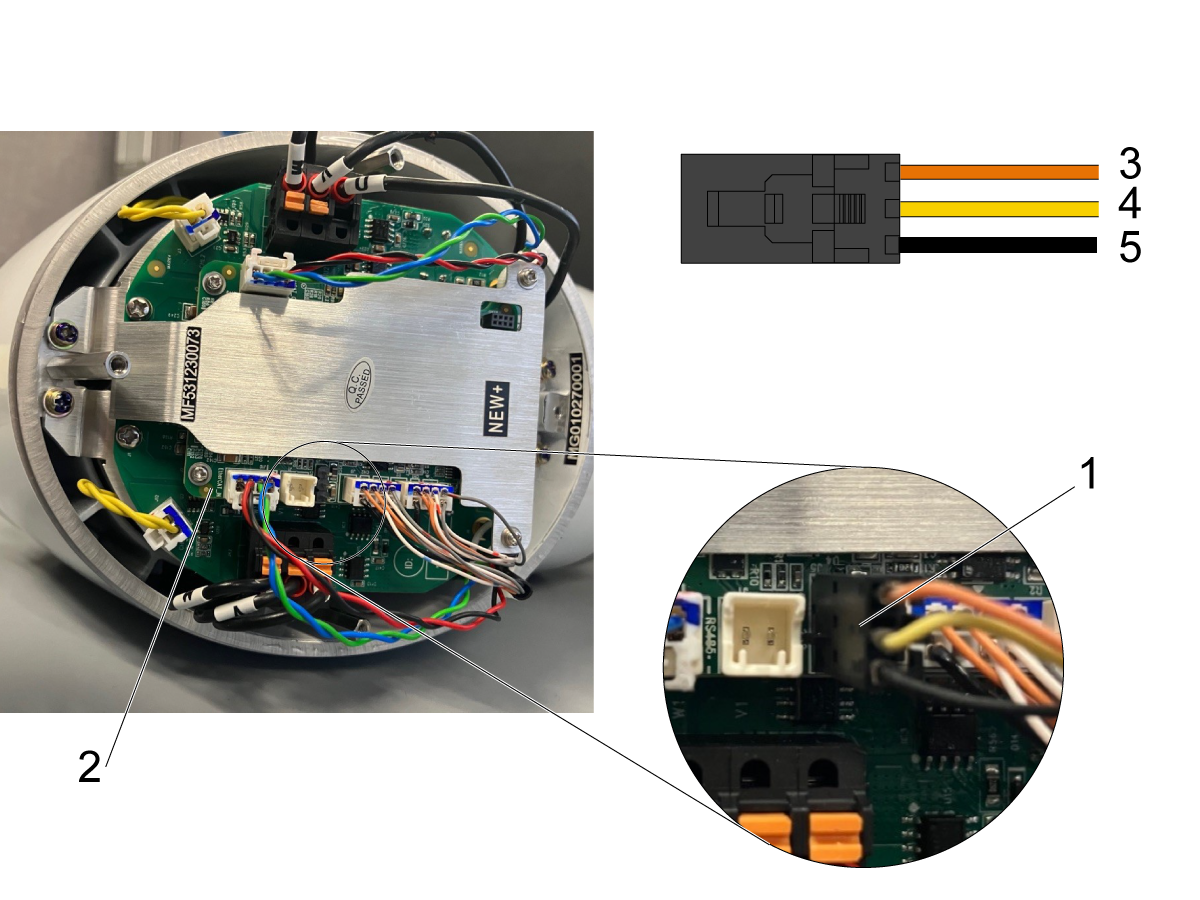
Use the 3 pin connector end [1] of T-0193 to the joint module PCB [2]. There are 3 pins shown in the image [3] that need to be connected to the cable.

Important: Make sure that the cable is placed on the pcb in the correct orientation. See the pinout of the PCB pins in the image.

  • [3] Transmit Data - Orange
  • [4] Receive Data - Yellow
  • [5] Ground - Black

7

Connect the usb end of T-0193 to a laptop that has the HMServo software application installed.

Note: This application can be downloaded from HBC but you may need administrative access to install it on the laptop. 

Follow the video in the next step for how to upload new firmware to the joint and make it compatible with the rest of the cobot.

8

(0:00 to 1:47 in video):

Install the HMServo application.

Open the HMServo application. Change the settings to english.

Press the Connect to Servo button (the top left icon on the toolbar). 

In the popup window, select the RS232 communication protocol and the COM port for the USB tool should auto populate. Set the Baud rate to 115200 and then press connect.

The Servo Watch menu in the left side of the window should be green and say Online.

Press the Advanced operation panel icon on the toolbar (4th from the right). 

In the popup window, select the check box next to Auto send per. Wait a second and the right column of the popup window should populate with data. 

Take a screen shot of the window and make a note of the value in the right column that corresponds to row 8 in the left column. 

Note: In the example video, the value to note is 02 02 0d 08. This could be different for the replacement joint you have.

Important: Make sure to press the Disconnect servo icon on the toolbar before disconnecting the 3 pin connector from the PCB.

9

The firmware value from the replacement joint needs to be compared to the firmware from one of the joint modules that isn't being replaced.

Note: The image shows using the module [1] for Joint 1 and joint 2. Any of the joint modules that isn't being replaced could be used to get a comparable firmware version. 

Remove the cover [2] on one of the working joint modules by removing the 4 SHCS [3].

Repeat the process in step 4 and 5 and follow the video to obtain the firmware version of the working joint.

Take a screenshot of the Advanced operation panel to compare the firmware value between the 2 joints. 

10

Contact Haas Service and provide the 2 firmware values (one from the replacement joint and one from the working joint. Make sure to specify what firmware value belongs to the replacement module and what firmware value belongs to the existing joint module.

Haas Service will then provide the firmware file that will need to be loaded onto the replacement joint to eliminate the EtherCAT error.

11

(01:47 to 03:45 in video):

Once you receive the firmware file needed from Haas service you will need to load it to the replacement joint.

Before loading the new firmware to the replacement joint you need to save the User Defined Motion (UDM) that was configured for the joint. 

Follow the video for how to extract the UDM file for the joint module. This file will need to be loaded back onto the joint after the firmware is loaded onto the joint module.

Press on the icon on the toolbar named User Defined Motion. 

Press the fourth icon from the right under the operation menu. The icon is labeled Export UDM sequences to file.

This button will bring up a file explorer window. Create a name for the file that you save the udm sequence. 

Note: The name or location of the file does not matter. Make sure that the file type is *.seq which is shown on the line where you set the file name.

Important: Make sure to press the Disconnect servo icon on the toolbar before disconnecting the 3 pin connector from the PCB.

12

(03:45 to 05:55 in video):

After you save the UDM sequence for the replacement joint you can upload the firmware to the joint module PCB.

Follow this video for how to upload the firmware file to the joint module.

Connect T-0193 to the joint module pcb of the replacement joint.

Connect to the joint by clicking the connect icon on the tool bar of the HMServo software (refer to step 5 for how to connect to the joint module).

Select the Download MCS icon on the toolbar (3rd from left).

Select the Browse option where it asks to select firmware file. This will bring up a file explorer window. Then select the firmware file that was provided. Press open to begin the upload.

Note: It can take 15 minutes to upload the firmware to the pcb.

Once the upload is complete use the teach pendant to power off the cobot. The Servo Watch in the top left corner of the screen will be red and show Offline.

Important: Wait 3 minutes with the cobot powered off, then power it back on using the teach pendant.

Follow step 5 to verify that the firmware value is now matching the value that was taken from the working joint. (one of the joint modules that isn't being replaced).

13

(06:00 to 07:38 in video):

If the firmware is the correct matching version, the UDM sequence needs to be reloaded onto the joint.

Make sure T-0193 is connected to the joint module PCB and connect to the joint using the HMServo software.

Once connected, press the User Defined Motion icon located on the toolbar.

In the popup window, press the file folder icon on the operation toolbar. Navigate the file explorer window to where the UDM sequence file from step 11 is saved. Select that file and press open.

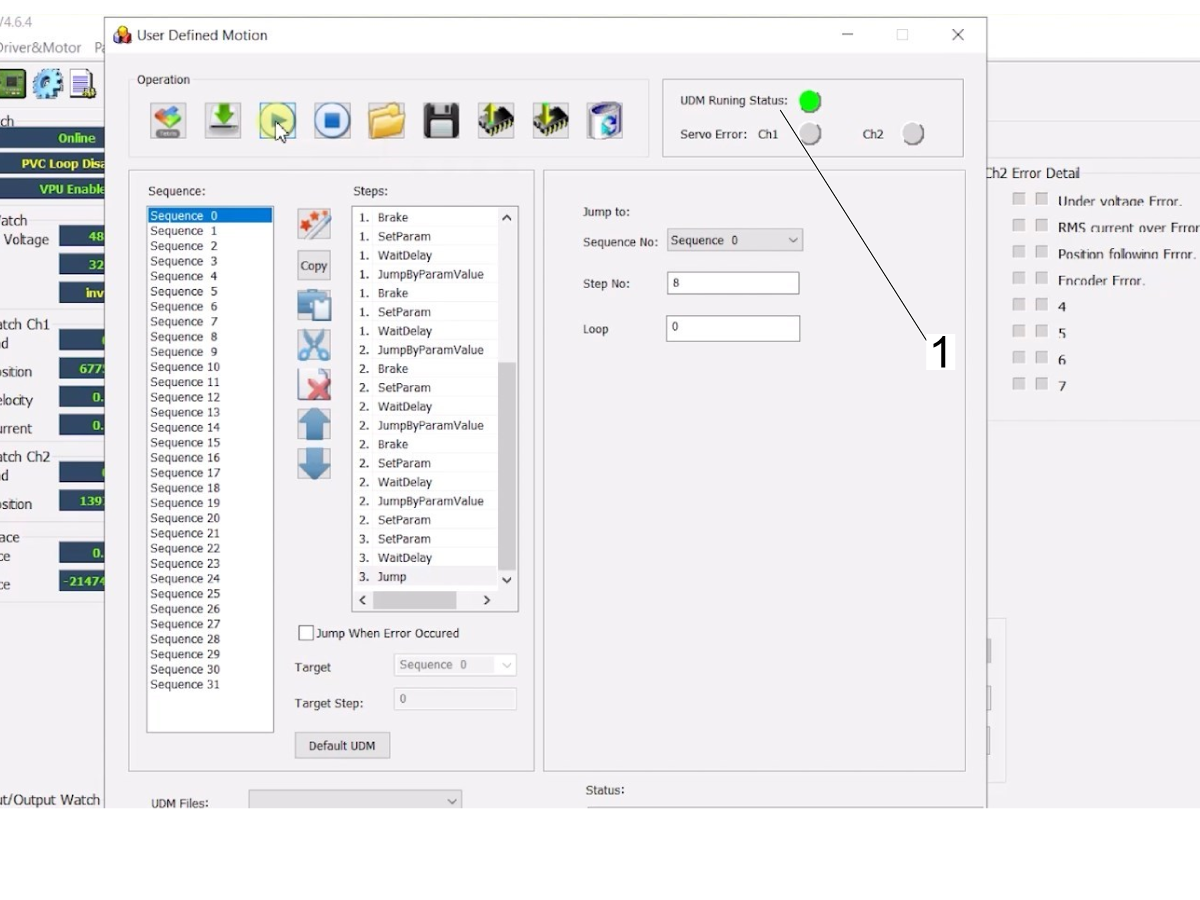
Press the top left icon on the operation menu named Compile UDM sequences. Press ok on the popup showing the size of the file.

After compiling the UDM file, press the Download UDM code to Servo icon on the operation menu. Press ok on the popup window.

Save the UDM code to the servo motor memory by pressing the second icon from the right named Save UDM sequences and code to Flash. Press ok on the popup window.

Press the Run UDM code icon on the toolbar to start running the UDM program. Once the program is running, you will see the green light next to the UDM Running Status [1] in the top right corner.

14

If the firmware value matches then the cobot can now be enabled with the teach pendant.

On the teach pendant select the green Enable button [1]. Verify that the led around the end effector [2] turns green. This indicates that the cobot now has consistent firmware in each joint module. 

Since the joint module was replaced. The cobot needs to have the origin position set again, like it was when the cobot was first installed. 

The cobot can not be operated until the origin position is set. See the next step about manually positioning the cobot in the origin position.

15

Each joint needs to be moved so that the origin (zero) position can be set through the HRTool software.

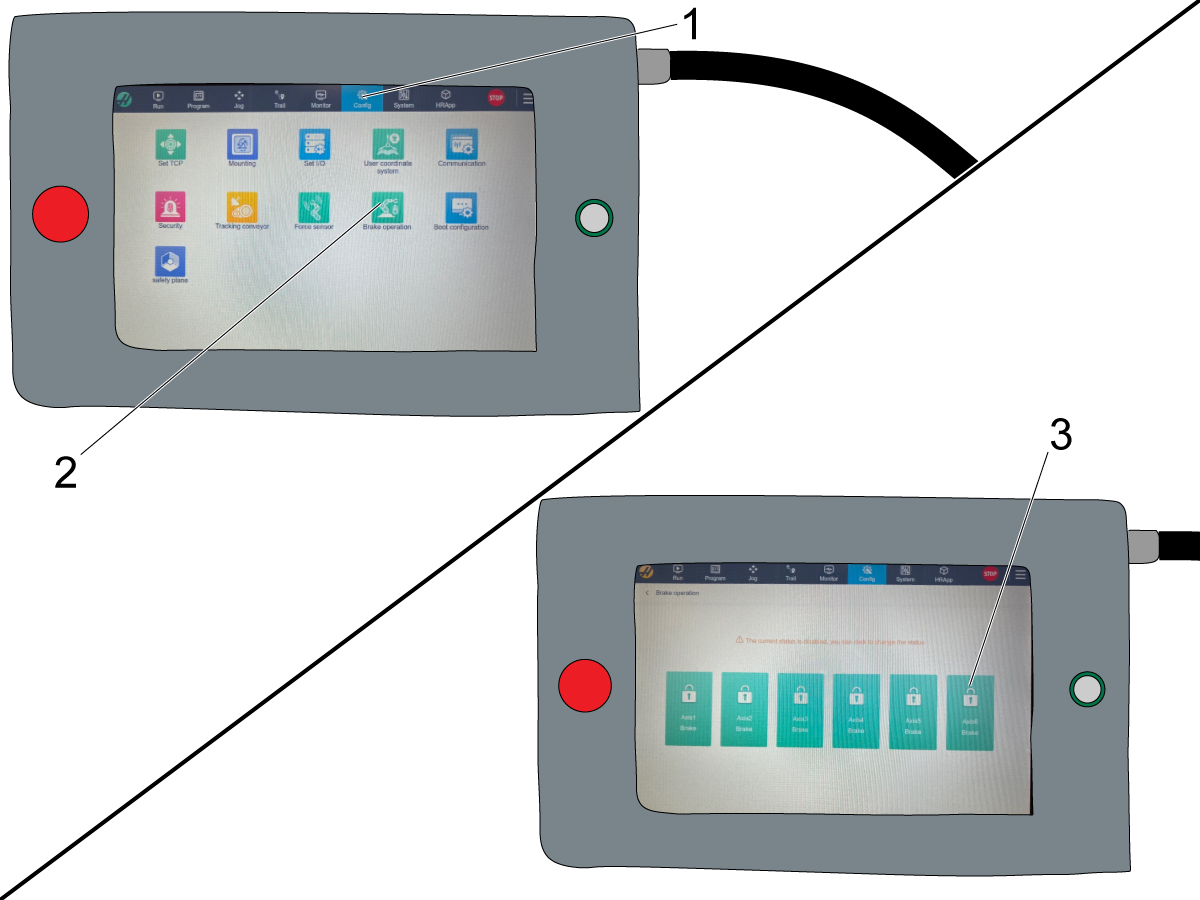
Press the configuration icon [1] on the top menu of the teach pendant.

Select the axis brake icon [2].

You will have to disable the axis brake for each joint, so that it can be manually rotated to the correct position.

Danger: Do not disable more than 1 axis brake at a time. Start with the smaller joints at the end of the arm. After a joint is rotated correctly, enable the brake before disabling the next axis brake.

16

Follow this process to manually rotate each joint:
  • Start by disabling J6 brake [3]. 
  • Rotate the end effector by pushing or pullying on the cobot so that the hash marks decal [4] is aligned. 
  • Renable the J6 brake by selecting it on the teach pendant.
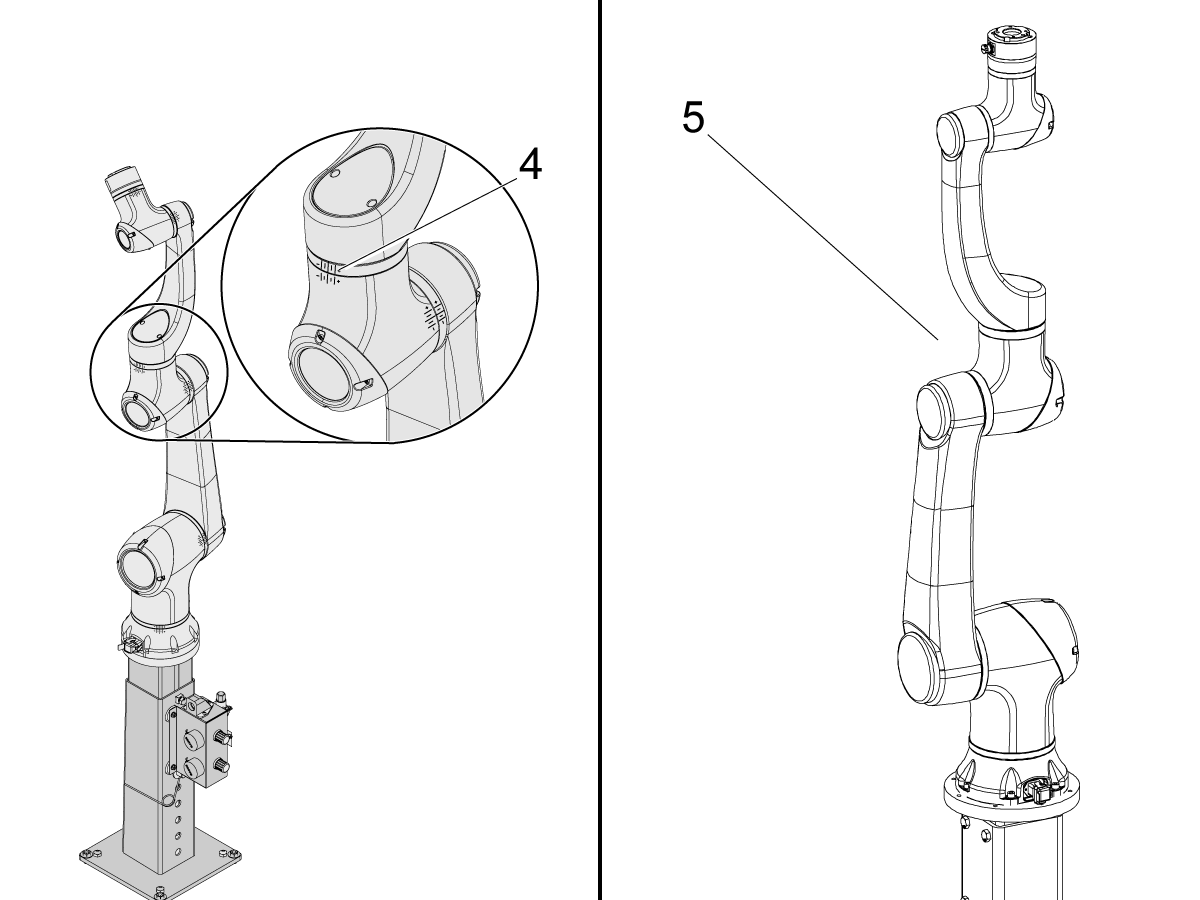
  • Repeat this process for joint 5, then joint 4, and then for all joints until all joints are in the correct orientation shown in the image [5].

Note: The lower joints requires alot of force to rotate depending on the orientation of the cobot. As long as the brake is disabled, the joint can be rotated.

17

(07:38 to end of video):

Make sure the laptop is connected to the control box by ethernet and open up the HRTool software.

Enter the IP address 10.72.65.82 to connect to the cobot.

Press get and wait for the encoder values for each joint to populate.

18

Enter the values for the 4 joints that are not for the joint that is being replaced. 

Note: The values in the Machine Origin: section of the HRTool page are in the following format:

Joint 1 value, Joint 2 value

Joint 3 value, Joint 4 value

Joint 5 value, Joint 6 value

Make sure you enter the correct value in the field for each axis.

Then press set to record this as the home position.

Note: In the example video, the joint module for (Joint3, Joint4) is being replaced. So, the values for J1, J2, J5, and J6 need to be set. Set the values for the joints that apply which joint module you are replacing.


19

Once the new origin has been set, you should be able to jog the cobot.

Use either the laptop or the teach pendant to open the cobot.

Wait for the ring led by the end effector to turn green.

Then select the jog icon from the top menu and try to jog the cobot.

The cobot should now function as intended. Test jogging each joint of the cobot.

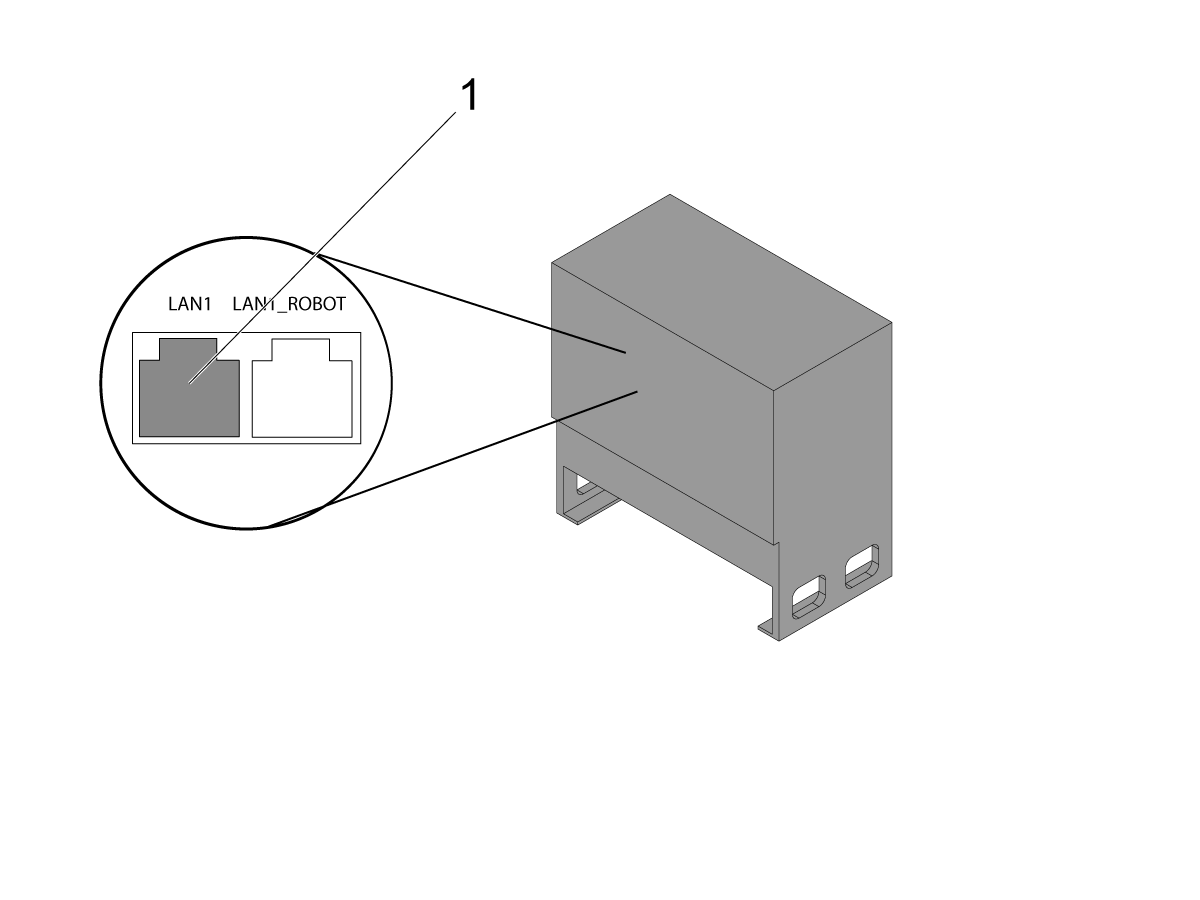
Once operational, make sure to reconnect the RJ-45 connector coming form the Haas machine to the cobot control box in the LAN1 port [1].

Recently Viewed Items

You Have No Recently Viewed Items Yet

Feedback
Haas Logo

Haas Delivered Price

This price includes shipping cost, export and import duties, insurance, and any other expenses incurred during shipping to a location in France agreed with you as a buyer. No other mandatory costs can be added to the delivery of a Haas CNC Product.

KEEP UP WITH THE LATEST HAAS TIPS AND TECHNOLOGY...

Sign up now!   

HAAS TOOLING ACCEPTS THE FOLLOWING:

  • Service & Support
  • Owners
  • Request Service
  • Operator Manuals
  • Haas Parts
  • Rotary Repair Request
  • Pre-Install Guides
  • Shopping Tools
  • Build & Price a New Haas
  • Available Inventory
  • The Haas Price List
  • CNCA Financing
  • About Haas
  • Accessibility Statement
  • DNSH Statement
  • Export Compliance
  • Careers
  • Certifications & Safety
  • Contact Us
  • History
  • Terms & Conditions
  • Haas Tooling Terms & Conditions
  • Privacy
  • Warranty
  • Haas Community
  • Haas Certification Program
  • Haas Motorsports
  • Gene Haas Foundation
  • Haas Technical Education Community
  • Events
  • Join the Conversation
  • Facebook
  • X
  • Flickr
  • YouTube
  • LinkedIn
  • Instagram
  • TikTok
© 2026 Haas Automation, Inc – CNC Machine Tools
This site is protected by reCAPTCHA and the Google Privacy Policy and Terms of Service apply.

2800 Sturgis Rd., Oxnard, CA 93030
Toll Free: (888) 817-4446 / Fax: 805-278-8554